Your Clear Driveway Is Killing Your Garden: The Ugly Truth About Road Salt
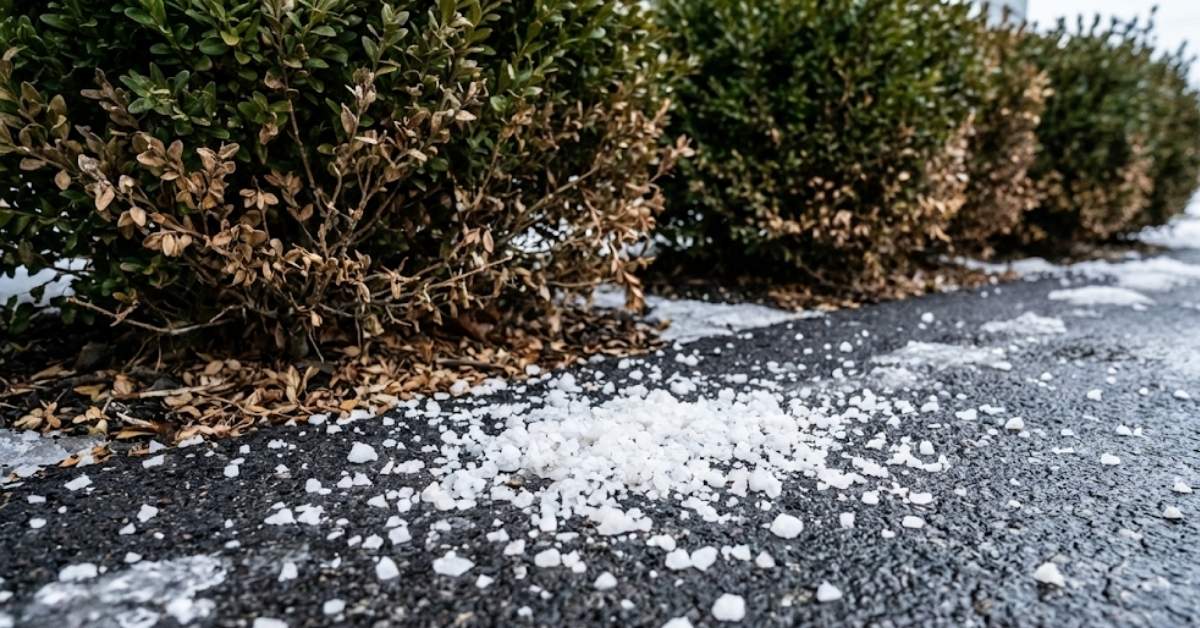
I spent yesterday watching my neighbor dump twenty pounds of rock salt on a four-foot patch of sidewalk. It sounded like gravel hitting a metal bucket. While he was busy “melting the problem away,” I was looking at his boxwoods. Those poor shrubs are about three feet from the concrete. By April, they’ll look like they’ve been hit with a blowtorch.
Most people use salt on driveways because it’s cheap and it works fast. It’s the standard American response to a snowstorm. But here is the reality: your ice-free pavement is a death sentence for your landscaping. If you value your lawn, your perennials, or your expensive evergreens, you need to stop treating salt like it’s harmless fairy dust. It is a chemical, and your soil hates it.
Will rock salt kill my plants?
Yes, rock salt (sodium chloride) kills plants by drawing moisture out of the roots and foliage, leading to extreme dehydration. It also prevents plants from absorbing essential nutrients like potassium and magnesium. Over time, salt buildup in the soil leads to “physiological drought,” essentially starving and thirsting your garden to death.
How Salt Actually Commits the Crime
Salt doesn’t just sit there. When the snow melts, that salty slush has to go somewhere. Usually, it drains right into the low spots of your yard or the edges of your lawn.
There are two ways salt destroys your yard. First is the “splash zone.” If your driveway is near the street, passing cars spray salty mist onto the needles of your pines and the branches of your shrubs. This is called foliar damage. It dries out the plant tissue instantly.
The second way is much sneakier. It happens underground. Salt contains sodium, which is a bully. It kicks out the good minerals in the soil and breaks down the soil structure. Instead of nice, crumbly dirt, you get a hard, crusty mess that water can’t penetrate. If you’ve ever noticed your grass looking thin and “burnt” along the driveway edge in the spring, that’s exactly what happened.
The Chemistry of Deicing: Pick Your Poison
The industry loves to put “Pet Safe” or “Eco-Friendly” on bags. Take those labels with a grain of salt—literally. Most of them are still salts; they just use different minerals.
| Deicer Type | Common Name | Melting Point | Plant Safety | Cost |
| Sodium Chloride | Rock Salt | 15°F | High Danger | Very Low |
| Calcium Chloride | Heat Pellets | -25°F | Moderate Danger | Medium |
| Magnesium Chloride | Safe-T-Step | -5°F | Lower Danger | High |
| Calcium Magnesium Acetate (CMA) | “Eco-Labels” | 20°F | Safest | Very High |
I get why people buy the cheap blue bags. Money doesn’t grow on trees—especially not trees killed by salt. But if you spend $10 on rock salt and end up killing $500 worth of arborvitae, you didn’t actually save any money.
The Invisible Damage to Your Hardscape
It’s not just the plants. If you have a concrete driveway, salt is your worst enemy. It doesn’t “eat” the concrete, but it changes the freezing point of water. This leads to more “freeze-thaw” cycles. The water gets into the pores of the concrete, freezes, expands, and pops the surface off. We call this scaling.
If you realize your driveway is already crumbling and you’re planning to rip it out and start over with better soil, you’ll need to know how much material to order. This soil calculator can help you figure out the volume for your new beds, and if you’re brave enough to pour your own walkway, our concrete calculator will keep you from over-ordering.
Better Ways to Handle the Ice
You don’t have to choose between a broken hip and a dead garden. There are better ways to manage your yard without turning it into a salt flat.
- Shovel Early and Often: I know, it’s a pain. But if you get the snow off before it turns to ice, you don’t need chemicals.
- The Traction Trick: Use sand, birdseed, or even clean kitty litter. These won’t melt the ice, but they’ll give you grip. Sand is the gold standard. It doesn’t hurt the soil, though you might have to sweep it up in the spring.
- The Brine Method: If you must use salt, mix it with water first. You use about 70% less salt this way, and it stays where you put it instead of bouncing into the bushes.
Visit the fitforyard.com homepage for more practical yard maintenance tips that don’t involve poisoning your own dirt.
Quick Answers (Because I Know You’ll Ask)
How do I protect my landscaping from driveway salt?
The best defense is a physical barrier. Burlap wraps or snow fences can keep the salty spray off your evergreens. You can also try to divert runoff by slightly sloping your driveway away from your best garden beds.
Can I save a plant that was salted?
If you catch it early, yes. The solution to pollution is dilution. Once the ground thaws, flush the area with massive amounts of fresh water. This helps push the salt below the root zone where it can’t do as much damage.
What is the best plant-safe deicer?
Calcium Magnesium Acetate (CMA) is widely considered the safest for plants. It’s made from dolomitic lime and acetic acid. It’s expensive, but it won’t kill your grass.
Does salt stay in the soil forever?
No, it eventually leaches out with rain and snowmelt, but in heavy clay soils, it can hang around for years. It ruins the soil “tilth,” making it hard and packed.
Why are my evergreens turning brown after winter?
If the browning is on the side facing the road or driveway, it’s likely salt spray. The salt sucks the moisture out of the needles during the winter, and by spring, the branch is dead.
Is there a way to flush salt out of the lawn?
Yes. Aside from heavy watering, you can apply gypsum (calcium sulfate). The calcium in the gypsum helps displace the sodium in the soil, allowing the salt to wash away more easily.
Does salt damage concrete too?
Absolutely. Salt increases the number of freeze-thaw cycles, which leads to pitting, cracking, and surface scaling. It can also rust the rebar inside the concrete if it gets deep enough.
How do I know if my soil is too salty?
Look for a white crust on the surface or plants that appear wilted even when the soil is wet. For a real answer, you can send a sample to a state lab—check out our guide on soil tests before the spring thaw for more on that.
A Reassuring Word for the Frustrated Gardener
I’ve killed my fair share of plants. Most of us have. It’s frustrating to realize you accidentally poisoned your own favorite rose bush because you didn’t want to slip on the way to the mailbox.
Don’t beat yourself up. Just change the habit. Buy a bag of sand, keep the shovel by the door, and save the salt for your popcorn. Your garden works hard all summer to look good; the least you can do is not make its winter any harder than it already is.
Check out our News category for the latest updates on yard safety and seasonal advice for homeowners.
Also Read:
- Forget Feeders: Why Hummingbirds Are Absolutely Obsessed With “Turks Cap”
- Cedar Mulch: Benefits, Uses, and Complete Guide for Your Garden
- The Great Debate: Should You Tip Your Gutter Cleaner?
- The Definitive Guide to Calculating Yard Materials: Soil, Topsoil, Concrete, and More
- Half Round vs K Style Gutters: Which One is Right for Your Home?
- Does Overwatering Your Lawn Cause Brown Patches? [Complete Guide]
- There are many ways to make outdoor spaces spectacular