Tired of the Swamp? How to Fix a Muddy Backyard Without Going Broke
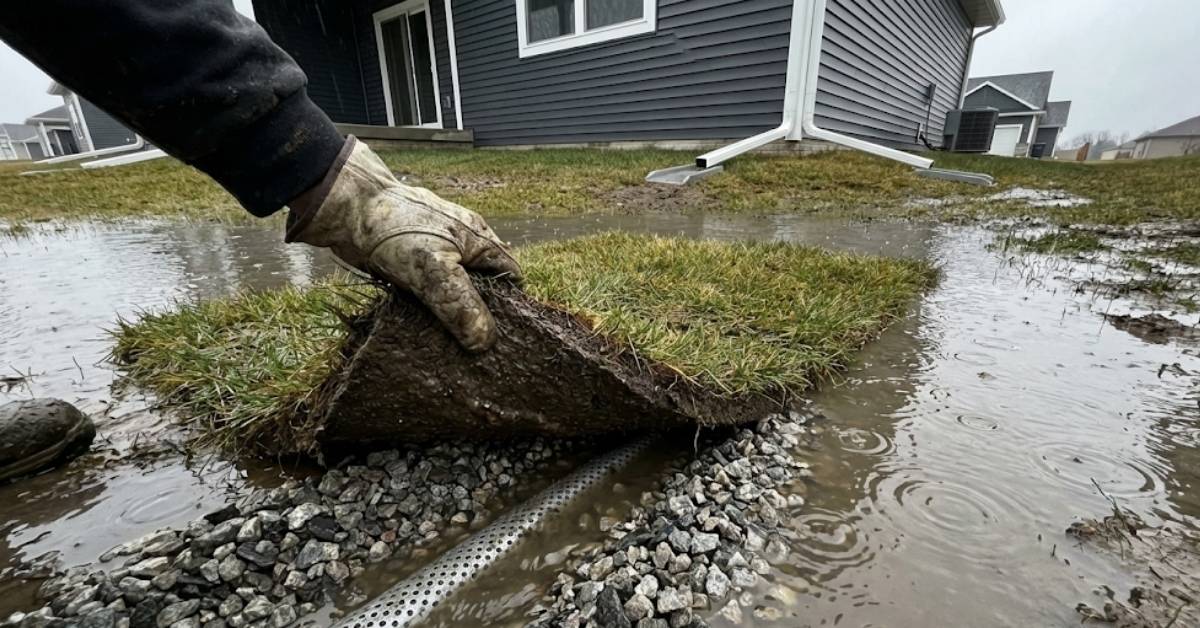
It is January 2026, and if your backyard looks anything like mine right now, it’s a greasy, brown disaster. I stepped outside this morning to check the mail and nearly lost a boot to a patch of muck that wasn’t there yesterday. Between the winter thaw and the spring rains right around the corner, many of us are living in a literal swamp.
The problem is that most “pro” landscaping companies want to charge you five figures to bring in heavy machinery and tear your life apart. I hate seeing people get bullied into spending a fortune when a little bit of sweat and some smart gravity-work can do the trick. Knowing how to fix a muddy backyard is mostly about understanding where the water wants to go and giving it a path to get there.
I get why this is confusing. Most people were taught that you just need to “fill it with dirt.” Spoiler alert: adding more dirt to a wet hole just gives you more mud.
What is the cheapest way to fix a muddy yard?
The most affordable way to fix a muddy yard is by improving surface drainage. Start by extending downspouts away from the foundation and clearing debris from natural swales. For localized wet spots, a DIY rain garden or a simple gravel-filled French drain is much cheaper than professional grading.
Stop the Water at the Source
Before you go digging trenches, look at your roof. A standard house sheds thousands of gallons of water during a heavy storm. If your downspouts are dumping that water right next to your patio, your yard doesn’t have a drainage problem—it has a “you” problem.
Buy some cheap plastic extensions. Get that water at least six to ten feet away from the house. If you can, pipe it directly to a lower part of the yard. This is the single most effective way to stop fixing standing water in backyard spots every single time it drizzles.
Solution 1: The French Drain (The Old Reliable)
I’ve seen people mess this up a thousand times. A French drain is just a trench filled with gravel and a perforated pipe. It works because water moves through gravel faster than it moves through packed clay soil.
Dig a trench about 12 inches deep with a slight slope (about 1 inch of drop for every 8 feet of length). Wrap the pipe in a fabric “sock” so it doesn’t get clogged with silt in two years. If you don’t use the fabric, you’re just building a temporary pipe that will turn into a long, skinny brick of mud.
Solution 2: The Dry Creek Bed
If you don’t want to bury pipes, make the water a feature. A dry creek bed is essentially a shallow, winding path lined with rocks and boulders. During a storm, it acts as a channel. When it’s dry, it looks like intentional landscaping.
This is one of the best affordable drainage solutions for yards because you can use local river rock. It looks a lot better than a muddy ditch and it handles heavy runoff without eroding your topsoil.
Solution 3: The Rain Garden
Sometimes you can’t move the water away, so you have to let it soak in. A rain garden is a depressed area planted with native plants that have deep roots. These roots act like straws, pulling the water deep into the ground.
According to the Environmental Protection Agency (EPA), rain gardens can remove up to 90% of nutrients and chemicals from runoff while allowing 30% more water to soak into the ground than a standard lawn. Plus, you don’t have to mow it.
Drainage Solution Comparison
| Solution | Average DIY Cost | Difficulty (1-10) | Best For |
| Downspout Extensions | $20 – $50 | 1 | Foundation protection |
| French Drain | $200 – $500 | 7 | Heavy standing water |
| Dry Creek Bed | $300 – $700 | 5 | Surface runoff / Slopes |
| Rain Garden | $100 – $400 | 4 | Low spots in the lawn |
| Sod/Plants | $100 – $500 | 3 | Minor muddy patches |
Solution 4: Core Aeration and Organic Matter
If your whole lawn feels like a sponge, your soil is likely compacted. Heavy clay soil acts like a plastic sheet. The water just sits on top.
Rent a core aerator from a local hardware store. It pulls little plugs of dirt out, letting the soil breathe. Afterward, top-dress the area with a thin layer of compost or sand. If you need to know how much compost to order for a large area, use our soil calculator to get the yardage right.
Solution 5: Strategic Planting
Grass is actually terrible at soaking up water compared to shrubs and trees. If you have a corner of the yard that is always a bog, stop trying to grow grass there. You’re fighting a losing battle.
Plant something that loves wet feet—like a Willow, a River Birch, or some Dogwood shrubs. These plants act as natural pumps. They’ll drink that water so you don’t have to look at it.
A Quick Word on Concrete and Mulch
If you’re planning on putting a patio over a wet spot, you’re just hiding the problem, not fixing it. The water will eventually undermine the base and crack your slab. Do the drainage work first. If you’re at the point where you’re ready to pour, check our concrete calculator to make sure you order exactly what you need.
Also, don’t just dump six inches of mulch on mud. It’ll just float away or turn into a moldy carpet. Use our mulch calculator to plan your coverage after you’ve fixed the standing water.
You can find more advice on fitforyard.com about keeping your yard in shape. I’ve even written about why experts urge you to stop mowing in December because of how it impacts soil compaction and moisture.
Quick Answers (Because I Know You’ll Ask)
Will sand help a muddy backyard?
Only if you mix it in deeply with organic matter. If you just pour sand on top of clay mud, you are essentially making concrete. It makes the drainage worse. Use a mix of compost and sand after aerating for the best results.
What can I put on top of mud in my backyard?
For a temporary fix (like for a dog run), wood chips or cedar mulch are best. They provide a walking surface and soak up some moisture. However, this is a band-aid. You still need to fix the slope or add a drain.
How do I dry out my yard fast?
There is no “instant” fix besides a pump, but core aeration and removing thatch are the fastest ways to help the sun and wind do their job.
Do French drains really work?
Yes, they are the gold standard for DIY backyard drainage. But they only work if they have a “daylight” exit—meaning the pipe has to end somewhere lower than where it starts so the water can actually leave.
How do I stop my yard from being a swamp?
Identify the high and low points. Water always wins, and it always goes downhill. If you have a swamp, you either need to raise the low point or give the water a faster way to leave through a pipe or creek bed.
What plants soak up the most water?
Willows, Red Maples, and Bald Cypress are “thirsty” trees. For smaller areas, look at Hibiscus, Ferns, and Sedges. These will thrive in the spots where your grass keeps dying.
Closing the Gates on the Swamp
Fixing a muddy yard is about working with nature, not against it. Don’t let some salesman talk you into a $15,000 “total yard regrading” until you’ve tried the basics. Clear your gutters, extend your pipes, and maybe dig a little gravel trench.
You’ll save a ton of cash and your boots will stay dry. For more news on yard tools and survival tips, check out our News section. I’m currently looking into some new armyworm threats that like to hide in damp grass, so stay tuned.
Stay dry out there.



Also Read:
- The Definitive Guide to Calculating Yard Materials: Soil, Topsoil, Concrete, and More
- Forget the Boring Beige: Why Dark Wood Patios Are Dominating Modern Yard Design in 2026
- The Dark Side of Curb Appeal: Why Dark Wood Patios are Dominating 2026
- Why Your Neighbors Are Wrong About Epsom Salt (And Why You Need It This January)
- Stop Waiting: The Ultimate February Dormant Pruning Checklist for Fruit Trees
- Stop Guessing: How Much Mulch Do You Actually Need? Use Our 2026 Tool
- Why Gardeners are Raving About This ‘Vinegar Hack’ for Patio Weeds
- Stop the Squeeze: The Best Winter Mulch Types to Prevent Frost Heave in Zone 7
- Stop Dreaming and Start Digging: How to Prep Your Backyard for a 2026 Vegetable Harvest