How to Calculate Concrete for Your 2026 Patio Project (Easy Guide)
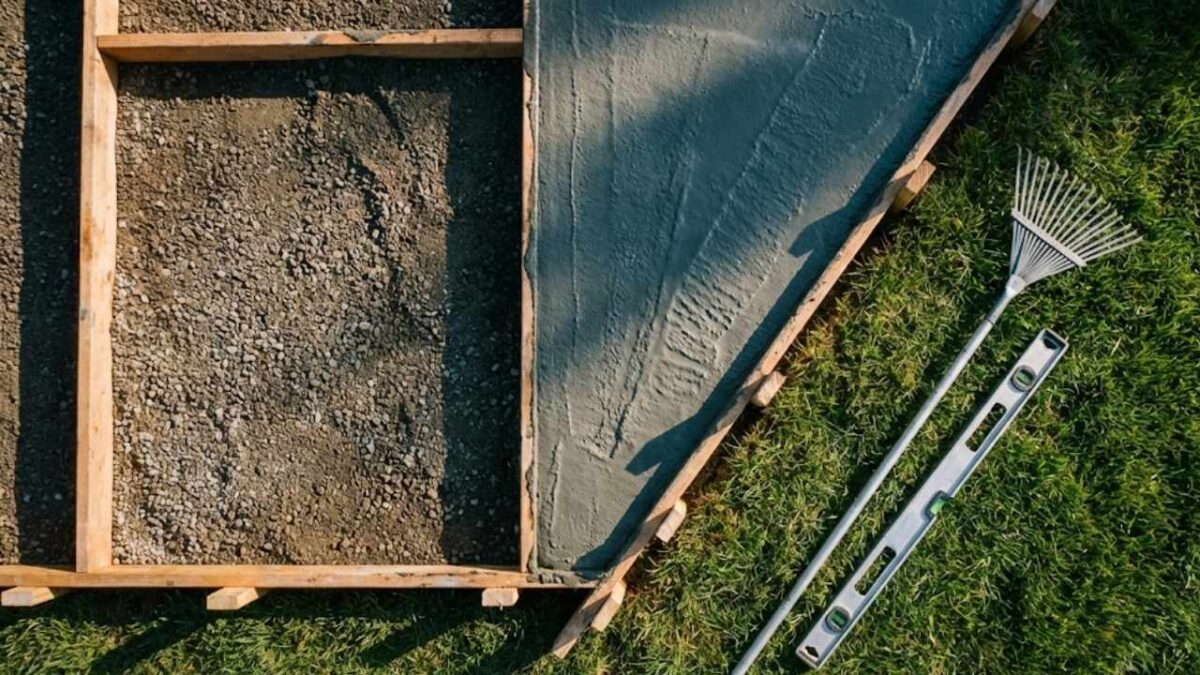
I was helping my cousin Mike last summer. He decided he was going to “eyeball” the concrete for his new backyard slab. He ended up three yards short, with a half-finished patio drying under the blazing sun and a delivery driver who was charging him by the minute for the delay. It was a nightmare. Mike spent the rest of the day panicked, overpaying for bags of premix just to fill the gap.
Don’t be like Mike. There is nothing more stressful than seeing the bottom of the mixer when you still have ten feet of empty forms staring at you. Whether you’re hiring a truck or mixing it yourself, you need an accurate concrete calculator for patio projects to stay sane. At fitforyard.com, we believe in doing the math once so you don’t have to fix the mess twice.
How do you calculate concrete yardage?
To calculate concrete yardage, multiply the length by the width by the thickness in feet to get total cubic feet. Divide that number by 27 to convert it to cubic yards. Always add a 10% safety margin to account for spillage, subgrade variations, and form movement.
Why the “Standard” 4-inch slab is often a lie
I get grumpy when I hear people say “just pour 4 inches.” If you’re building a patio for a couple of lawn chairs and a grill, 4 inches is fine. But if you’re planning on a heavy stone outdoor kitchen or a hot tub in 2026, 4 inches is going to crack faster than a cheap plastic toy.
Most people were taught that 4 inches is the gold standard. In reality, once you factor in the unevenness of your gravel subgrade, that “4-inch” slab might only be 3 inches in some spots. That’s where the trouble starts. For anything substantial, aim for a true 4 inches, or 6 inches if you’re in a region with heavy freeze-thaw cycles like the Midwest. You can use our concrete calculator to adjust these depths easily before you buy.
Measuring the mess: Length, Width, and Depth
Before you touch a shovel, get your tape measure. Concrete is sold by the “yard,” which is actually a cubic yard (3 feet by 3 feet by 3 feet).
If you have a simple rectangle, the math is easy. If you have curves, it’s a bit of a headache. For curves, I usually tell folks to measure the widest and longest points to treat it like a rectangle, then subtract about 10% of the total. But honestly, for a DIYer, it’s better to have a little too much than not enough. Concrete is cheap compared to the cost of a failed pour.
Quick Reference: Concrete Needs for Common Patio Sizes (4″ Thick)
| Patio Size (Feet) | Total Cubic Feet | Cubic Yards Needed | 80lb Bags (If DIY) |
| 10 x 10 | 33.3 | 1.3 | 60 Bags |
| 12 x 12 | 48.0 | 1.8 | 86 Bags |
| 15 x 15 | 75.0 | 2.8 | 134 Bags |
| 10 x 20 | 66.7 | 2.5 | 119 Bags |
Note: Estimates include a 10% waste factor. Data based on standard yield metrics from the American Concrete Institute.
Bags vs. Ready-Mix: The $500 Question
I see a lot of people trying to save a buck by mixing 80lb bags from the hardware store. Let me tell you, after bag number twenty, your back is going to be screaming. Usually, if your project is larger than 1 cubic yard (about 45-50 bags), you should just call the ready-mix truck.
Yes, the truck has a “short load” fee if you order less than 4 or 5 yards, but the quality of the mix is better, and it saves you a day of back-breaking labor. For a 2026 project, labor costs are rising, so saving your own energy is a valid financial decision.
2026 Cost Estimator for Concrete Patios
| Method | Material Cost (Approx) | Labor Intensity | Best For |
| 80lb Premix Bags | $6 – $9 per bag | High | Small repairs or 8×8 slabs |
| Ready-Mix Truck | $120 – $160 per yard | Moderate | Standard 10×10+ patios |
| Fiber-Reinforced | Add $15 per yard | Low | High-traffic or cold climates |
Prices are estimated 2026 US averages. Regional prices in places like California or New York will be higher.
Don’t forget the subbase
Concrete doesn’t just sit on dirt. Well, it can, but it shouldn’t. You need a layer of compacted gravel (usually 4 inches) to handle drainage. If the water can’t get away from under the slab, it will freeze, lift the concrete, and crack it. If your soil is particularly soft, check out our soil calculator to figure out how much base material you need to dig out first.
When you calculate your concrete, make sure your forms are set accurately. If your gravel is lumpy, you’ll use more concrete than you planned. A well-compacted, flat base is the only way to make your concrete calculator for patio math actually work in the real world. You can find more latest yard updates on how to prep your ground properly on our news page.
Quick Answers (Because I Know You’ll Ask)
How much concrete do I need for a 10×10 patio? For a standard 4-inch thick 10×10 slab, you need about 1.25 cubic yards. With a 10% safety margin, order 1.5 yards.
How many 80lb bags of concrete are in a yard? It takes approximately 45 bags (80lb each) to make one cubic yard. Most people order 50 just to be safe.
How do you calculate concrete yardage? Multiply Length x Width x Thickness (all in feet) and divide by 27. Example: (10′ x 10′ x 0.33′) / 27 = 1.22 yards.
How thick should a concrete patio be? 4 inches is standard for foot traffic. Go to 6 inches if you are placing a hot tub or a heavy outdoor fireplace on it.
Is it cheaper to pour your own concrete patio? Only if you don’t value your time or your back. For small slabs, bags are cheaper. For anything over 100 square feet, the truck is often more cost-effective.
How do I calculate concrete for a curved patio? Measure the maximum length and width to find the area of a rectangle that covers the curve, then multiply by thickness and divide by 27. Add 15% for waste.
Closing thoughts
Pouring concrete is one of the most rewarding backyard projects, but it’s also the least forgiving. Once that truck starts pouring, the clock is ticking. Get your measurements right, build your forms strong, and always, always order a little more than you think you need.
I’d much rather see you washing a little leftover concrete out of the mixer than trying to bridge a two-foot gap with mud and prayer. If you’re also dealing with winter mulching or planning your 2026 garden, check out our other guides. We’re here to make sure your yard stays looking good without the corporate fluff. For more tips on keeping your yard in top shape, visit our News section.
Now, get that tape measure out and do it right the first time.
This concrete project guide provides a visual walkthrough of the bag estimation process to ensure you don’t run out of materials on pour day.
Also Read:
- Here are seven proven advantages of having indoor plants
- Front Yard Landscaping with Native Plants: A Sustainable Guide
- Your Clean Yard is a Death Trap: Build This “Ugly” Winter Bunker Instead
- Your Tree Looks Messy: The Viral “Tight-Wrap” Trick That Fixes It
- URGENT ALERT: That Tiny Bug Is The New Armyworm Threat, Experts Warn
- 43 Best Gift Ideas for Bird Watchers, Audubon and Bird Lovers
- How to Grow Tagetes Marigolds power full flower 7 steps Seed, Seedlings, or Garden-Ready Plants
- Standing Water in Your Gutter? Here’s How to Fix It and Avoid Costly Repairs
- Drought-Resistant Plants for a Low-Maintenance Garden Yard
- 11 Beautiful Trees With Heart Shaped Leaves
- Marble Table and Dining Chairs: Complete Buying, Styling, and Care Guide
- Do squirrels live underground? Facts, Habits, and Behavior