Stop Waiting: The Ultimate February Dormant Pruning Checklist for Fruit Trees
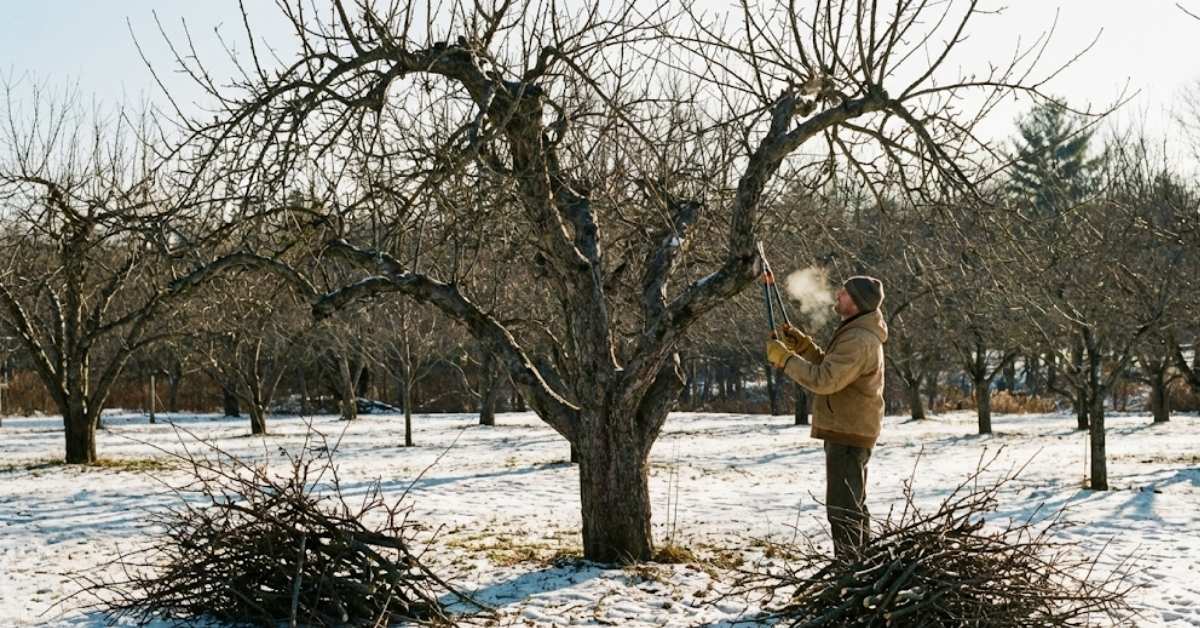
Look outside. It’s likely gray, cold, and miserable. You probably want to stay on the couch with coffee. I get it. But if you want actual fruit this summer—instead of a tangled mess of leaves and disappointment—you need to get off the couch now.
February is the bottom of the ninth for dormant pruning fruit trees. I see so much bad advice telling people to wait until spring. That’s nonsense. By spring, the tree is waking up and pushing sap. You want to cut when that tree is dead asleep.
I’ve spent decades fixing trees butchered by bad timing or dull tools. This isn’t rocket science, folks. It’s about giving your tree sunlight and air. Let’s get it done right so you aren’t fighting a jungle come July.
The Short Answer: Is It Too Late?
No, February is usually perfect. As long as the buds haven’t broken open (showing green tips), you are in the clear. In most of the US, late winter is the ideal window for dormant pruning because the hardest freezes are past, but the tree hasn’t woken up yet.
Why We Do This in the Cold
Pruning hurts the tree. It’s surgery. Doing it in winter, when the tree is dormant, minimizes the shock. The sap isn’t flowing, so the cuts won’t bleed excessively.
More importantly, without leaves in the way, you can actually see the structure of the tree. You can see the crossed branches, the diseased wood, and the stupid growth blocking the sun. You can’t fix what you can’t see.
The “Big Three” Tools You Actually Need
Don’t buy those 50-piece gardening kits sold in shiny boxes. They are garbage. You need three quality tools with sharp blades. Dull blades crush wood and invite disease.
- Hand Pruners (Bypass): For anything smaller than your pinky finger. Do not use “anvil” style pruners; they crush the stem.
- Loppers: For branches up to about an inch and a half thick. You need leverage here.
- Pruning Saw: For the big stuff. A curved blade works best in tight spots.
If you have tall trees, keep your feet on the ground and use a pole saw. Don’t be a hero on a ladder in February mud.
Step 1: The “DDD” Rule (Start Here)
If you are terrified of making a mistake, start here. You cannot mess this part up. I know it feels scary to cut chunks off a living thing, but trust me on this.
We are removing the Three D’s:
- Dead: If the wood is brittle and snaps smoothly, it’s dead. Get rid of it.
- Diseased: Look for shriveled bark, weird black knots, or oozing cankers. Cut it out well below the ugly part.
- Dumb (or Damaged): These are branches crossing each other and rubbing. That rubbing wears away bark and invites bugs. Remove the weaker of the two branches.
Step 2: Open the Canopy for Sunlight
Fruit needs sun to ripen. Leaves need air movement to dry off so they don’t get fungus. A thick, dense tree is a disease factory.
Your goal is to open up the center of the tree. Imagine you want to throw a baseball through the middle of the tree without hitting a branch.
Look for “water sprouts.” These are those thin, whip-like branches growing straight up toward the sky from thicker horizontal limbs. They grow fast, suck up energy, and produce zero fruit. Cut them all off right at the base.
Step 3: Know Your Tree Type (Pome vs. Stone)
This is where people get confused. Not all trees want the same haircut. You treat an apple tree differently than a peach tree.
Apples and pears are “pome” fruits. Peaches, plums, and cherries are “stone” fruits (they have a pit).
Here is a simple breakdown of how their structures differ.
Pruning Goals by Fruit Type
| Fruit Type | Examples | Ideal Shape | The Main Goal |
| Pome Fruit | Apples, Pears | Central Leader (Like a Christmas tree) | Keep one main trunk going up. Keep side branches spaced out so light hits the bottom limbs. |
| Stone Fruit | Peaches, Plums, Cherries | Open Center (Like a martini glass or vase) | Remove the central trunk early on. Encourage 3-4 main branches opening outward to let sun into the middle. |
Source: General pruning guidelines supported by various university extension services, such as Oregon State University Extension.
If you try to force a peach tree to look like a Christmas tree, you’ll end up with shaded wood that dies back anyway.
The Crucial “Three-Cut Method”
If you are cutting a heavy branch (anything over 2 inches thick) with a saw, do not just hack from the top down. As the branch falls, its weight will rip a long strip of bark down the trunk of your nice tree. That’s a massive wound that might not heal.
According to experts at Penn State Extension, using a three-cut sequence prevents bark tearing.
- The Undercut: Go about 6-12 inches out from the trunk. Cut upward from the bottom about one-third of the way through the branch.
- The Top Cut: Move out another inch or two past your undercut. Saw down from the top all the way through. The branch will fall cleanly, and the bark tear will stop at your undercut.
- The Stub Cut: Now you have a manageable stub. Cut it off neatly near the trunk, just outside the little swollen ring where the branch meets the trunk (the branch collar). Don’t leave a giant peg, but don’t cut flush to the trunk either.
Cleanup Matters
When you are done, you will have a huge mess on the ground. Don’t just leave it there.
Dead branches harbor overwintering pests and fungal spores. Rake it all up and get it away from your orchard. Burn it if your area allows, or trash it. Do not put diseased wood in your compost pile; most home compost bins don’t get hot enough to kill the pathogens.
While you are cleaning up the ground, check the base of the trunk. If you have deep mulch piled right against the bark, pull it back a few inches. Piling mulch like a volcano against a tree trunk invites rot and rodents. If you need to figure out how much mulch you actually need for the surrounding area, we have a mulch calculator for that.
It’s also a good time to check out other updates on fitforyard.com to get your yard ready for spring.
Quick Answers (Because I Know You’ll Ask)
What fruit trees should be pruned in February?
Almost all of them. Apples, pears, peaches, plums, and cherries all benefit from late-winter pruning while fully dormant. The exception is apricots, which sometimes prefer pruning a bit later to avoid certain diseases, but for most backyard growers, February is fine.
Can I prune apple trees in freezing weather?
Yes, but it’s miserable for you. Try to pick a day when it’s above 20°F just so your hands work. The tree itself doesn’t mind being cut when frozen, but dormant pruning fruit trees is easier when you aren’t shivering.
What happens if you don’t prune fruit trees?
You get a dense, messy tree with poor air circulation. This leads to fungal diseases like scab and rot. The fruit you do get will be small, poorly colored, and mostly at the very top of the tree where you can’t reach it.
How much should you prune off a fruit tree?
A good rule of thumb is never to remove more than about 25% to 30% of the living wood in one year. Taking too much shocks the tree and causes it to grow a massive amount of leafy water sprouts next year instead of fruit.
Should I seal pruning cuts on fruit trees?
Absolutely not. This is an old myth that won’t die. Slapping tar or paint on a cut just traps moisture and bacteria inside the wound, causing rot faster. Trees heal themselves by growing over the cut; let them do their job in the open air.
Looking Ahead to Harvest
Dormant pruning is tough work. It’s cold, and your shoulders will be sore. But when you are standing out there in July, looking at clean, healthy fruit ripening in the sun instead of a fungal mess hid in the shade, you’ll be glad you bundled up and got it done.
For more timely updates as we head into spring, keep an eye on our News section. Get out there and cut some wood.




Also Read:
- Stop Guessing: How Much Mulch Do You Actually Need? Use Our 2026 Tool
- Why Gardeners are Raving About This ‘Vinegar Hack’ for Patio Weeds
- Stop the Squeeze: The Best Winter Mulch Types to Prevent Frost Heave in Zone 7
- Stop Dreaming and Start Digging: How to Prep Your Backyard for a 2026 Vegetable Harvest
- Stop Killing Your Plants: The Honest Truth About Yard Gardening Tips That Actually Work
- Your Clear Driveway Is Killing Your Garden: The Ugly Truth About Road Salt
- Forget Feeders: Why Hummingbirds Are Absolutely Obsessed With “Turks Cap”
- Cedar Mulch: Benefits, Uses, and Complete Guide for Your Garden
- The Great Debate: Should You Tip Your Gutter Cleaner?
- The Definitive Guide to Calculating Yard Materials: Soil, Topsoil, Concrete, and More
- Half Round vs K Style Gutters: Which One is Right for Your Home?
- Does Overwatering Your Lawn Cause Brown Patches? [Complete Guide]