The Hidden Danger of Walking on Frosted Lawns This Winter

I woke up this morning, looked out the window, and saw it: that shimmering, silver blanket across the yard. Most folks see a “winter wonderland.” I see a minefield. Last year, I watched my neighbor, Mike, stomp across his frozen turf just to grab a newspaper he could’ve read on his phone. By March, his lawn looked like a CSI crime scene, covered in brown, dead footprints that didn’t go away until June.
Walking on frosted lawns is the easiest way to sabotage your spring curb appeal before the year even starts. It’s not just “grass being cold”; it’s a mechanical disaster happening under your boots. At fitforyard.com, we don’t care about pretty pictures of ice; we care about the living plants that have to survive until April.
Is it bad to walk on frosted grass?
Yes, it is very bad to walk on frosted grass because the frozen water inside the plant cells makes the blades brittle. When you step on them, the ice crystals shatter the cell walls internally, essentially crushing the grass. This leads to dead, brown patches and footprints that won’t recover until the spring growing season.
The “Shatter” Effect: What’s actually happening?
Grass is mostly water. In the spring, those blades are flexible because the water inside the cells is liquid. But when that temperature drops and frost moves in, the water inside those cells turns into jagged ice crystals.
Imagine a bunch of tiny glass balloons. If you step on them, they don’t just bend; they shatter. That is exactly what you’re doing to your lawn. You aren’t just “compressing” the grass; you are physically destroying its internal structure. Because the grass is dormant, it can’t “heal” itself. It just sits there, broken and bleeding out, until the ground warms up months later.
The Footprint Fiasco: Why the damage lasts so long
If you walk across a frosted lawn in January, you might not see anything today. But as the frost thaws, those crushed blades will turn a sickly yellow, then a dark brown.
I get why this is confusing. Most people were taught that grass is tough. It is—when it’s growing. But winter dormancy is like a coma. The plant isn’t moving nutrients; it’s not repairing tissue. Those brown footprints are essentially permanent scars that will stay there until the soil temperature hits 50°F and the grass can finally start growing new leaves. If the damage is deep enough to hit the “crown” (the heart of the plant), that spot is dead for good.
Frozen Grass vs. Frozen Soil: The Double Whammy
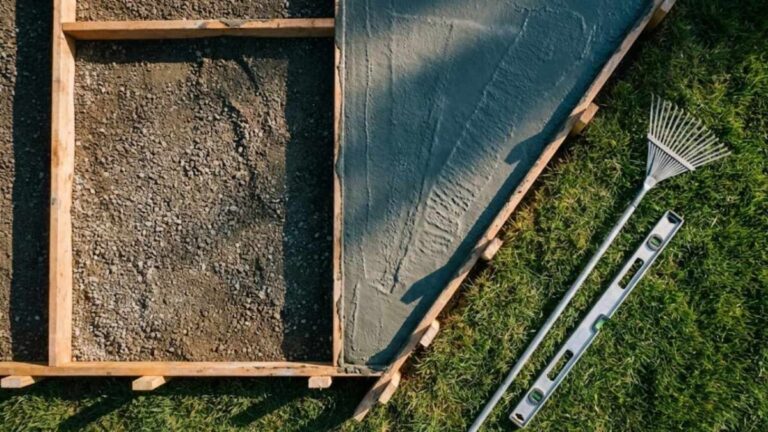
It’s not just the blades you’re hurting. If the ground is partially frozen or waterlogged, your weight also compacts the soil. Compacted soil is a death sentence for roots because it squeezes out the oxygen they need to breathe. If you’re planning a project like a new walkway to avoid this mess, check out our concrete calculator to figure out exactly how much material you need to get off the grass for good.
| Feature | Frosted Grass Damage | Frozen Soil Compaction |
| Visible Sign | Brown, straw-like footprints | Bare, hard patches in spring |
| Primary Cause | Shattered plant cell walls | Loss of soil pore space (oxygen) |
| Recovery Time | 4 – 8 weeks of active growth | Often requires mechanical aeration |
| Long-term Risk | Snow mold and fungal disease | Stunted root growth |
Can dogs walk on frosted grass?
I love my lab, Buster, but he’s basically a forty-pound wrecking ball. Yes, dogs can damage frosted grass just as much as humans can. Their paws concentrate a lot of weight on a small area, which is the perfect recipe for snapping frozen blades.
If you have a high-traffic area where the dog goes out every morning, don’t be surprised if that path is completely bare by April. I usually suggest putting down a temporary path of straw or just sticking to a designated “sacrificial” area. It’s better to have one small patch to reseed than a whole yard of brown polka dots. If you end up needing to level out those ruts later, our soil calculator will help you figure out how much topsoil to order.
How to protect your lawn from “Jack Frost”
The best defense is staying off the field. But if you must go out there—maybe a tree limb fell or the dog escaped—wait until the sun has done its job.
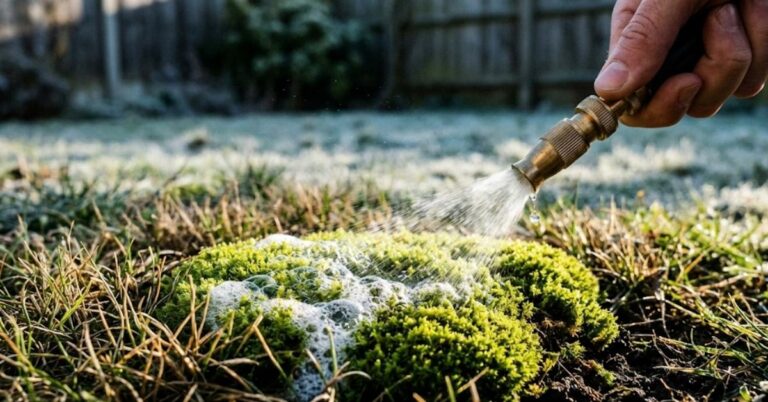
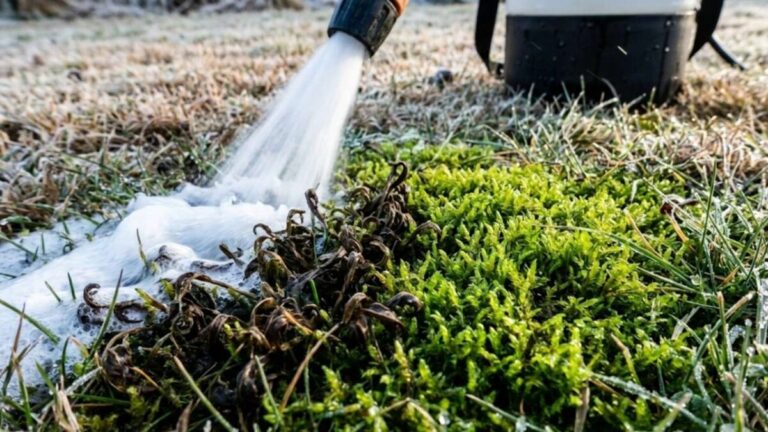
Most frost thaws by mid-morning if the sun is out. If it’s a grey, overcast day, that frost might stick around all day. Be patient. If you’re bored and looking for a way to actually help your yard without stomping on it, take a look at our guide on using dish soap to kill moss or why you should be mulching your garden beds right now.
Winter Lawn Protection Checklist
| Action | Why it matters | Timing |
| Stick to paths | Prevents mechanical blade breakage. | Every frosty morning. |
| Wait for thaw | Cells become flexible again once liquid. | Usually after 10:00 AM. |
| Clear heavy debris | Prevents smothering and disease. | Only when ground is dry/thawed. |
| Avoid the mower | Mowers are heavy and blades are sharp. | Until grass starts growing in spring. |
Quick Answers (Because I Know You’ll Ask)
Is it bad to walk on frosted grass? Yes. It shatters the internal cells of the grass blades, leading to death and brown spots.
Does walking on a frozen lawn kill the grass? It can. If you crush the crown of the plant, that grass is dead. If you just damage the leaves, it will be brown until new growth replaces it in spring.
How long does it take for frosted grass to recover? It won’t recover during winter. You’ll have to wait for the spring growing season (usually April or May) for the grass to grow out of the damage.
What happens if you walk on a frosty lawn? You leave “bruises.” The grass turns yellow or brown as the shattered tissue dies off.
How do you fix brown footprints on a lawn? You can’t “fix” the existing blades. You have to wait for spring, rake out the dead material, and potentially overseed the bare spots.
Can dogs walk on frosted grass? They can, but they will damage it. Heavy dogs or frequent paths will result in dead areas just like human traffic.
Closing thoughts
I know it’s tempting to take a shortcut across the yard, but your lawn is currently in its most vulnerable state. Think of it like a hibernating bear—leave it alone and let it sleep. Every step you take today is another hour of work you’ll have to do with a rake and a bag of seed in May.
Check out our News category for more blunt advice on getting through this winter without ruining your backyard. We’re all about saving you time and money, and the cheapest lawn care tip I can give you is this: stay on the sidewalk.
Your lawn will thank you in the spring with a lush, green carpet—assuming you didn’t turn it into a brown jigsaw puzzle today.
Also Read:
- How to Calculate Concrete for Your 2026 Patio Project (Easy Guide)
- Stop! Don’t Prune These 5 Trees Until February 2026
- Winter Mulching 101: Why Your Garden Beds Need Protection Now
- The 60ml Washing Up Liquid Secret: Kill Lawn Moss in 24 Hours
- Tired of Your Yard Dying? Why 2026 is the Year of ‘Climate-Resilient’ Backyards (and How to Fix Yours)
- Gardeners Urged to Pour Dish Soap on Lawns This January: Here’s Why
- The Ultimate Backyard Guide: 137+ Ideas, Designs & Solutions for Your Perfect Outdoor Space (2026)
- Stop Wasting Cash on Your Ugly Yard: 50+ Backyard Ideas That Actually Work
- The Ultimate Global Guide to Moss Removal: How to Get Rid of Moss on Lawns Permanently
- Why Winter Mulching Is The Only Thing Standing Between You And A Dead Garden
- The “No-Guess” Guide To Soil Calculation: Stop Wasting Cash At The Garden Center
- 89 Facts About Squirrels: Stop Letting These Furry Bandits Rob Your Yard