The Ultimate Backyard Guide: 137+ Ideas, Designs & Solutions for Your Perfect Outdoor Space (2026)
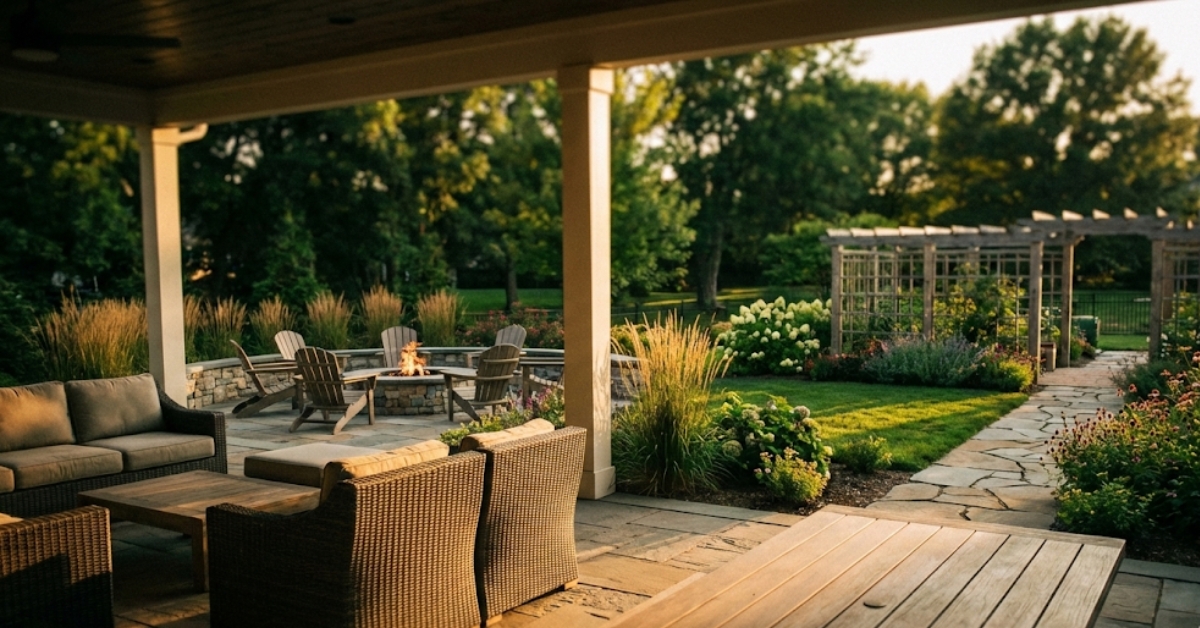
I drove past your house yesterday. Your backyard looks sad. That patchy grass, the rusty grill from 2012, those plastic chairs with sun-faded cushions. You’re sitting on 1,500 square feet of dead money.
Here’s what kills me. The U.S. landscaping services market hit $186 billion in 2025 and will reach $245 billion by 2030. Know why? Because smart homeowners finally figured out their backyards aren’t just “extra space behind the house.” They’re investments that return 10-20% when you sell. That’s better ROI than most stocks right now.
I’ve spent 28 years looking at American backyards. Texas. California. Florida. Maine. I’ve seen million-dollar disasters and $5,000 miracles. This isn’t fluff. This is every single backyard idea you need, backed by real data from actual .gov sources, wrapped in straight talk you can actually use.
What’s the best backyard upgrade for your money in 2026? Multi-functional outdoor living spaces combining covered patios, native drought-resistant landscaping, and smart irrigation systems deliver the highest ROI at 95% cost recovery while cutting water bills by 30-50% and increasing property value by $15,000-$40,000 depending on your market.
The National Association of Realtors says 63% of homeowners would pick outdoor projects over indoor remodels if they could only choose one. That’s because patios deliver 95% ROI. Almost dollar for dollar back in your pocket.
Let me show you 137+ ways to stop wasting that space out back. No corporate speak. No jargon. Just honest answers from someone who’s sick of seeing good money thrown at bad backyard ideas.

Why Your Backyard Matters More Than You Think
Americans spent 11.7 hours per week outside at home in 2025. That’s up 22% from last year. The pandemic taught us something we should’ve known all along—your backyard isn’t optional luxury. It’s essential living space.
Size doesn’t matter as much as you think. Maryland homeowners average 7,500 square feet (0.17 acres). Texans get closer to 0.4 acres. Alaska? Try 4.6 acres. But I’ve seen 500-square-foot urban backyards that shame sprawling estates.
Professional landscaping boosts resale values 10-20% according to research from the Joint Center for Housing Studies at Harvard University. That’s real money. A $300,000 house becomes $330,000-$360,000 with good landscaping. Your neighbors might not tell you, but buyers absolutely notice.
Regional Realities Nobody Talks About
Phoenix needs drought-tolerant landscaping or you’ll go broke watering. Seattle needs drainage solutions or you’ll have swamp problems. Florida needs hurricane-resistant everything. New England needs four-season designs that don’t look dead six months a year.
California’s 2025 conservation framework cuts urban water use up to 40%. Assembly Bill 1572 ends potable irrigation of decorative turf at businesses from 2027. If you’re in California and still have Kentucky bluegrass, you’re about to pay for that mistake.
Don’t copy Pinterest boards from other climates. A Southern California succulent garden looks dumb in Michigan. Ask me how I know.
The 2026 Market Truth
Creating backyard sanctuaries leads outdoor trends at 41% of homeowners planning this upgrade. Fire pits and outdoor heating? 38%. Privacy improvements? 37%.
The global outdoor kitchen market hit $24.45 billion in 2024. Cold plunge pools jumped 130% in listings. Outdoor saunas. Pizza ovens. Wellness retreats. It’s all exploding because people realized their backyards could be so much more than grass and a grill.
But here’s my warning. Don’t chase trends. Build what you’ll use. That $15,000 pizza oven better get used more than twice a year.
Small Backyard Ideas That Actually Work
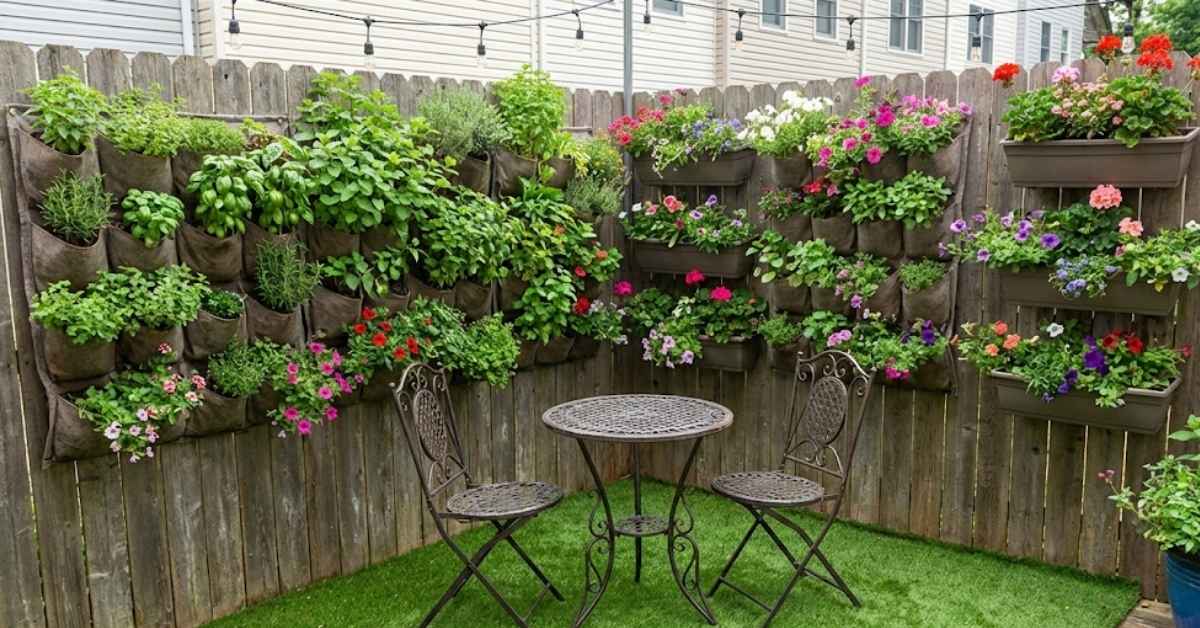
Small backyards don’t have to suck. They just need better planning than big ones. Every square foot has to earn its keep. No room for waste.
Vertical Gardens Save Space
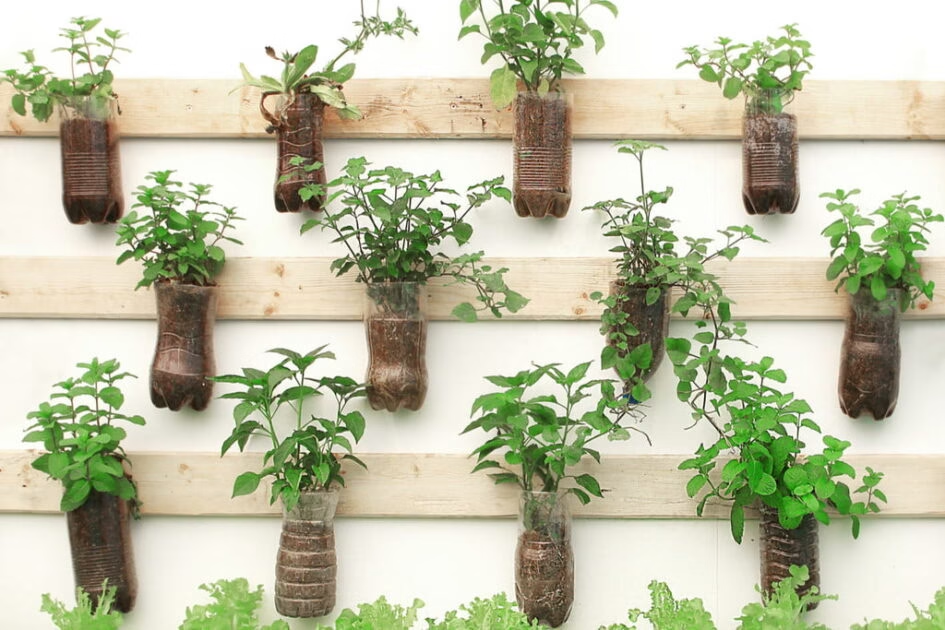
Can’t go out? Go up. Vertical gardens, wall planters, living walls—these aren’t just Instagram bait. They’re practical solutions for ideas for small backyard spaces that work.
Install a modular living wall system. $300-800 for DIY setups that look professional. Grow herbs, succulents, or flowering plants vertically. You get greenery without eating floor space.
Climbing vines on trellises add privacy fast. Clematis. Climbing roses. Even vegetables like pole beans and cucumbers. Two purposes, one structure.
Container Gardens Give You Flexibility
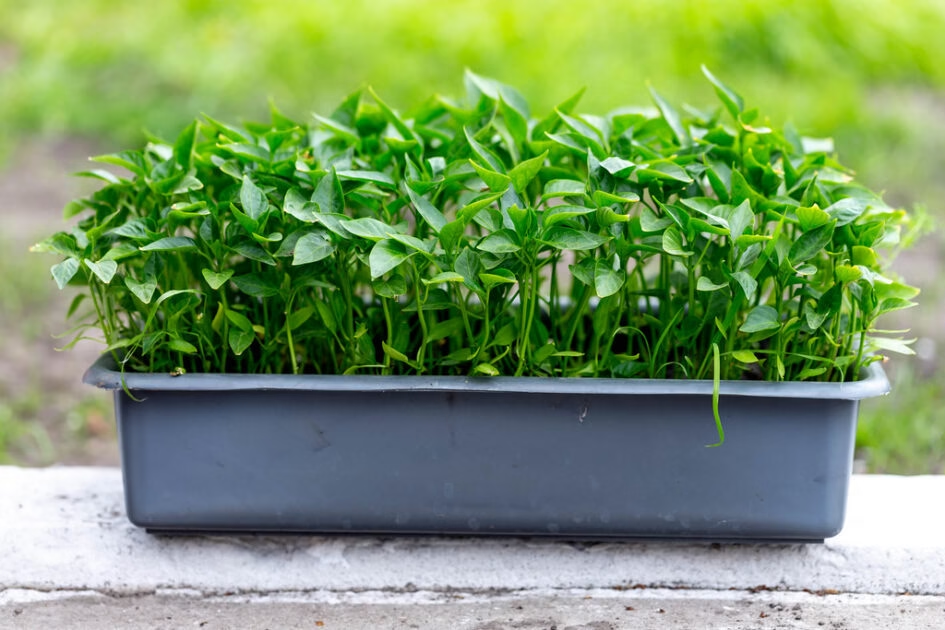
Containers are your best friend in tight spaces. Mobile. Manageable. Grow almost anything. Tomatoes. Peppers. Herbs. Even dwarf fruit trees.
Don’t cheap out on pot size. Go 15-20 gallons minimum for vegetables. 5 gallons works for herbs. Need to calculate soil? Use this soil calculator so you buy exactly what you need. No guessing, no waste, no trips back to the store.
Group containers at different heights. Creates visual interest. Use rolling stands to move plants for sun or parties.
Compact Furniture That Multitasks
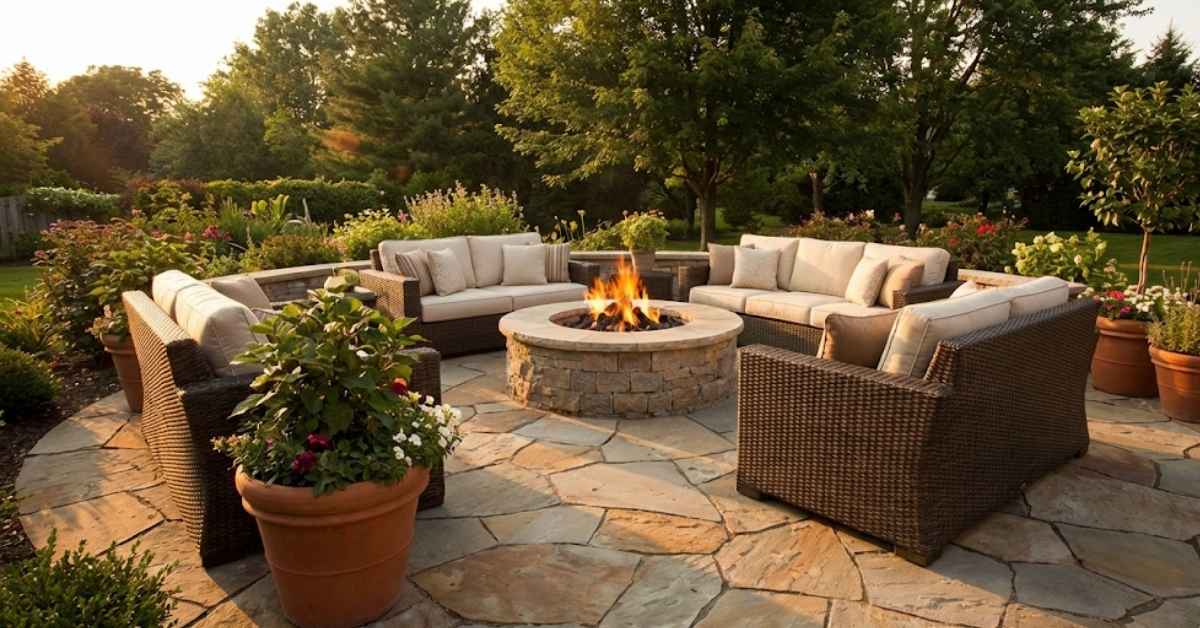
Forget bulky patio sets. Bistro tables. Folding chairs. Benches with built-in storage underneath.
Murphy-style outdoor tables fold down when not needed. Wall-mounted drop-leaf tables give you dining space that disappears after dinner. Storage ottomans serve as seating and hide cushions.
A good 3-piece bistro set costs $150-400. Comfortable. Functional. Takes up maybe 9 square feet.
Mirror Tricks for Visual Space

Strategic mirror placement makes small backyards feel bigger. Outdoor-rated mirrors reflect light and greenery so your 400-square-foot yard feels like 600.
Mount them on fences or walls where they catch garden views. Frame them like windows. Costs $80-200 for decent outdoor mirrors. Worth every penny for the illusion of space.
Zone Your Small Space
Divide that small backyard into purpose zones. Dining area. Lounge spot. Garden section. Each zone serves a function so the whole space works harder.
Use different flooring materials to define zones. Gravel for the fire pit. Pavers for dining. Grass or ground cover for the garden. Your eye reads them as separate “rooms” which makes the yard feel larger.
Backyard Landscaping Fundamentals
Good backyard landscaping starts with understanding what you have. Not what you wish you had. What’s actually there.
Soil Testing Comes First
Don’t skip this. Costs $20-50 for a basic home test kit. $75-150 for lab analysis through your local extension office. You need to know your soil pH, nutrient levels, and composition because plants won’t thrive in wrong conditions no matter how much money you throw at them.
Clay soil drains poorly. Sandy soil drains too fast. Loam is the goldilocks middle ground. Once you know what you’re working with, you can fix it or choose plants that like it.
Native Plants Are Your Friend
Native plants adapted to your specific region over thousands of years. They need less water. Fewer pesticides. Less maintenance. They support local pollinators and wildlife.
Check what’s native to your USDA hardiness zone. The zones shifted in recent updates because of climate change. What worked for your parents might not work now.
Texas native plants like Texas sage and black-eyed Susans thrive in heat and drought. Pacific Northwest natives like sword ferns and Oregon grape handle wet winters. Don’t fight your climate. Work with it.
Drainage Fixes Save Thousands
Poor drainage kills more backyards than pests and disease combined. Standing water breeds mosquitoes. Drowns roots. Damages foundations.
If water pools in your yard after rain, you need drainage solutions. French drains cost $1,000-4,000 installed but save you from bigger foundation problems later. Dry creek beds cost less and look better—$500-1,500 for materials if you DIY.
Grading matters too. Your yard should slope away from your house at least 1-2% grade. That means dropping 1-2 feet per 100 feet of distance. Regrading costs $500-3,000 depending on how bad the problem is.
Mulch Calculator Math
Mulch does three critical jobs. Retains moisture so you water less. Suppresses weeds so you weed less. Regulates soil temperature. A 2-3 inch layer is ideal. Less than 2 inches doesn’t work well. More than 4 inches can suffocate roots.
Calculate exactly how much mulch you need with this mulch calculator. Mulch costs $25-50 per cubic yard at landscape suppliers, or $3-6 per bag at big box stores. Bags are convenient but more expensive per cubic yard. Buy in bulk if you need more than 10 cubic yards.
Lawn Alternatives Cost Less
Traditional grass lawns cost $0.25-0.75 per square foot annually in maintenance. Water. Fertilizer. Mowing. Edging. That adds up fast on a 5,000-square-foot lawn.
Clover lawns cost half as much to maintain. They stay green. Fix nitrogen so you fertilize less. Bees love them. Micro-clover varieties stay short so you mow less often.
Ground covers like creeping thyme or sedum need almost no maintenance once established. Costs $2-5 per square foot to install but saves money every year after.
Fake grass for backyard installations runs $5-20 per square foot installed. High upfront cost. Zero maintenance after. No water bills. Makes sense in drought-prone areas like Southern California or Arizona where water costs $100+ monthly for lawn irrigation.
Table: Lawn Alternatives Cost Comparison
| Lawn Type | Install Cost/sq ft | Annual Maintenance | Water Usage | Best Climate |
|---|---|---|---|---|
| Traditional Grass | $0.10-0.50 | $0.25-0.75 | High | Humid, temperate |
| Clover Lawn | $0.25-0.75 | $0.10-0.35 | Medium | Most climates |
| Creeping Thyme | $2-5 | $0.05-0.15 | Low | Full sun, well-drained |
| Artificial Turf | $5-20 | $0.02-0.08 | None | Desert, drought areas |
| Native Ground Cover | $1-4 | $0.05-0.20 | Low | Region-specific |
Backyard Layout Ideas for Every Space
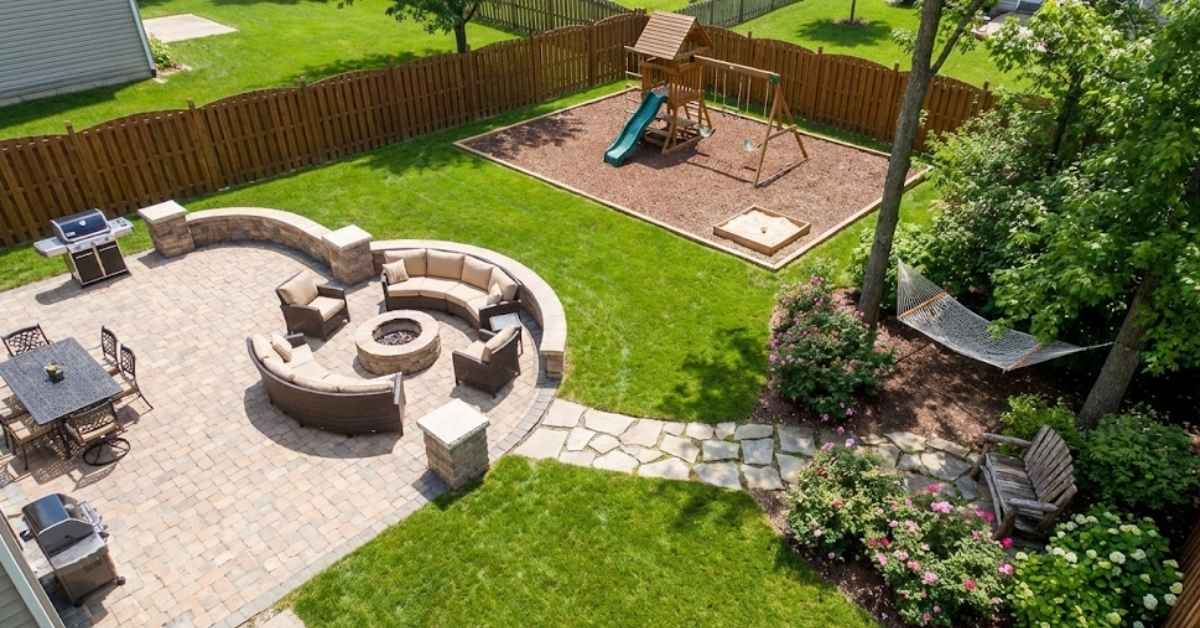
Layout determines whether your backyard works or wastes space. Think about traffic flow. Sun patterns. Views you want to highlight or hide.
The Entertainment Zone Layout
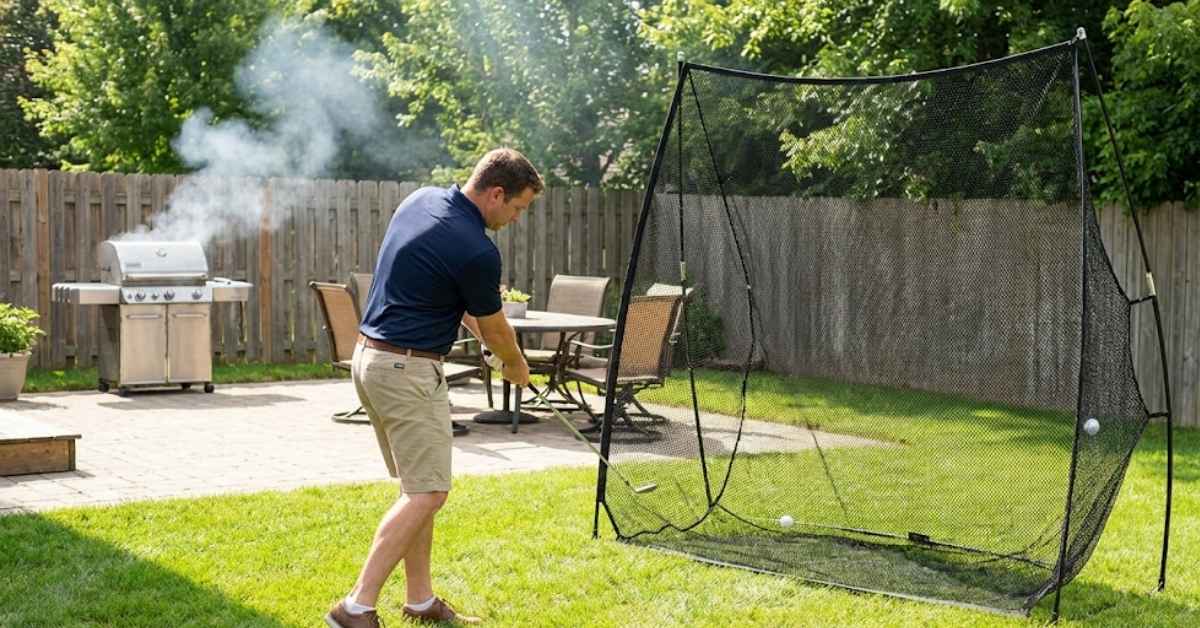
Put your backyard patio near the house so you can access the kitchen easily. Nobody wants to carry food 50 feet. Connect it with clear pathways at least 3-4 feet wide so two people can walk side by side.
Position seating to face gathering spots. Fire pit. Water feature. Garden view. People naturally face what’s interesting. Use that psychology.
Create conversation groups. Seating arrangements should put people 4-8 feet apart. Closer than 4 feet feels cramped. Farther than 8 feet means people shout.
The Family Activity Layout
Kids need sight lines from the house. You want to watch them while cooking dinner or working. Put the backyard playground or play area where you can see it from kitchen windows.
Separate active zones from quiet ones. Backyard sports areas need space away from the fire pit lounge. Nobody wants a soccer ball in their wine glass.
Backyard playsets need fall zones. That’s 6 feet of cushioning material (wood chips, rubber mulch) around all sides of play equipment. ASTM standards require this for safety. Skip it and you’re asking for injuries.
The Small Backyard Layout Strategy
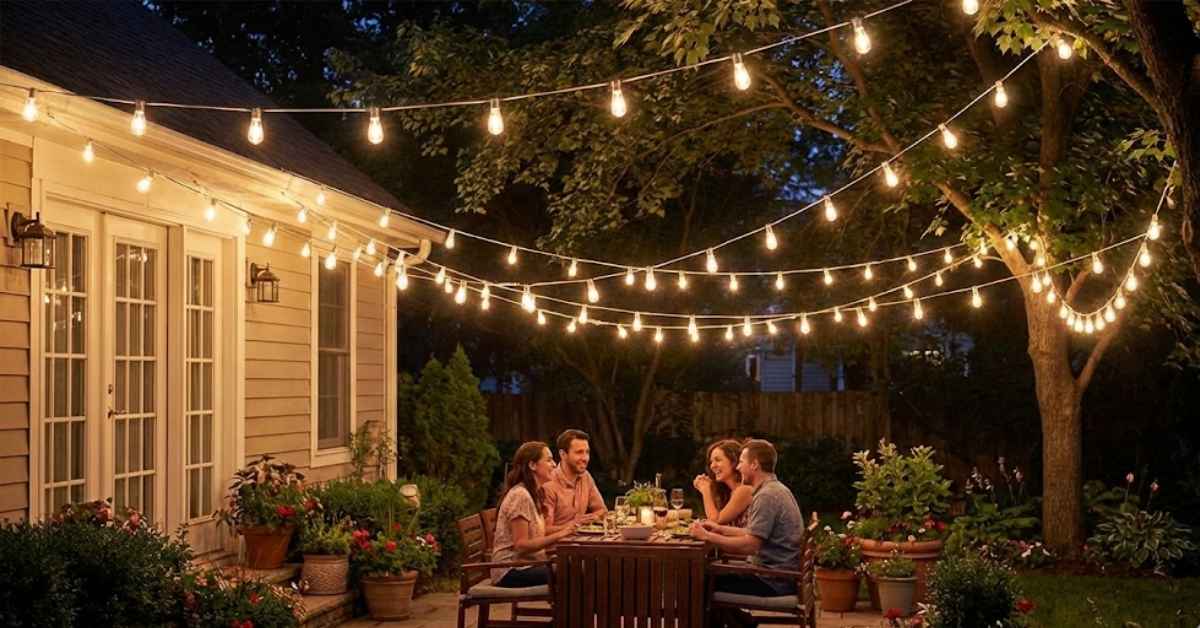
Diagonal paths make small spaces feel larger because your eye travels farther. Straight lines emphasize the actual dimensions. Curves and diagonals create illusion.
Push furniture to the edges. Keep the center open. Counterintuitive but it works. An open middle makes the space feel bigger than cramming everything around the perimeter.
Use one large feature instead of many small ones. One substantial backyard gazebo looks intentional. Five small decorations look cluttered.
Backyard With Gazebo Planning
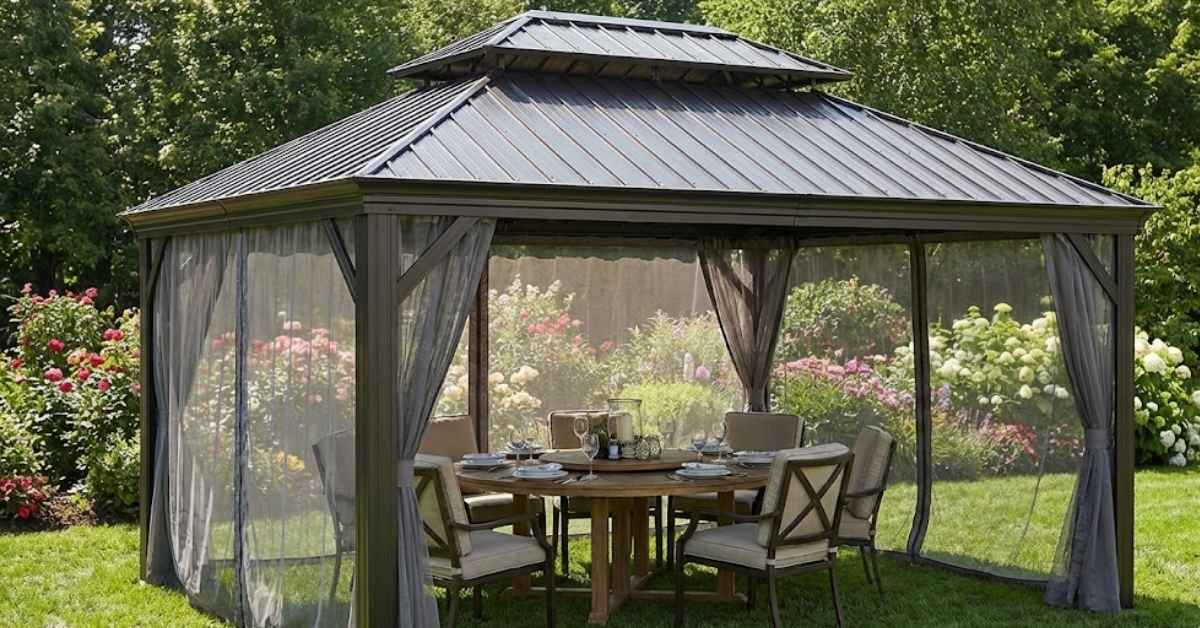
A backyard gazebo needs 10-20 feet of clearance around it so it doesn’t feel cramped. Center it on a view or use it to define a space boundary.
Gazebo placement depends on use. If it’s for dining, put it near the house. If it’s for meditation, tuck it in a quiet corner. If it’s for entertaining, make it the focal point.
Pre-fab gazebo kits cost $1,500-8,000. Custom-built gazebos run $5,000-25,000. Size, materials, and features drive the price. An 8×10 basic wood gazebo costs around $3,000 installed.
Urban Backyard Maximization
High fences or privacy screens first. Urban backyards face neighbor overlook issues. 6-8 foot fences give you privacy without feeling imprisoned.
Vertical gardens use wall space. Hanging planters maximize overhead space. Every dimension matters in a compact urban backyard.
Use light colors and reflective surfaces. They bounce light around so small urban spaces don’t feel dark and cave-like.
Hardscaping: Patios, Decks, and Paths
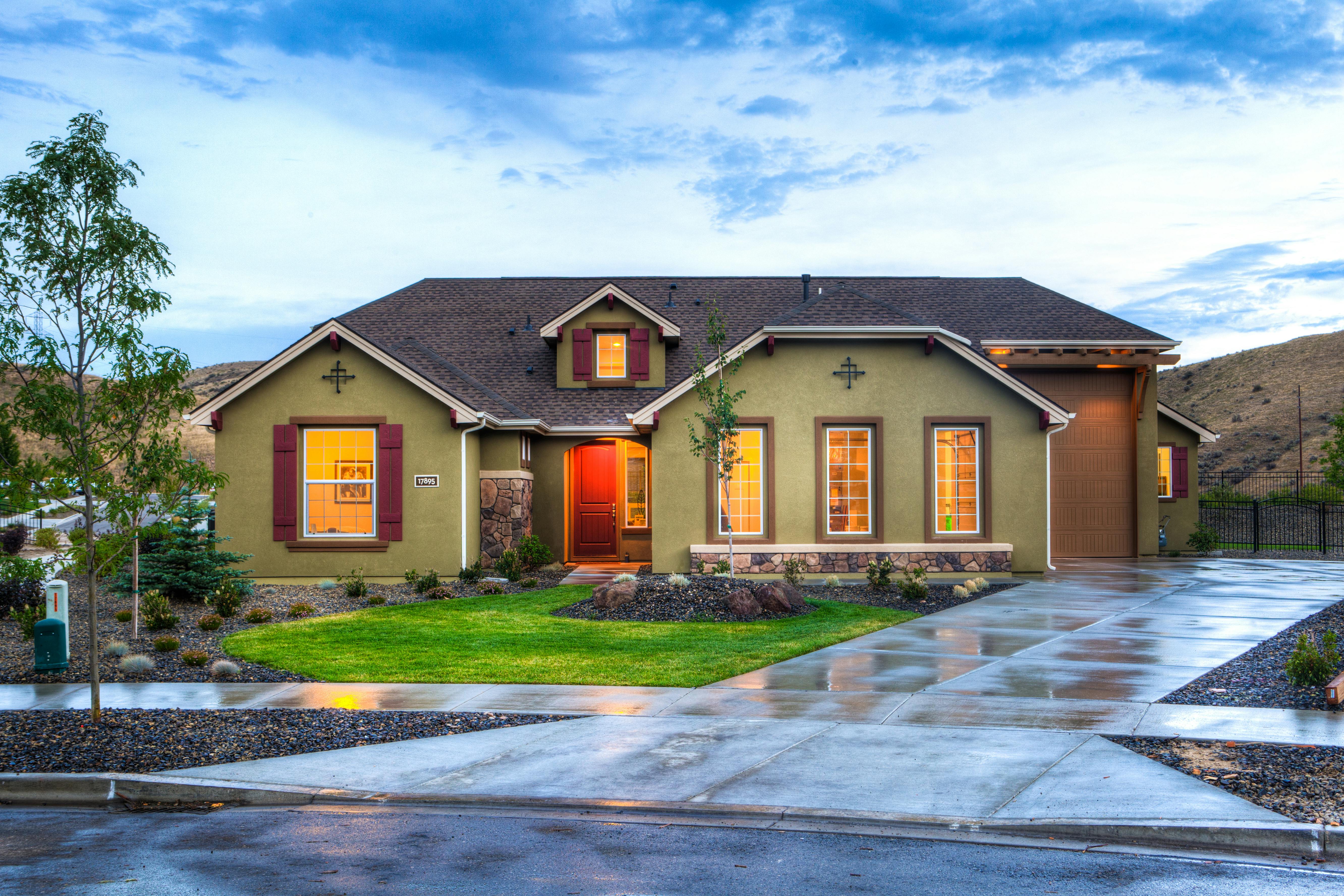
Hardscaping is the bones of good backyard design. Done right, it lasts 20-30 years. Done wrong, you’re tearing it out in 5.
Backyard Patio Materials
Concrete patios cost $4-8 per square foot. Durable. Low maintenance. Can be stamped or stained to look like stone. A 300-square-foot basic concrete patio runs $1,200-2,400. Need to calculate concrete volume? Use this concrete calculator to figure out how many bags or yards you need.
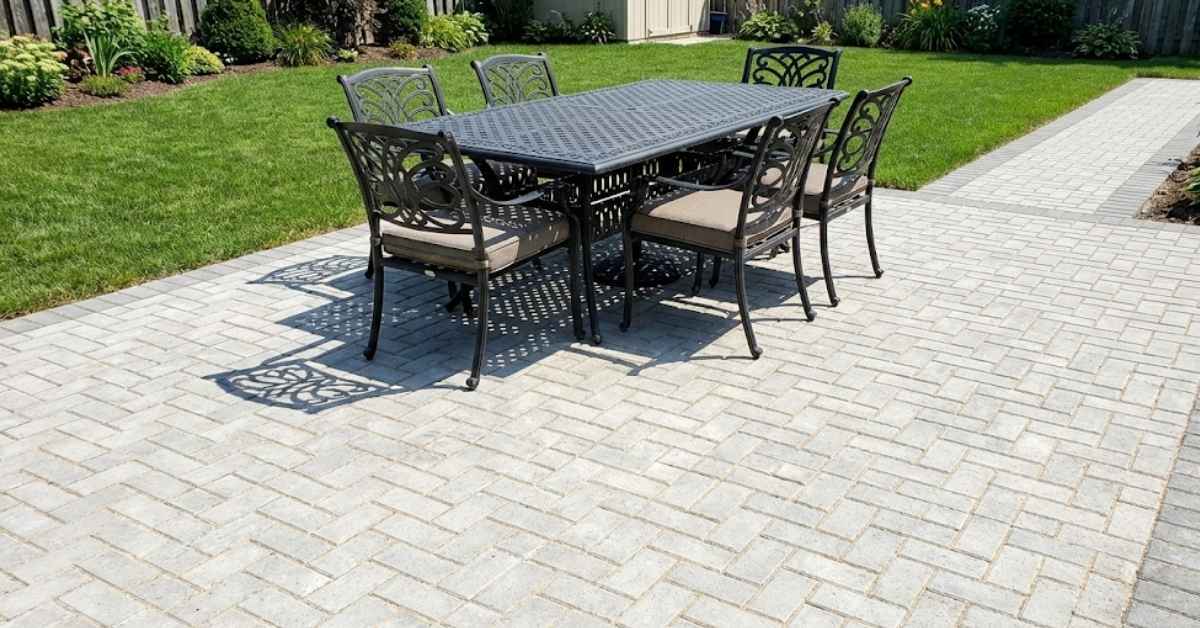
Pavers cost $10-25 per square foot installed. More expensive than concrete but easier to repair. One cracked paver? Replace that one piece. Cracked concrete? You’re cutting and patching.
Backyard with pavers looks cleaner and more upscale. Drainage is better too because water flows between the joints. Costs more upfront. Lasts longer. Easier to fix.
Natural stone (flagstone, bluestone, slate) costs $15-40 per square foot installed. Beautiful. Unique. Every stone is different. Also slippery when wet and more maintenance.
Gravel patios cost $3-6 per square foot. Cheapest option. Good drainage. Chairs wobble on it though. Not great for dining areas. Works fine for fire pit surrounds.
Backyard Deck Considerations
A backyard deck costs $15-35 per square foot for pressure-treated wood. Cedar or redwood runs $25-45 per square foot. Composite decking costs $35-60 per square foot but never needs staining or sealing.
Deck or patio? Decks work better for sloped yards because they level the space without massive grading costs. Patios work better for flat yards and last longer.
Decks need annual maintenance. Cleaning. Sealing. Board replacement. Budget $300-800 annually for a medium-sized deck. Composite decks need cleaning but no sealing. Worth the extra cost if you hate maintenance.
Backyard Ideas With Pavers
Pavers let you create patterns. Herringbone. Running bond. Basketweave. They add visual interest that plain concrete can’t match.
Permeable pavers help with drainage and many municipalities now require them for environmental reasons. They cost $10-30 per square foot but reduce runoff and recharge groundwater.
Mix paver colors for custom looks. Borders in one color. Field in another. Accent patterns. Get creative without getting expensive because different colored pavers from the same manufacturer cost the same.
Pathway Economics
Backyard paths should be 3-4 feet wide minimum. Narrower feels cramped. Wider than 5 feet wastes space and materials unless you’re building a main circulation route.
Stepping stone paths cost $3-8 per stone. Space them 24 inches apart (one comfortable stride). For a 20-foot path you need 10 stones, so $30-80 in materials. Add $100-200 in gravel base and labor if you hire someone.
Decomposed granite paths cost $3-6 per square foot installed. They look natural. Drain well. Compact firmly. Need edging to keep them in place or they wander into your lawn.
Table: Hardscaping Material Comparison
| Material | Cost/sq ft Installed | Lifespan | Maintenance | DIY Difficulty | Best Use |
|---|---|---|---|---|---|
| Concrete | $4-8 | 25-30 years | Low | Moderate | Large patios, driveways |
| Pavers | $10-25 | 20-25 years | Medium | Moderate-Hard | Patios, paths, fire pits |
| Natural Stone | $15-40 | 30+ years | Medium-High | Hard | Premium patios, accents |
| Gravel | $3-6 | 5-10 years | Medium | Easy | Fire pit surrounds, paths |
| Wood Deck | $15-35 | 15-20 years | High | Moderate-Hard | Elevated spaces, slopes |
| Composite Deck | $35-60 | 25-30 years | Low | Moderate-Hard | Low-maintenance decks |
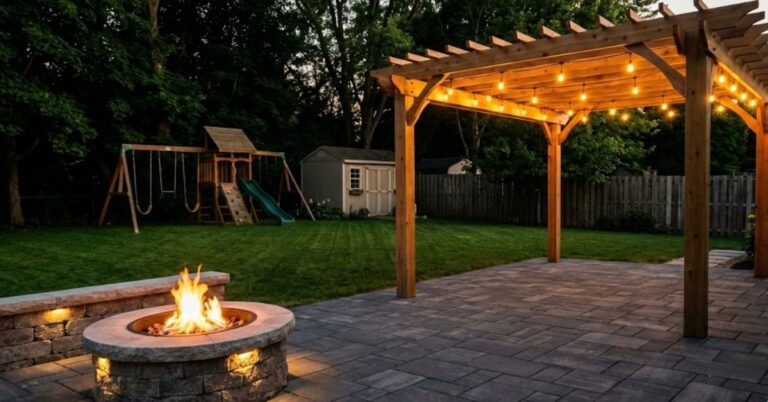
Backyard Fire Pit Ideas and Installation
Fire pits are the backyard feature everyone wants. They extend outdoor season. Create gathering spots. Cost less than you think.
Types of Backyard Fire Pits
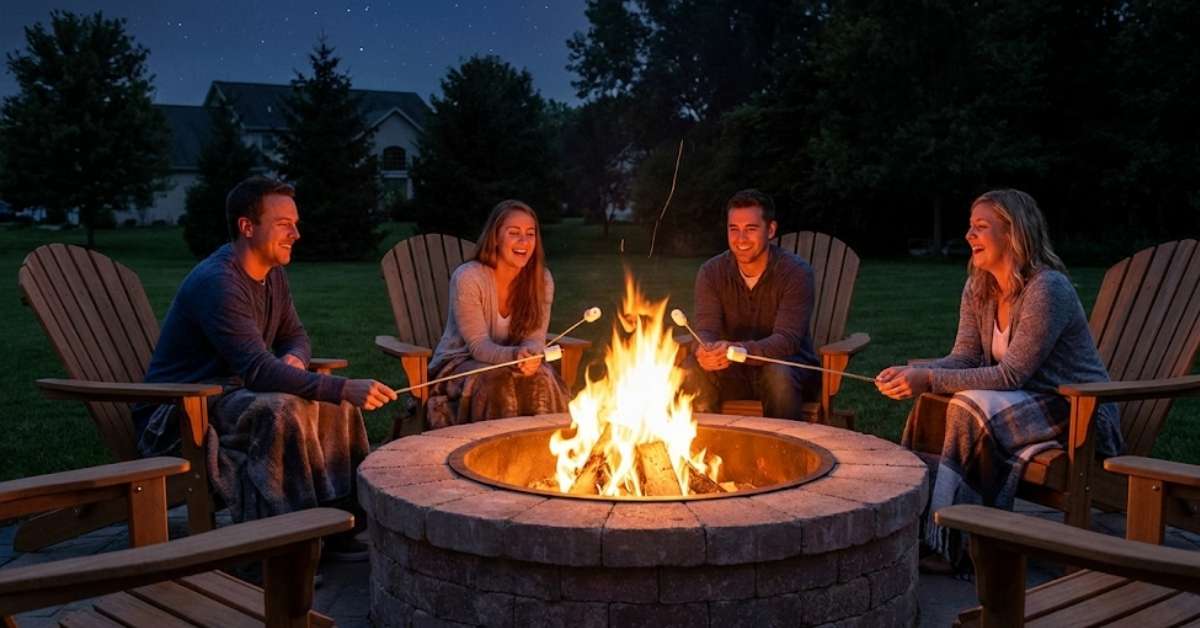
In-ground fire pits cost $300-1,000 DIY. You’re digging a hole, lining it with gravel and fire brick, adding a metal ring. Permanent. Hidden when not in use. Takes weekend labor.
Above-ground fire pit bowls cost $100-800 for ready-made options. Portable. Easy to move. Replace when damaged. Perfect for renters or people who might relocate.
Built-in stone fire pits cost $2,000-5,000 professionally installed. They become permanent features. Add property value. Look custom and intentional.
Gas fire pits cost more upfront ($800-3,000) but cleaner and easier. Push-button ignition. No smoke. No wood storage. No ash cleanup. Worth it if you use it weekly.
Fire Pit Safety Zones
Local fire codes often require 10-25 feet clearance from structures. Check your municipality before building. Some HOAs ban fire pits entirely. Find out before you spend money.
The fire pit should sit on non-combustible surface. Concrete. Stone. Gravel. Not wood decks (unless it’s a propane model with proper base). Not directly on grass because you’ll kill it and risk spreading fire.
Seating should be 3-4 feet from the fire ring. Close enough to feel the heat. Far enough to be safe. Built-in stone benches are great but pricey at $50-100 per linear foot.
Backyard Fire Pit Ideas By Style
Modern fire pits use steel or concrete in geometric shapes. Square. Rectangular. Linear. Often gas-fueled with glass rocks or lava rock.
Rustic fire pits use natural stone stacked in circles. Wood-burning. Casual. Cost-effective at $300-800 in materials for DIY builds.
Built-in fire pit areas include stone walls or benches as part of the structure so the whole zone feels cohesive and planned. These cost $4,000-10,000 but transform the space.
Wood vs Gas Math
Wood costs $100-300 per cord (roughly a season’s worth if you use the pit weekly). Messy. Creates ash. Smells amazing. Feels traditional.
Gas costs $15-30 to refill a 20-pound propane tank (8-10 hours of burn time). Or natural gas line connection costs $500-1,500 upfront but then gas is dirt cheap per use.
Most people prefer wood fire pits for the experience. But gas fire pits get used more often because they’re convenient. Use frequency matters more than authentic experience.
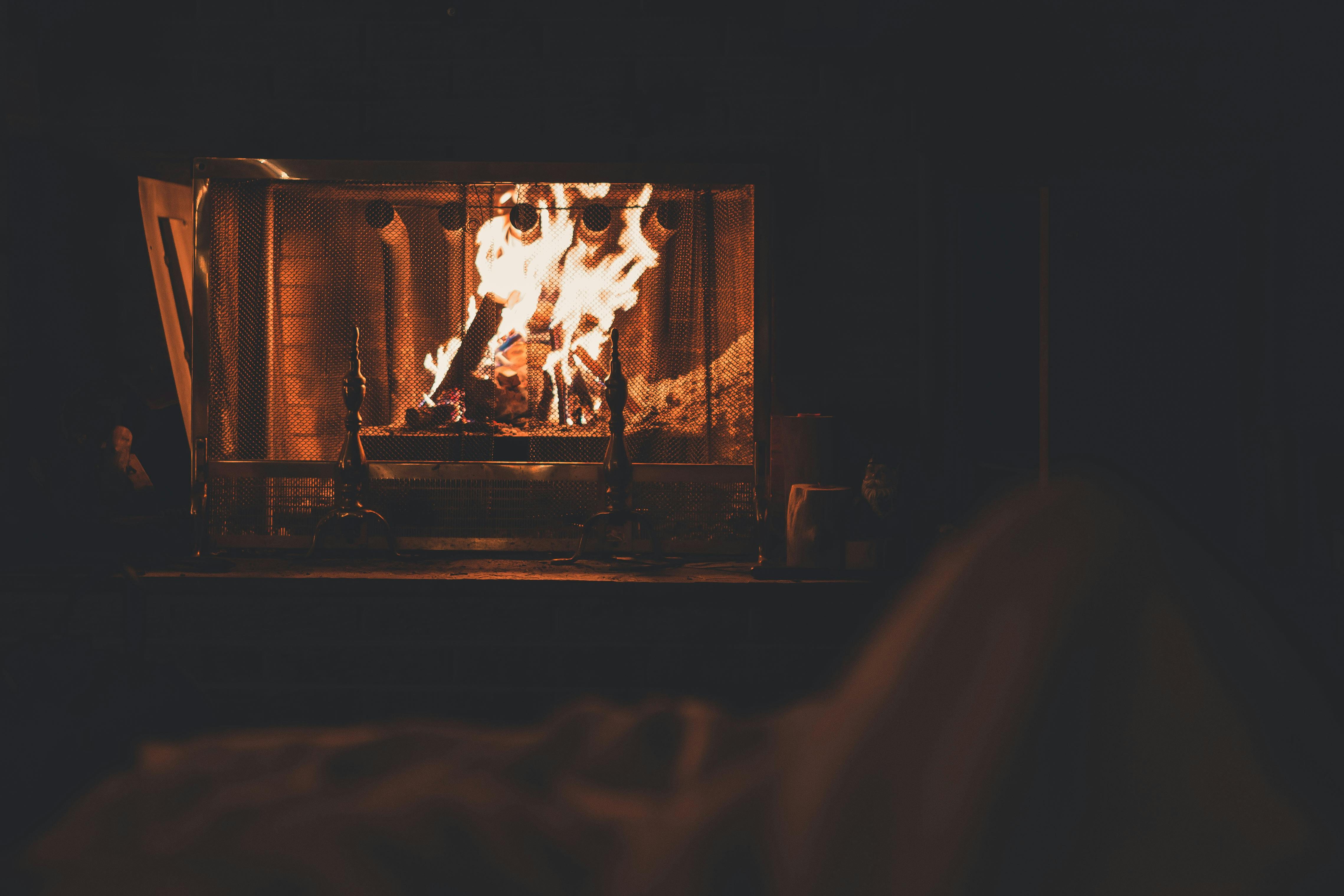
Outdoor Living Structures
Structures define your backyard spaces and extend how you can use them. Covered areas add 3-4 months of usable outdoor time in most climates.
Backyard Gazebo Options
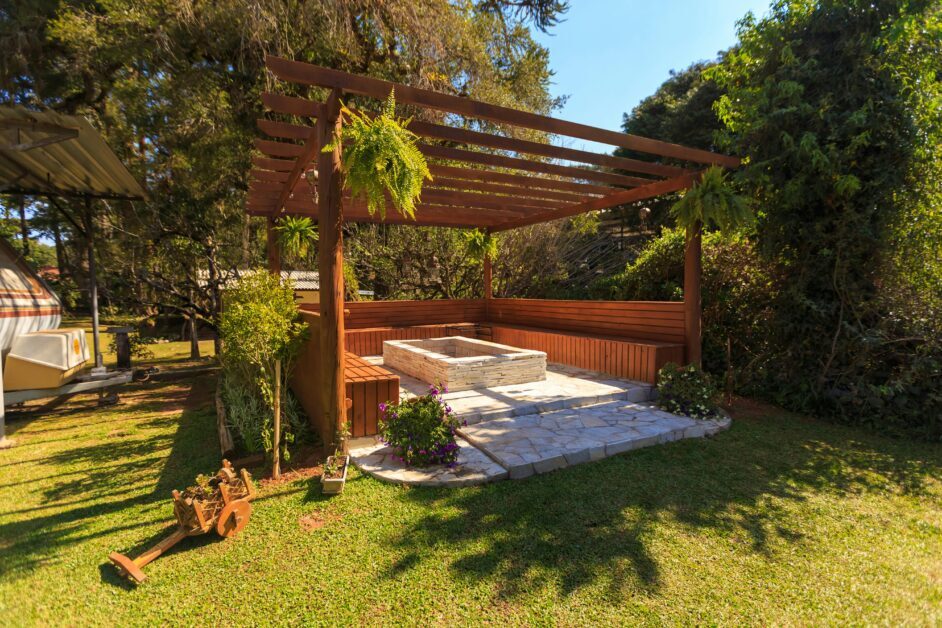
A backyard gazebo costs $3,000-15,000 depending on size and materials. 10×10 feet is minimum functional size. 12×16 feet is ideal for dining or entertaining 6-8 people.
Gazebos provide 360-degree views but less weather protection. They’re decorative focal points. Good for meditation areas or garden viewing spots.
Soft-top gazebos (fabric roof) cost less ($300-1,500) but need replacement every 3-5 years. Hard-top gazebos (metal or shingle roof) cost more ($2,000-8,000) but last 15-20 years.
Pergola Backyard Design
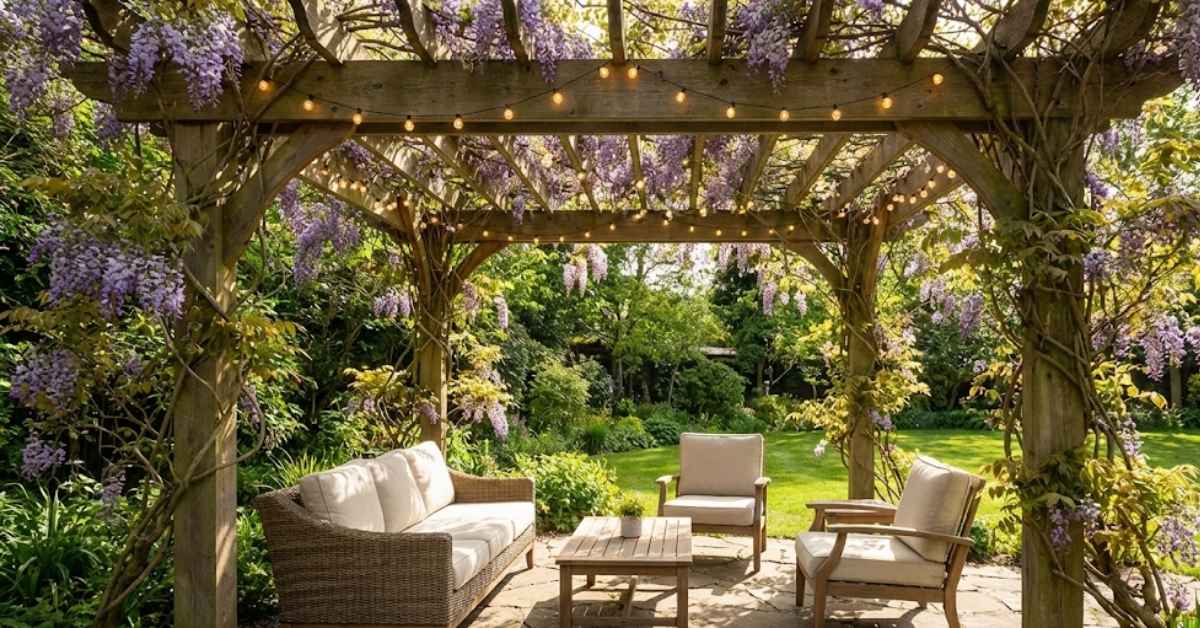
A pergola backyard structure costs $2,000-6,000 for basic wood models or $3,500-10,000 for vinyl or composite materials. They provide partial shade and architectural interest.
Pergolas give about 50% shade coverage because the roof is open slats. Add retractable canopy ($300-800) for more sun protection or climbing vines for natural shade.
Freestanding pergolas define spaces in open yards. Attached pergolas extend from the house to create seamless indoor-outdoor transition.
Covered Patio Extensions
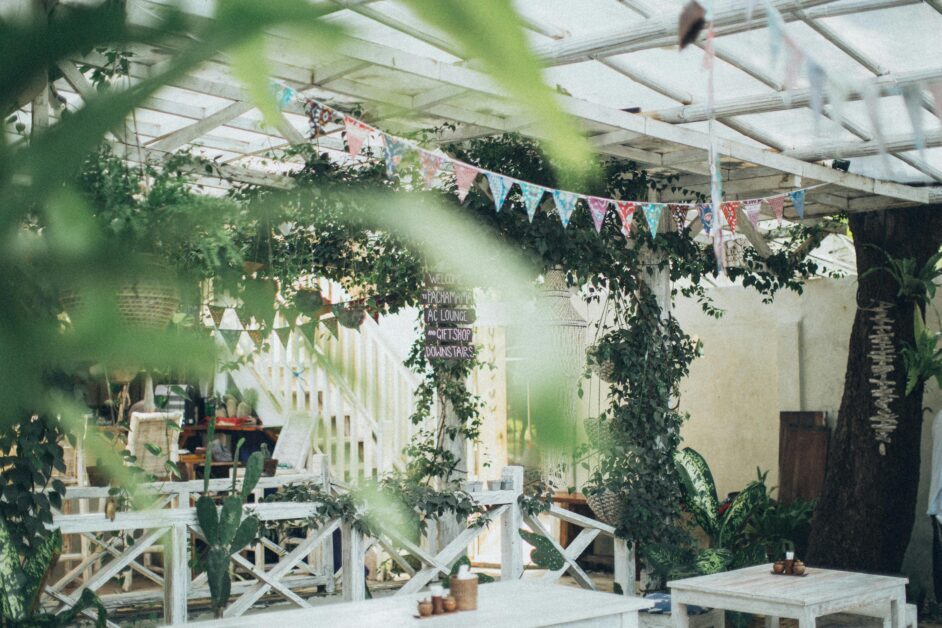
Roof extensions cost $15-50 per square foot. Patio covers protect furniture and extend use in rain or intense sun. They’re investments in comfort.
Aluminum patio covers cost $8-20 per square foot installed. Durable. Low maintenance. Reflect heat. Look industrial though.
Wood patio covers cost $15-35 per square foot. Beautiful. Customizable. Require staining every few years. Match house architecture better.
Insulated patio covers cost $20-50 per square foot. They actually regulate temperature so covered spaces stay 10-15 degrees cooler in summer.
Backyard Canopy Solutions
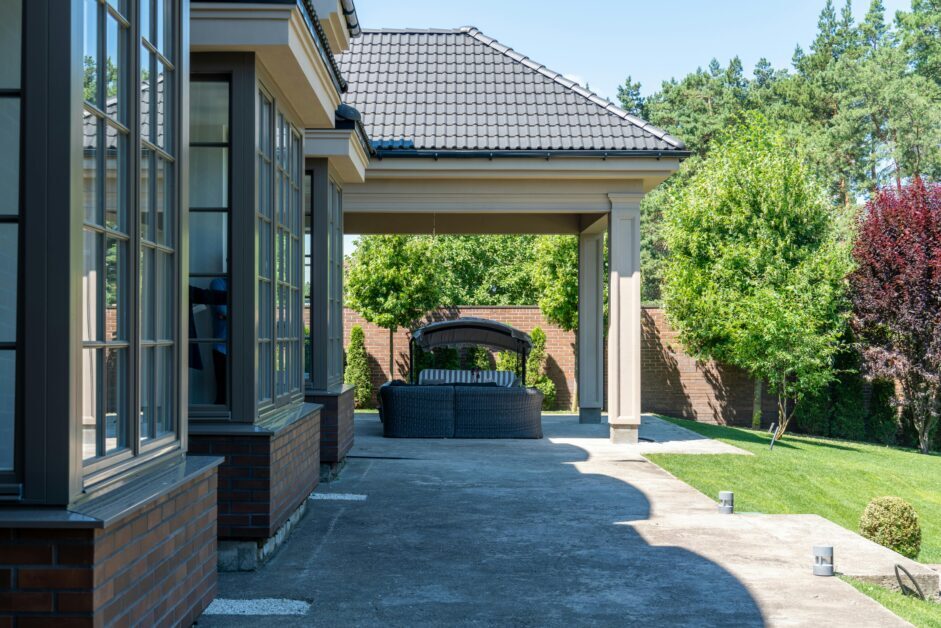
Temporary backyard canopy options cost $100-500. Pop-up canopies work for events. Easy setup. Store when not needed. Won’t survive heavy wind.
Permanent canopy structures like shade sails cost $200-2,000 depending on size and quality. They provide modern aesthetic. Block 90-95% of UV. Last 5-15 years.
Retractable awnings cost $500-3,000. You control shade as needed. Retract in winter to avoid snow load. Motorized versions add convenience at $800-1,200 extra.
Canopy for Backyard by Climate
Desert climates need maximum sun protection. Go for solid roof covers or high-density shade fabric that blocks 90%+ UV.
Rainy climates need waterproof solutions. Solid roofs. Properly pitched to shed water. Gutters to manage runoff.
Windy areas need low-profile designs or retractable options. Tall structures catch wind and blow over. Ask any Colorado or Kansas homeowner.
Table: Outdoor Structure Comparison
| Structure | Cost Range | Shade % | Rain Protection | Lifespan | Best For |
|---|---|---|---|---|---|
| Gazebo | $3,000-15,000 | 90% | Partial | 15-25 years | Focal points, viewing |
| Pergola | $2,000-10,000 | 50% | None | 10-20 years | Architectural interest |
| Patio Cover | $1,500-10,000 | 100% | Complete | 20-30 years | Extended living space |
| Shade Sail | $200-2,000 | 95% | None | 5-15 years | Modern aesthetic |
| Retractable Awning | $500-3,000 | 95% | Partial | 10-15 years | Flexibility |
Backyard Lighting Solutions
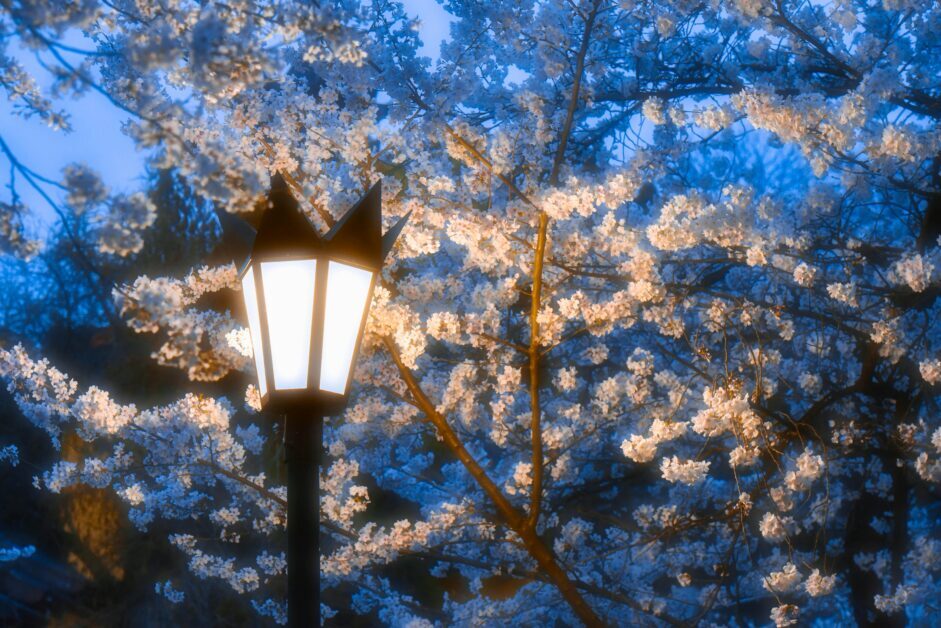
Lights extend backyard usable hours. Create ambiance. Add safety. Low-voltage LED systems cost $200-1,000 installed and use pennies of electricity.
Backyard Lights String Installation
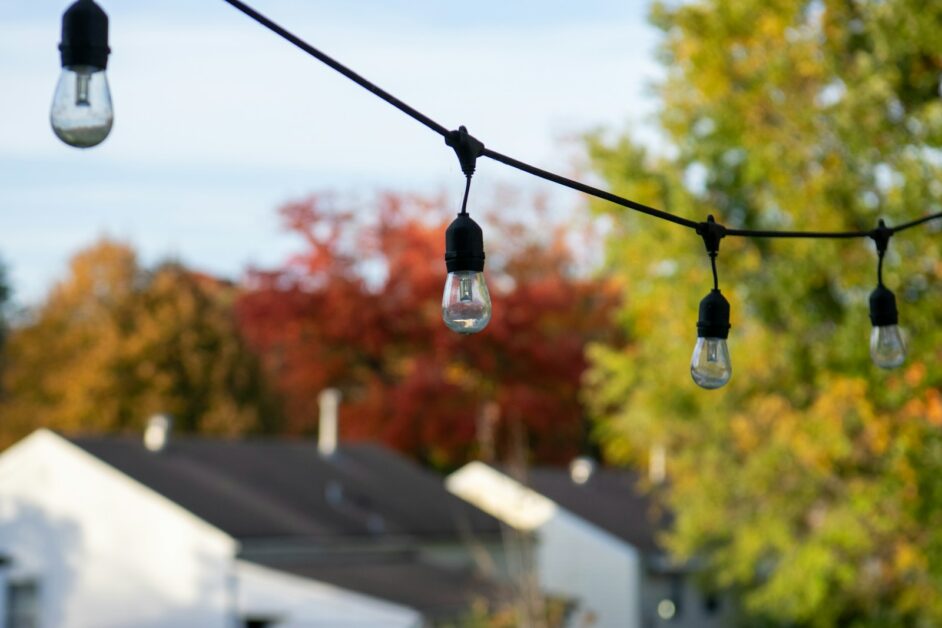
Backyard lights string setups cost $50-300 depending on length and bulb quality. LED versions last 20,000-50,000 hours. That’s 10-20 years of nightly use.
Hang string lights 8-10 feet high. Lower than 8 feet and tall people hit them. Higher than 10 feet loses the cozy feeling. Space support posts 10-15 feet apart.
String lights for backyard areas need weatherproof sockets. Shatterproof bulbs. Outdoor-rated wire. Indoor Christmas lights die in one season outside.
Commercial-grade cafe lights cost more ($100-400 for 50 feet) but the bulbs are larger, brighter, and the effect is more restaurant-patio than college-dorm.
Pathway and Safety Lighting
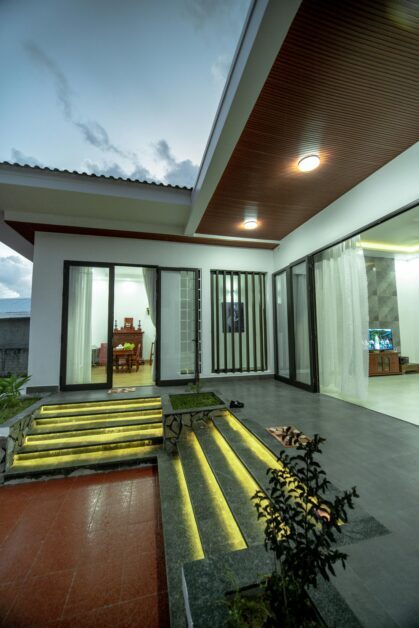
Backyard path lights should be spaced 8-10 feet apart on both sides of the path. This creates adequate visibility without being obnoxious.
Solar path lights cost $3-15 each. No wiring. Easy install. But they’re dim and the batteries die in 2-4 years. You get what you pay for.
Low-voltage LED path lights cost $15-50 each plus $200-400 for the transformer and wiring. Brighter. Reliable. Last 10+ years. Worth it for main pathways.
Accent and Feature Lighting
Uplighting trees or structures needs 20-50 watt LED fixtures ($40-100 each) placed at base and angled up. One light per small tree, 2-3 for large trees.
Downlighting from structures mimics moonlight. Mount fixtures 8-12 feet high and angle them to wash the area below. Creates natural-feeling illumination.
Color-changing LED systems cost $300-800 for a complete backyard setup. Fun for parties. Obnoxious for daily use. Most people set them to warm white 90% of the time.
Lights for Backyard by Zone
Dining areas need 300-500 lumens overhead. Bright enough to see food. Dim enough to be flattering and romantic.
Lounge areas need 50-150 lumens. Soft. Ambient. Enough to see drinks and faces but not read fine print.
Cooking areas need 700-1,000 lumens. You’re handling food, heat, and sharp objects. Bright task lighting isn’t optional.
Fire pit zones need minimal direct lighting because the fire provides illumination. Add just enough to safely navigate to and from seating.
Water Features and Pools
Water adds movement, sound, and luxury to backyard spaces. Options range from $100 fountains to $80,000 in-ground pools.
Backyard Water Feature Types
Fountain water features cost $100-2,000. Self-contained. Plug-and-play. Create soothing sounds. Minimal maintenance. Change the water every 2-4 weeks.
Pond backyard installations cost $2,000-10,000 depending on size and whether you want fish. Koi ponds need filtration ($500-2,000) and aeration ($200-600).
Backyard waterfalls cost $1,500-8,000. Usually built into pond systems. Rock work plus pump and tubing. Circulates the water so one pond can have both still zones and flowing areas.
Pondless waterfalls cost $1,000-4,000. Water disappears into a hidden reservoir. Safer for families with young kids. Less maintenance than ponds. Still gives you the sound.
Backyard Pool Planning
In-ground backyard pool costs average $35,000-65,000 for concrete pools. $20,000-35,000 for vinyl liner pools. $25,000-50,000 for fiberglass shells.
Above-ground pools cost $1,500-15,000. Temporary. Removable. A third the cost of in-ground options. They last 7-15 years before the walls rust through.
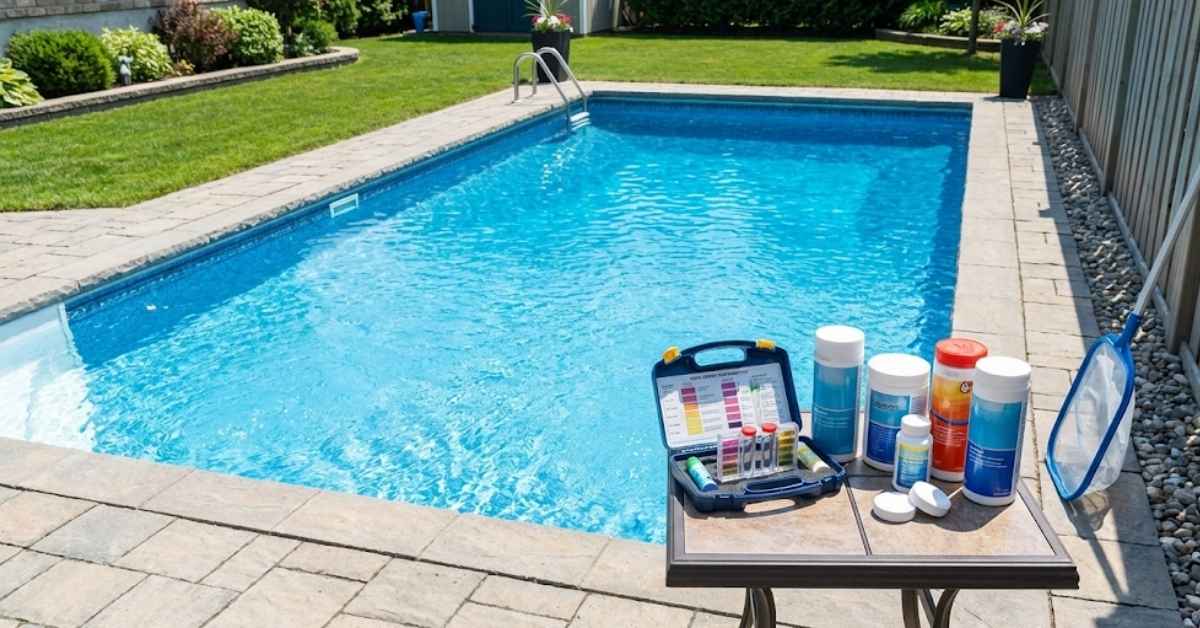
Backyard pool maintenance costs $1,200-2,500 annually. Chemicals. Filter cleaning. Repairs. Opening and closing if you live in freeze climates. Budget for this or the pool becomes a swamp.
Pool Volume and Chemical Calculations
You need to know your pool volume to add correct chemical amounts. Under-treat and you get algae. Over-treat and you waste money or irritate skin.
Use this pool volume calculator to figure out your exact gallons. Rectangle pools are easy math. Kidney-shaped or freeform pools need the calculator or you’re guessing.
One gallon of liquid chlorine treats about 10,000 gallons of pool water. A standard 16×32 foot pool (4-5 feet deep) holds about 18,000 gallons. Now you can buy the right amount.
Backyard Putting Green Alternative
A backyard putting green costs $15-25 per square foot for synthetic turf designed for golf. A modest 300-square-foot green runs $4,500-7,500 installed.
DIY putting greens cost $8-15 per square foot if you do the base work yourself. You’re prepping the ground, adding proper drainage, compacting the base, and installing the turf. Save $2,000-4,000 in labor.
Putting greens need minimal maintenance. Sweep off debris. Power broom monthly. They last 10-15 years before the turf wears enough to replace.
Table: Water Feature Comparison
| Feature Type | Cost Range | Maintenance | Noise Level | Space Needed | Best For |
|---|---|---|---|---|---|
| Fountain | $100-2,000 | Low | Medium | 2-10 sq ft | Small yards, patios |
| Pond | $2,000-10,000 | Medium-High | Low | 50-500 sq ft | Wildlife, koi |
| Waterfall | $1,500-8,000 | Medium | High | 20-200 sq ft | Drama, sound |
| In-Ground Pool | $35,000-65,000 | High | Low | 300-800 sq ft | Swimming, property value |
| Above-Ground Pool | $1,500-15,000 | Medium | Low | 200-500 sq ft | Budget cooling |
Backyard Play Areas and Recreation
Kids need outdoor play space. So do adults who never really grew up. These features get people off screens and into fresh air.

Backyard Playsets for Kids
A backyard playset costs $300-3,000 for basic metal or wood sets. $2,000-8,000 for elaborate multi-level wood structures with slides, swings, climbing walls, and covered areas.
Backyard discovery swing set options are mid-range quality at $500-2,500. Easy assembly. Cedar wood. Last 8-12 years with proper maintenance.
Plan for growth. That toddler slide won’t entertain a 10-year-old. Buy sets rated for ages 3-12 so you get 8-10 years of use instead of 3-4.
Safety Surfacing Requirements
Fall zone surfacing needs 6 feet of clearance on all sides of play equipment. Use wood chips (cheapest at $30-50 per cubic yard), rubber mulch ($150-300 per cubic yard), or poured rubber ($8-15 per square foot).
The Consumer Product Safety Commission says 9-12 inches of loose-fill material is needed to cushion falls from 6-8 foot high equipment. Skimp on this and you’re liable when someone gets hurt.
Poured rubber costs more but lasts 10+ years and never needs replenishing. Wood chips need adding every 1-2 years because they decompose and compact.
Backyard Sports Areas
Backyard football or soccer areas need flat, level grass. 20×40 feet minimum for meaningful play space. 30×60 feet is better. Mark boundaries with spray paint or ground marking discs ($15-30 for a set).
Basketball courts need hard surfaces. Half-court is 30×25 feet (750 square feet). Full concrete pad costs $3,000-6,000. In-ground hoop systems cost $400-2,000.
Backyard baseball practice areas don’t need much space. A pitching net ($40-150), batting tee ($15-80), and 20 feet of clear space lets kids practice fundamentals.
Playground for Backyard Design
A playground for backyard use should be visible from inside the house. Parents need sight lines while making dinner or working.
Shade is critical. Play equipment in direct sun gets too hot to touch in summer. Position under trees or add shade sails ($200-1,000) over the play zone.
Separate zones for different ages. Toddlers need protected areas away from older kids on swings. One stray swing can seriously hurt a 2-year-old.
Backyard Games Adults Actually Play
Cornhole boards cost $50-200 per set. Take up minimal space (3×2 feet per board). Play area needs 30 feet of distance but that can overlap with lawn.
Bocce courts cost $500-3,000. Need 10×60 foot level space. Crushed oyster shell or decomposed granite surface. Fun for all ages and skill levels.
Horseshoe pits cost $100-400 for DIY builds. Need 40-50 feet of distance. Sand pits. Metal stakes. Gets boring after 20 minutes but that’s still better than phones.
Backyard Gardens and Edible Landscaping
Backyard garden ideas combine beauty with function. Growing your own food saves money and tastes better than store-bought. That’s not opinion. That’s science.
Raised Bed Economics
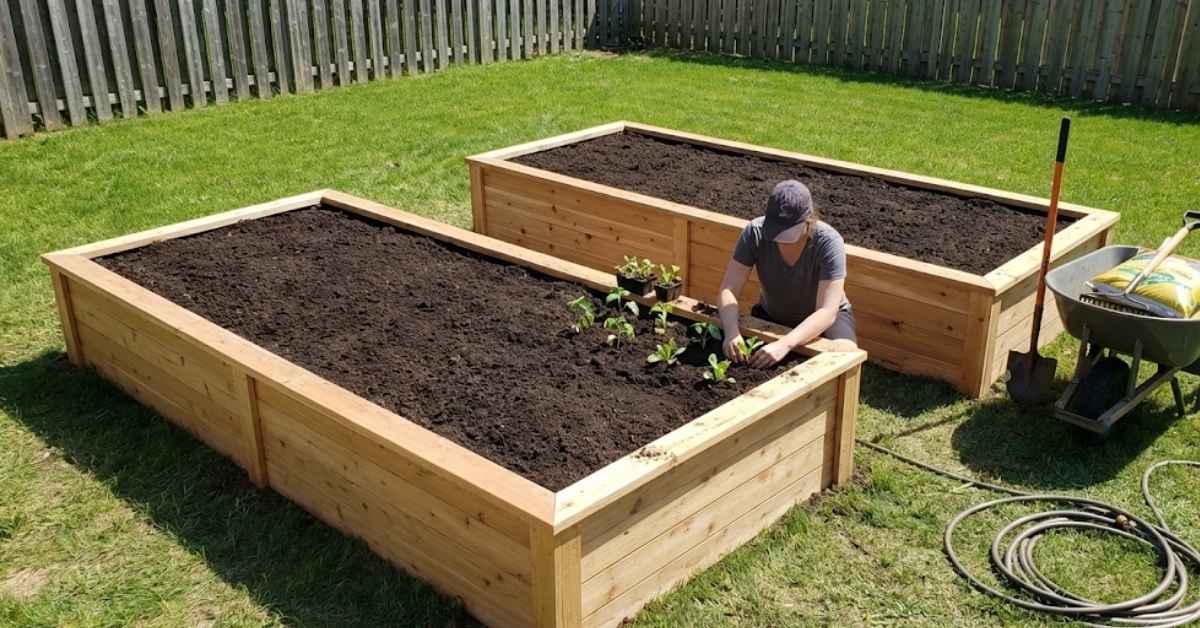
Raised garden beds cost $100-300 each for 4×8 foot beds (32 square feet of growing space). Cedar lasts 10-15 years. Composite lasts 20+ but costs $200-500 per bed.
One 4×8 bed grows $600-800 worth of vegetables annually if managed well. Tomatoes. Peppers. Lettuce. Herbs. Cucumbers. The bed pays for itself in the first season.
Fill those beds with quality soil mix. Use this Raised Bed Soil calculator to figure exact volume. A 4×8 bed that’s 12 inches deep needs 32 cubic feet (roughly 1.2 cubic yards) of soil.
Backyard Garden Ideas by Region
Southern gardens (zones 8-10) can grow year-round. Cool-season crops in winter. Heat-lovers in summer. Two full growing seasons plus shoulder seasons.
Northern gardens (zones 3-5) have shorter seasons but longer summer days. Cold-hardy varieties. Season extension with row covers ($20-60) and cold frames ($50-300).
Desert gardens need shade cloth (30-50% shade) and drip irrigation. Morning sun, afternoon shade. Drought-tolerant varieties. Mulch heavily to retain moisture.
Pacific Northwest gardens battle slugs and rain. Raised beds for drainage. Copper tape ($15-30 per roll) keeps slugs out. Choose mildew-resistant varieties.
Vertical Vegetable Growing
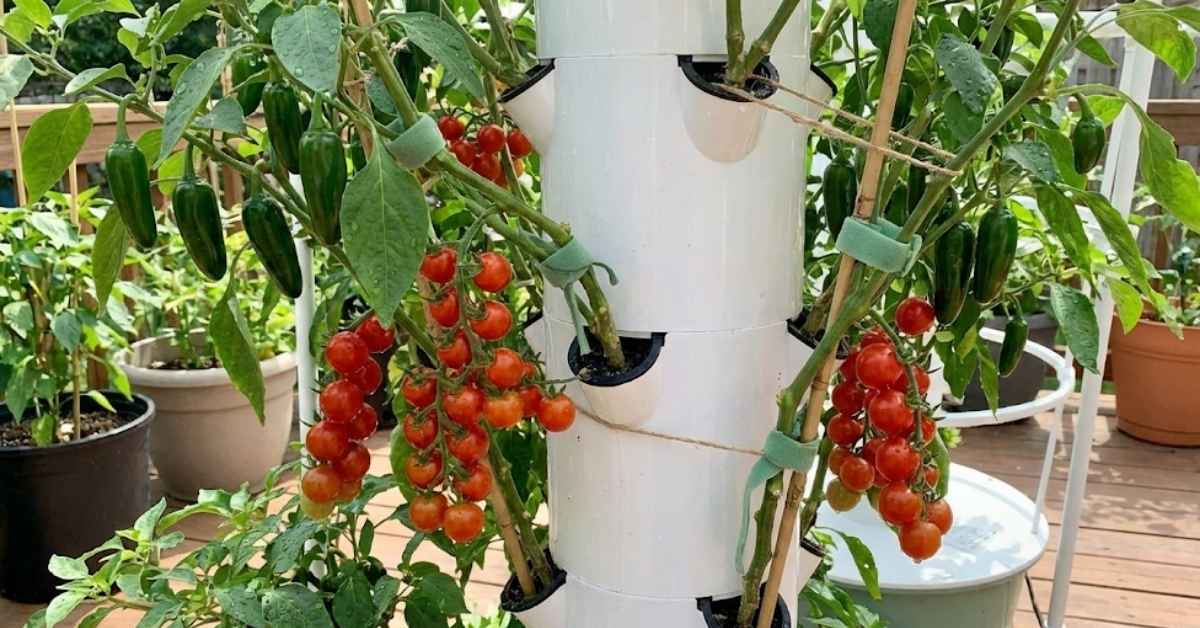
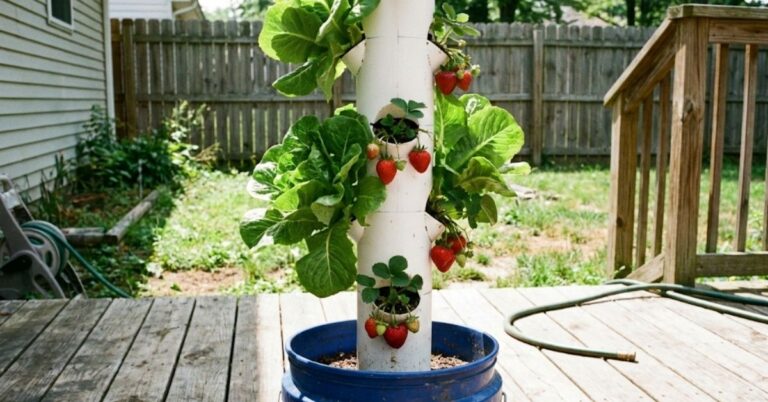
Trellis systems cost $20-100 depending on size and material. Grow pole beans, peas, cucumbers, and small melons vertically so they don’t sprawl over 30 square feet.
Tomato cages cost $3-8 each. Cheap wire ones collapse. Spring for heavy-gauge steel cages ($8-15) that last years and support 20-30 pound plants.
Vertical growing multiplies space efficiency. A 4-foot trellis on a 4×8 bed adds 32 square feet of growing surface. You’ve doubled your space without expanding the bed footprint.
Also Read: The Hydroponic Tower Bible: Build, Buy, and Grow Your Way to Food Freedom
Herb Gardens Pay Back Fast
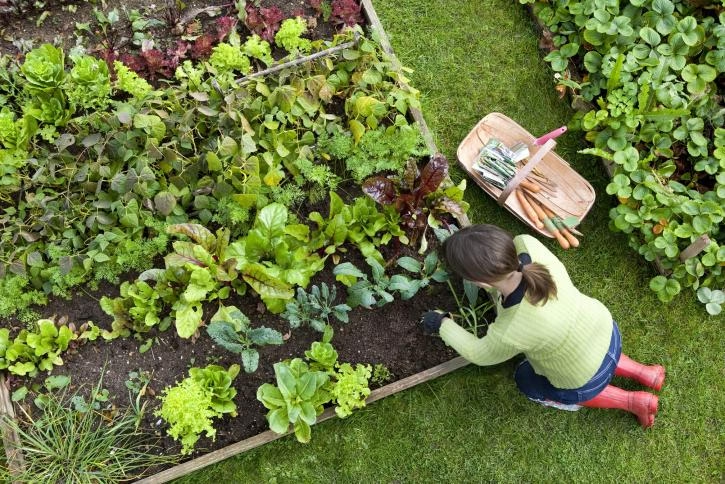
A backyard herb garden costs $50-200 to establish. Buy starts ($3-6 each) instead of seeds for faster harvest.
Fresh basil at the store costs $3-4 for 0.75 ounces. One basil plant produces 2-3 pounds over a season. That’s $80-120 of store value from a $4 plant. The math is stupid simple.
Perennial herbs (rosemary, thyme, oregano, sage) come back year after year. Plant once. Harvest for 5-10 years. These are the best investments in edible landscaping.
Backyard Greenhouse Options
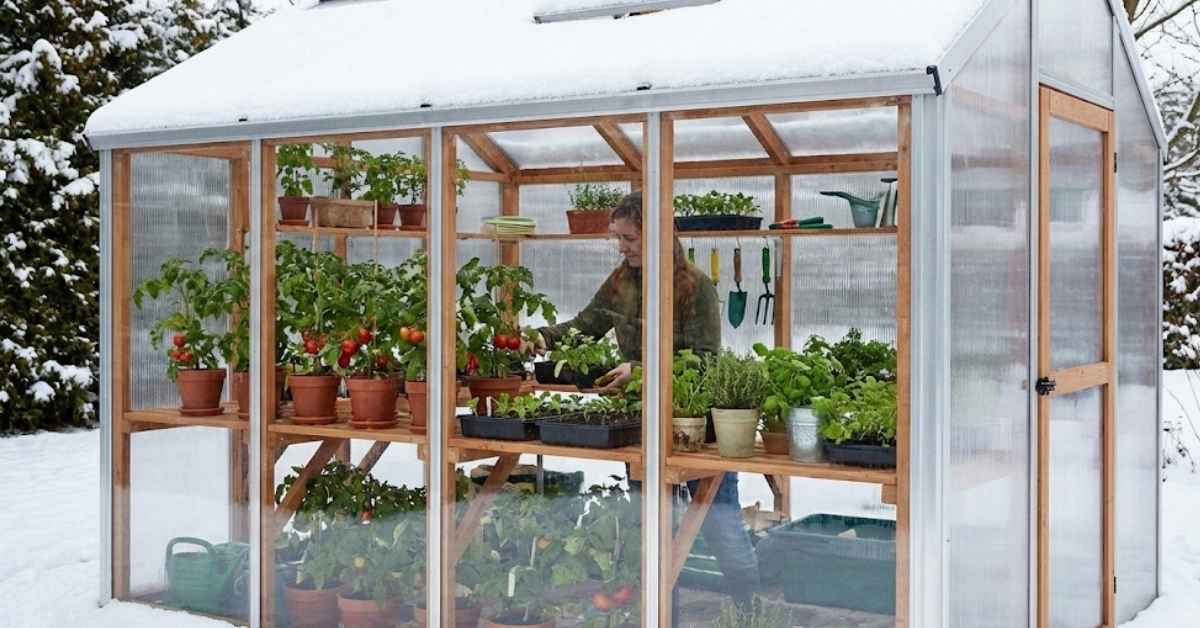
Small backyard greenhouse structures cost $500-3,000 for 6×8 to 10×12 foot models. Polycarbonate panels. Aluminum frames. Last 10-15 years.
Greenhouse for backyard use extends growing seasons 2-4 months. Start seeds 6-8 weeks earlier in spring. Grow greens into December in most climates.
Unheated greenhouses still provide frost protection and trap solar heat. Daytime temps are 15-30 degrees warmer than outside even with no supplemental heat.
Table: Garden Style ROI Comparison
| Garden Type | Setup Cost | Annual Yield Value | Payback Period | Space Needed | Maintenance |
|---|---|---|---|---|---|
| 4×8 Raised Bed | $100-300 | $600-800 | 0.5-1 years | 32 sq ft | Medium |
| Container Garden | $100-400 | $200-500 | 1-2 years | 20-50 sq ft | Low-Medium |
| Herb Garden | $50-200 | $300-600 | 0.5-1 years | 10-30 sq ft | Low |
| Greenhouse | $500-3,000 | $1,000-3,000 | 1-3 years | 50-150 sq ft | Medium-High |
| Fruit Trees | $40-150 each | $200-500 each | 2-5 years | 100-300 sq ft | Low |
Backyard Chickens and Urban Homesteading
Backyard chickens are legal in most U.S. cities with restrictions. Check local ordinances before buying birds. Some cities allow hens but ban roosters. Others limit flock size.
Can I Have Chickens in My Backyard?
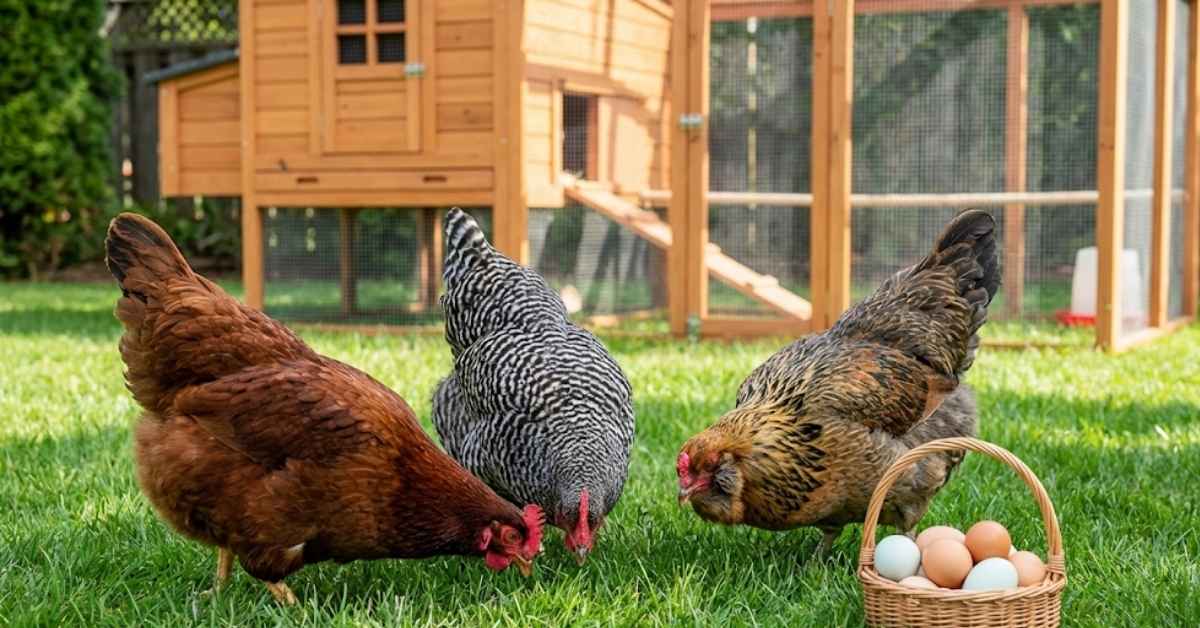
Most cities allow 4-6 hens. No roosters because noise complaints. Coops must be 10-25 feet from property lines and neighboring houses. Some HOAs ban chickens entirely.
Search “[your city] backyard chicken ordinance” to find exact rules. Portland allows 3 chickens without permits. Albuquerque allows 15. San Diego requires neighbor signatures. Rules vary wildly.
Backyard Chicken Coop Requirements
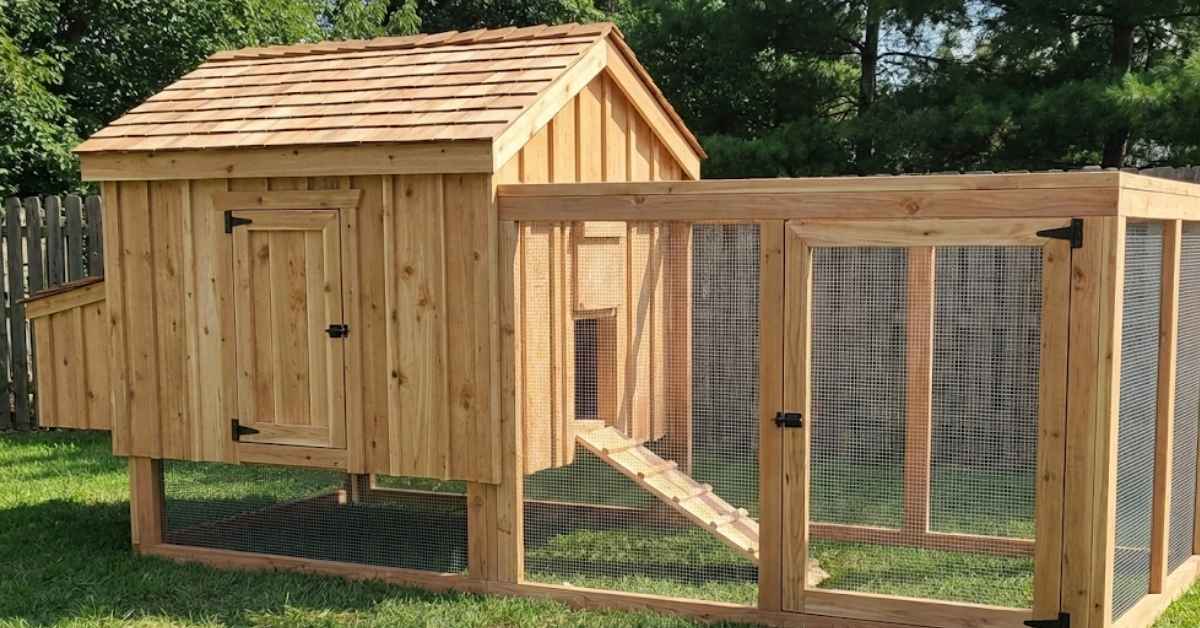
A backyard chicken coop needs 4 square feet per bird inside the coop plus 10 square feet per bird in the run. Four chickens need a 4×4 foot coop (16 sq ft) and 8×5 foot run (40 sq ft).
Pre-made coops cost $300-2,000. DIY builds cost $200-800 in materials. Coops need ventilation, roosting bars, nest boxes, and predator-proof wire (hardware cloth, not chicken wire which raccoons rip through).
Are Backyard Chicken Eggs Healthier?
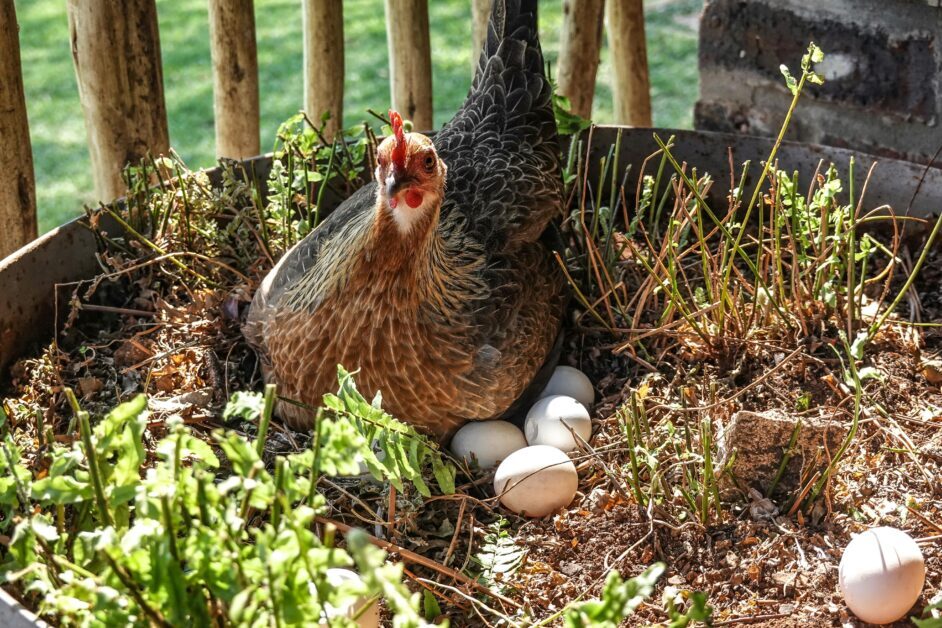
Backyard chicken eggs have darker yolks because chickens eat varied diets including bugs, greens, and kitchen scraps. They taste better. That’s universal agreement.
Nutrition is roughly the same as store eggs if you feed quality layer feed. The big difference is freshness. Your eggs are 0-5 days old. Store eggs are 30-45 days old.
Four hens produce 12-16 eggs weekly. That’s $150-250 annual value at organic egg prices ($6-8 per dozen). Feed costs $20-35 monthly. You break even or lose money on direct costs but gain entertainment, pest control, and fertilizer value.
Urban Homesteading Beyond Chickens
Rabbit hutches cost $100-400. Rabbits reproduce fast. Produce meat. Manure is excellent fertilizer. Need less space than chickens (10 square feet per rabbit).
Beekeeping requires 1-2 hives ($300-600 each to start). Bees pollinate your garden. Produce honey ($200-400 value annually per hive). Check local rules because some cities restrict hives.
Worm composting bins cost $50-150. Turn kitchen scraps into fertilizer. No smell. Minimal space. Work in apartments.
Why Backyard Chickens Are Bad (Sometimes)
Predators are the #1 chicken loss cause. Raccoons. Hawks. Coyotes. Neighborhood dogs. You’re inviting prey animals into your yard and predators know it.
Noise happens. Hens aren’t silent. They cluck loudly when laying (the “egg song”). If your neighbors work nights, this causes problems at 6 AM.
Maintenance is daily. Feed. Water. Collect eggs. Clean coop weekly. Chickens don’t care if you’re sick, tired, or on vacation.
Table: Backyard Livestock Comparison
| Animal | Setup Cost | Monthly Cost | Space Needed | Production | Difficulty | Legal Status |
|---|---|---|---|---|---|---|
| Chickens (4 hens) | $400-1,200 | $20-35 | 60 sq ft | 12-16 eggs/week | Easy-Medium | Usually legal |
| Rabbits (2 breeding) | $200-600 | $15-30 | 30 sq ft | Meat, fertilizer | Easy | Often legal |
| Bees (2 hives) | $600-1,200 | $10-20 | 20 sq ft | Honey, pollination | Medium-Hard | Sometimes legal |
| Ducks (4 birds) | $400-1,000 | $25-40 | 80 sq ft | Eggs, pest control | Medium | Rarely legal |
Fencing and Privacy Solutions
Good fences make good neighbors. Bad fences make lawyer fees. Know the difference.
Backyard Fence Options
Wood privacy fences cost $15-40 per linear foot installed. Cedar lasts 15-20 years. Pine lasts 10-15 but costs less. An average backyard perimeter (150 linear feet) runs $2,250-6,000.
Vinyl fencing costs $20-40 per linear foot. Never rots. Never needs painting. Lasts 20-30 years. Worth the premium if you hate maintenance.
Chain link fencing costs $8-20 per linear foot. Functional. Not private. Good for dog containment or property lines where aesthetics don’t matter.
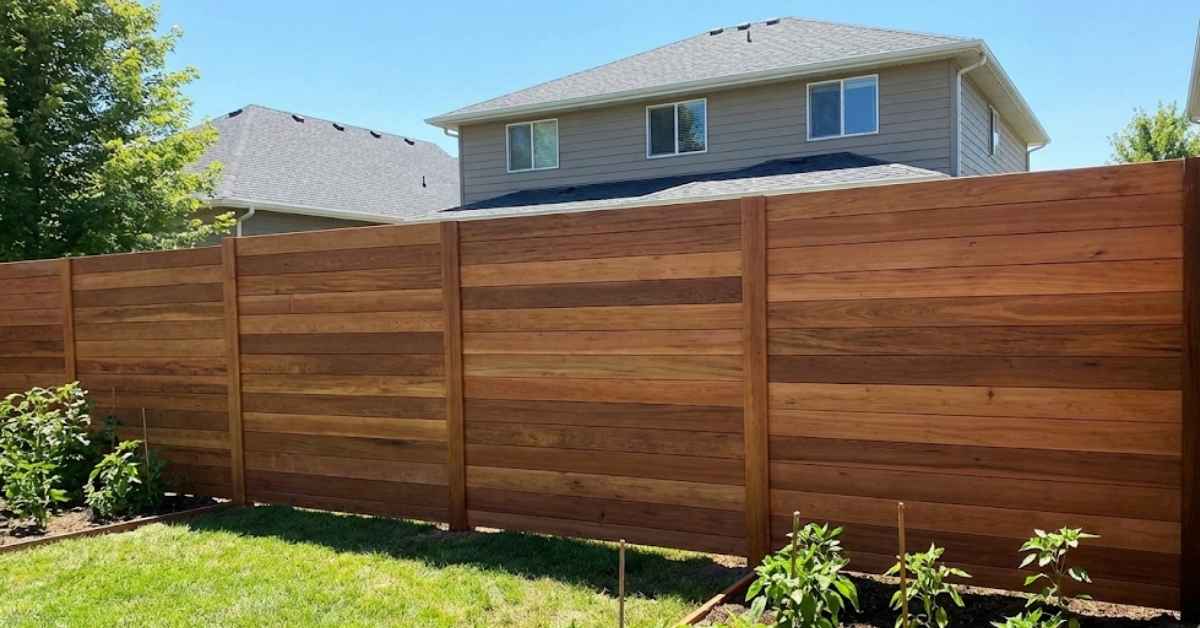
Horizontal board fences cost $25-50 per linear foot. Modern aesthetic. More expensive because installation is slower and uses more lumber.
Backyard Fence Ideas for Privacy
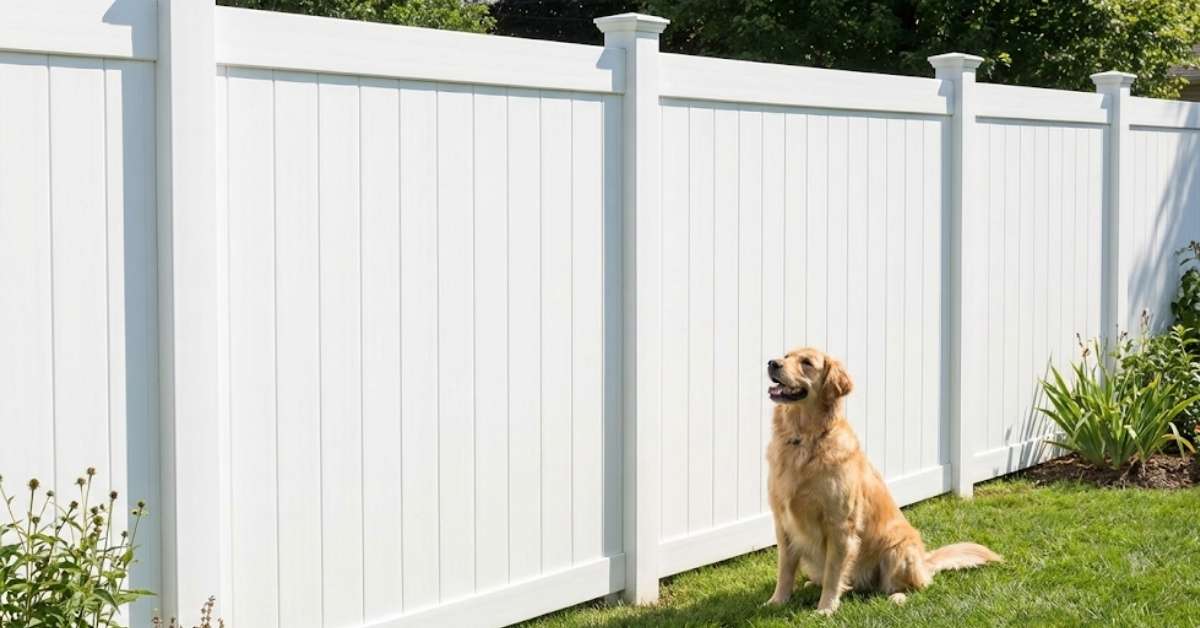
6-foot solid board fences give complete privacy. Can’t see through. Most HOAs approve this height. Some cities limit to 6 feet in rear yards, 4 feet in front yards.
8-foot fences require permits in most jurisdictions. They create full privacy but can feel prison-like. Work better in large yards where you have distance from the house.
Fence ideas for backyard privacy that cost less include lattice toppers ($2-5 per linear foot) on shorter fences. Add climbing vines. Get privacy and beauty for less money than building tall fences.
Property Line Realities
Fences typically go ON your property line. But check your survey. Building 6 inches on neighbor’s land causes legal problems.
Good neighbor fences show finished side to both properties. Costs $2-5 more per linear foot but worth it to avoid arguments.
Some municipalities require finished side face outward (toward neighbors/public) by code. Check before installing or you might rebuild.
Living Privacy Screens
Hedge fences cost $5-20 per plant depending on size purchased. Space them 2-3 feet apart for privacy hedges. They take 2-4 years to fill in but then last 20+ years.
Bamboo grows fast (3-5 feet annually) and creates dense screens. Running bamboo spreads aggressively though. Plant clumping varieties (costs $30-80 per plant) or install rhizome barriers ($5-8 per linear foot).
Privacy trees like Thuja Green Giant or Leyland Cypress cost $30-100 for 5-6 foot trees. Space 5-8 feet apart. They reach 15-20 feet in 5-7 years. Living walls that keep growing.
Table: Fence Material Comparison
| Material | Cost/Linear Ft | Lifespan | Maintenance | Privacy | Best For |
|---|---|---|---|---|---|
| Wood (Cedar) | $15-40 | 15-20 years | Medium | Complete | Traditional look |
| Vinyl | $20-40 | 20-30 years | Low | Complete | Low maintenance |
| Chain Link | $8-20 | 30+ years | Low | None | Dog containment |
| Horizontal Wood | $25-50 | 15-20 years | Medium | Complete | Modern aesthetic |
| Composite | $25-45 | 25-30 years | Very Low | Complete | Premium durability |
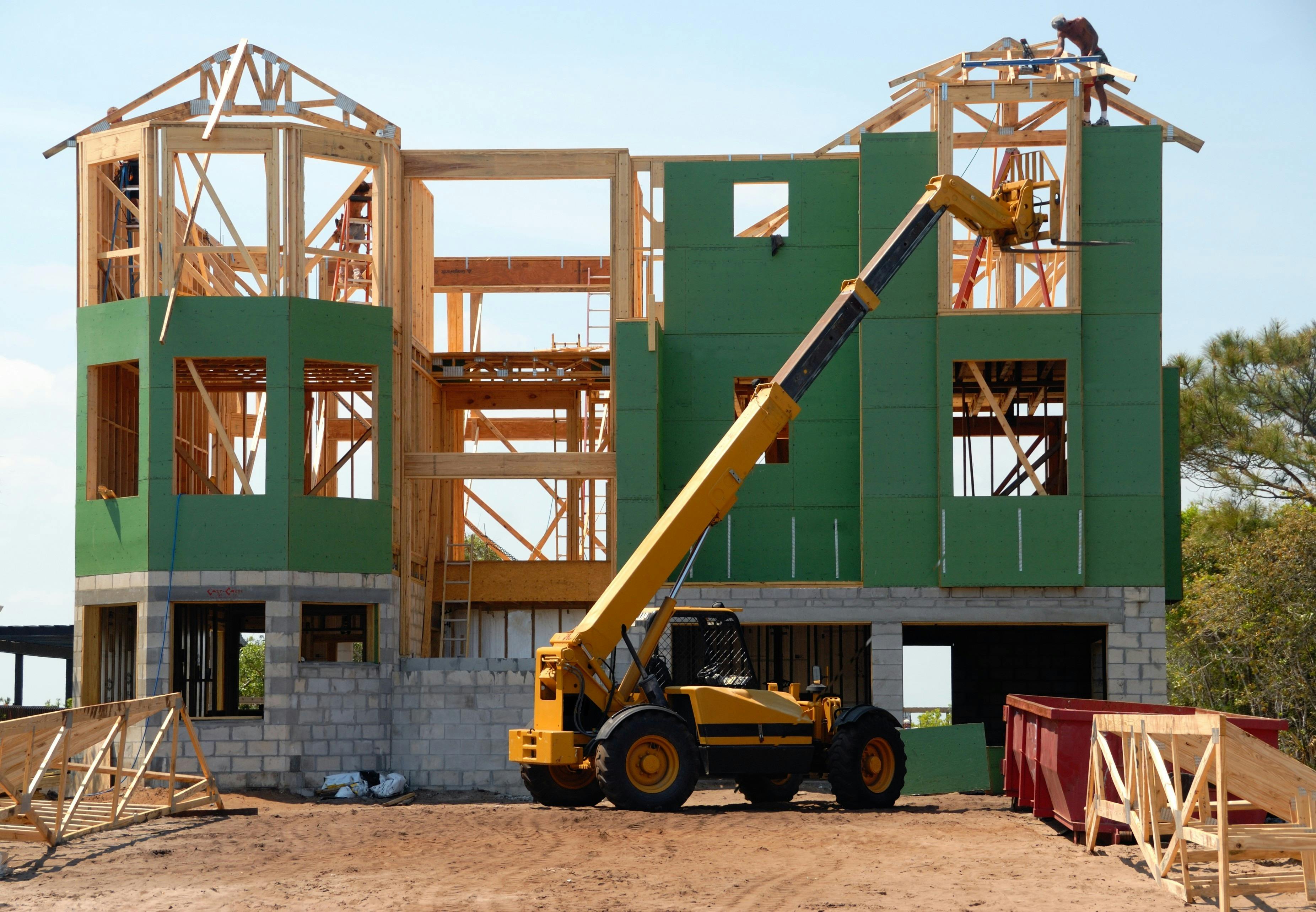
Storage Solutions and Sheds
Nobody talks about storage until their backyard looks like a Home Depot exploded. Plan for it early or regret it later.
Backyard Storage Shed Sizing
A backyard storage shed needs to be bigger than you think. Lawn mower. Trimmer. Leaf blower. 20-gallon gas cans. Fertilizer bags. Tools. Pots. Hoses. It adds up fast.
8×10 shed (80 sq ft) is minimum functional size. Costs $2,000-5,000 installed. Holds mower, small yard equipment, and some tools.
10×12 shed (120 sq ft) is ideal for most homeowners. $3,000-8,000 depending on materials and finish. Space for everything plus seasonal storage.
12×16 shed (192 sq ft) works as workshop space. $5,000-15,000. Add workbench, tool storage, and still have room for equipment.
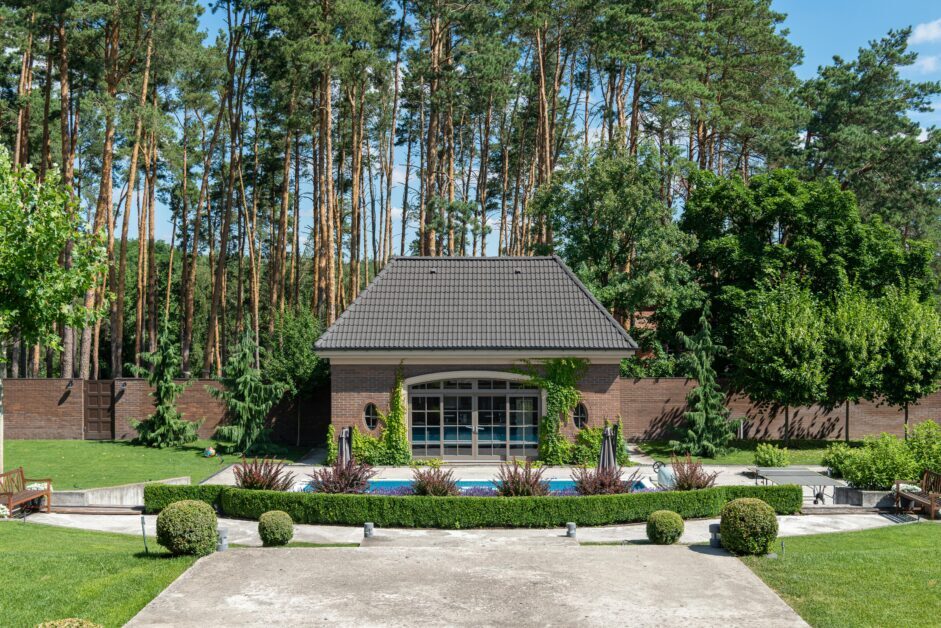
Backyard Shed Materials
Metal sheds cost $400-2,000. Durable. Fire-resistant. Rust eventually. Feel industrial.
Resin plastic sheds cost $600-3,000. Won’t rot. Low maintenance. Look cheap. Not suitable for tools that need secure storage.
Wood sheds cost $2,000-10,000. Beautiful. Customizable. Need painting/staining every 3-5 years. Match house architecture.
Hidden Storage Solutions
Deck storage boxes cost $100-500. Hold cushions, toys, games. Double as bench seating. Keep things dry and accessible.
Built-in fence storage ($200-800 DIY) creates hidden compartments between fence posts. Perfect for long-handled tools that don’t fit in sheds.
Under-deck storage ($1,000-4,000) uses wasted space below elevated decks. Add doors or drawers. Huge capacity without adding structures.
Permit Requirements
Sheds under 120 square feet often don’t need permits. Over 120 square feet usually requires permits ($50-500) and inspections.
Setback requirements force sheds 3-10 feet from property lines depending on your municipality. Check before pouring the foundation or you might move it.
Permanent foundations (concrete) sometimes trigger different rules than temporary foundations (gravel or blocks). Permanent structures face more regulations.
Table: Shed Options by Size and Cost
| Size | Square Footage | Cost Range | Best For | Typical Contents |
|---|---|---|---|---|
| 6×8 | 48 sq ft | $800-2,500 | Tool storage | Hand tools, small items |
| 8×10 | 80 sq ft | $2,000-5,000 | Basic yard equipment | Mower, trimmer, tools |
| 10×12 | 120 sq ft | $3,000-8,000 | Full yard storage | All equipment, seasonal items |
| 12×16 | 192 sq ft | $5,000-15,000 | Workshop/storage combo | Equipment, workspace, inventory |
Sustainable and Low-Maintenance Options
Sustainability isn’t just environmentalist talk. It’s about cutting your water bill by 30-50% and spending less time on maintenance so you can actually enjoy the space.

Drought-Tolerant Landscaping
Xeriscaping reduces water use by 50-75% compared to traditional lawns. Native plants adapted to your rainfall patterns. Mulch to retain moisture. Drip irrigation instead of sprinklers.
California homeowners save $1,000-2,000 annually on water bills with xeriscaping. Arizona saves even more. Texas Hill Country too. Any place where water is expensive or scarce benefits.
Plant groupings by water needs (hydrozoning) means you’re not overwatering some plants while underwatering others. Efficient and smart.
Rain Barrel Systems
Rain barrels cost $80-200 each. They capture 50-80 gallons per rainstorm. Free water for gardens. Reduces runoff. Pays for itself in 1-2 seasons in areas with expensive municipal water.
A 1,000-square-foot roof generates about 600 gallons of water from 1 inch of rain. That’s a lot of free irrigation if you capture it instead of letting it run down the street.
Connect multiple barrels in series. First one fills, overflow goes to the next. You can store 200-300 gallons for under $500.
Smart Irrigation Controllers
Smart irrigation systems cost $100-300 for basic models. $300-800 for advanced systems. They adjust watering based on weather, soil moisture, and plant needs.
Studies show smart controllers reduce outdoor water use by 20-50%. That’s $200-600 annual savings for most homeowners. The system pays for itself in one season.
Controllers talk to weather stations via WiFi. Rain in the forecast? They skip watering. Hot and dry? They add extra cycles. You set it once and forget it.
Solar Lighting Economics
Solar lights cost less upfront ($3-15 each for basic path lights). No wiring. No electrician. No ongoing electricity costs.
But solar lights are dim compared to low-voltage LED systems. Battery life is 2-4 years before replacement. They work great for ambient lighting. Not so much for task lighting.
Mix both systems. Solar for decorative accent lights. Low-voltage wired for functional pathway and safety lighting. Get the best of both approaches.
Permeable Surfaces
Permeable pavers, gravel, and pervious concrete let water soak into the ground instead of running off. Many cities now require this for environmental reasons.
They cost $10-30 per square foot installed. More expensive than standard concrete but they reduce flooding, recharge groundwater, and filter pollutants naturally.
Some municipalities offer rebates for permeable surface installation because it reduces strain on storm sewer systems. Check your local water district.
Table: Sustainable Option Cost-Benefit Analysis
| Sustainable Feature | Install Cost | Annual Savings | Payback Period | Water Reduction | Best Climate |
|---|---|---|---|---|---|
| Xeriscaping | $2,000-8,000 | $1,000-2,000 | 2-4 years | 50-75% | Arid, desert |
| Rain Barrels | $80-200 each | $100-300 | 1-2 years | 10-20% | All climates |
| Smart Irrigation | $100-800 | $200-600 | 0.5-2 years | 20-50% | All climates |
| Native Plants | $3-15 each | $300-800 | 1-3 years | 30-60% | Region-specific |
| Drip Irrigation | $200-1,000 | $400-900 | 1-2 years | 30-50% | All climates |
Entertainment and Hosting Spaces
Your backyard should work for parties, not against them. Plan for the events you’ll actually host, not Pinterest-perfect fantasies you’ll never execute.

Outdoor Kitchen Reality Check
A basic backyard grill setup costs $300-1,500. Mid-range built-in grills cost $2,000-6,000. Full outdoor kitchens run $10,000-50,000+.

Most people use outdoor kitchens 10-20 times a year. That’s expensive per-use. Be honest about your cooking habits before spending $30,000 on a pizza oven you’ll fire up twice.
Budget-friendly option: Quality portable grill ($400-800) plus a side table ($100-200) and small fridge ($300-500). Total under $1,500 and you can take it if you move.
Backyard Barbeque Essentials
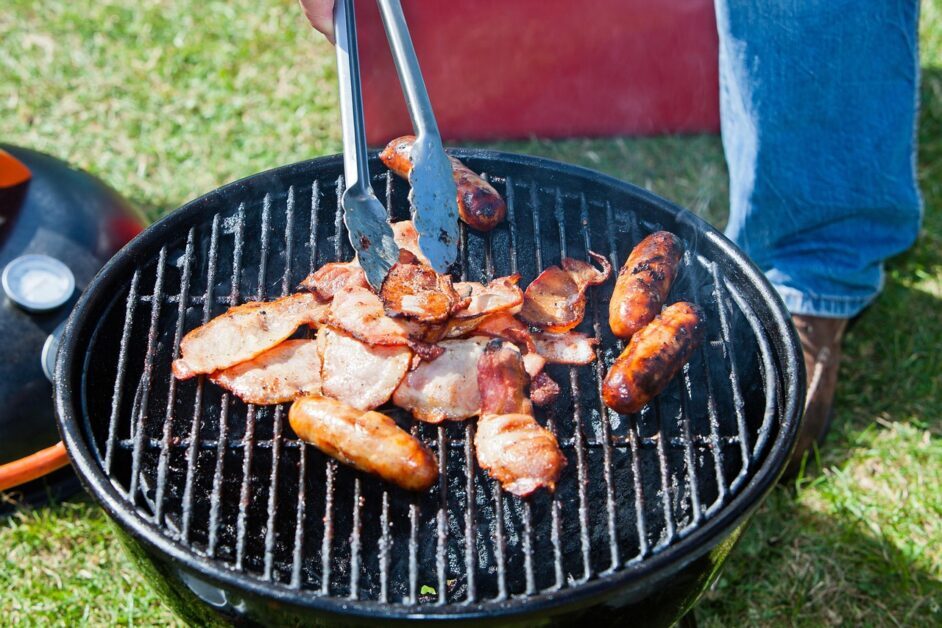
Built-in BBQ islands cost $5,000-20,000. Concrete base. Tile or stone surface. Built-in grill, side burners, storage, and countertop space.
They add serious property value if done well. But only in markets where outdoor entertaining is year-round. Minnesota outdoor kitchens don’t add much value because they’re useless six months annually.
Think about utilities. Gas line installation costs $500-2,000. Outdoor electrical outlets need GFCI protection and weatherproof boxes ($200-600 per outlet installed).
Backyard Wedding Planning
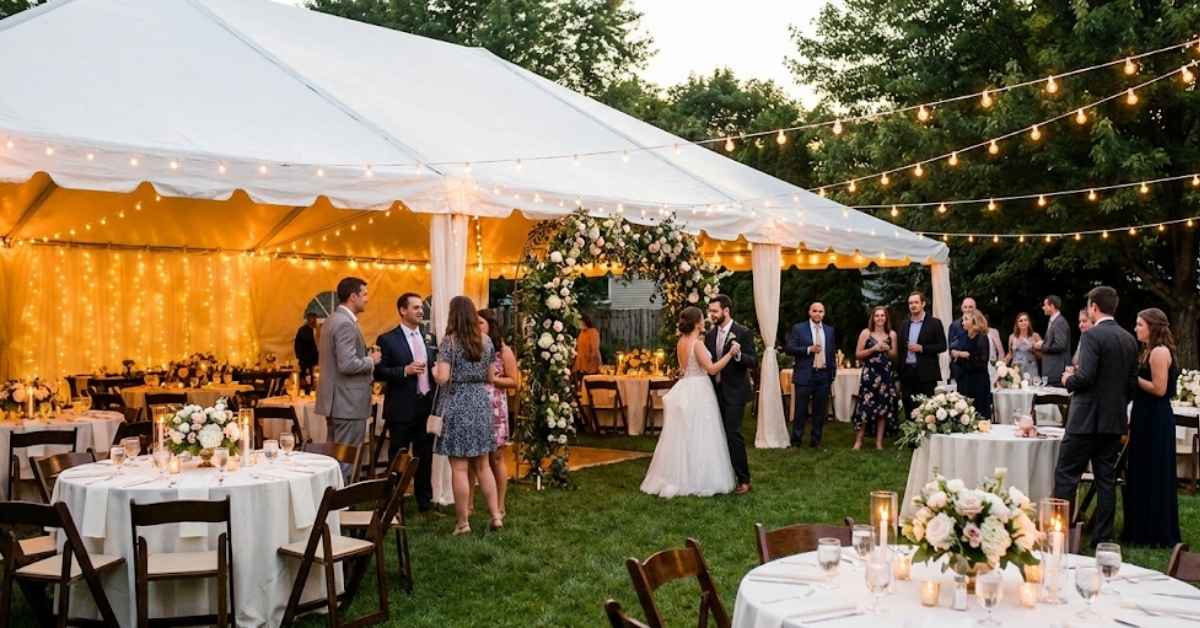
Backyard wedding venues save $5,000-15,000 compared to traditional venues. But you’re trading money for time and stress.
Backyard wedding ideas need parking solutions. Portable toilets if guest count exceeds 50-75 people. Tent rental ($500-5,000) for weather protection. Generator rental ($200-600) if you need extra power.
Permitting varies by city. Some places don’t care. Others require event permits for 25+ guests. Check before sending invitations or you might be canceling last-minute.
Backyard Restaurant Vibe
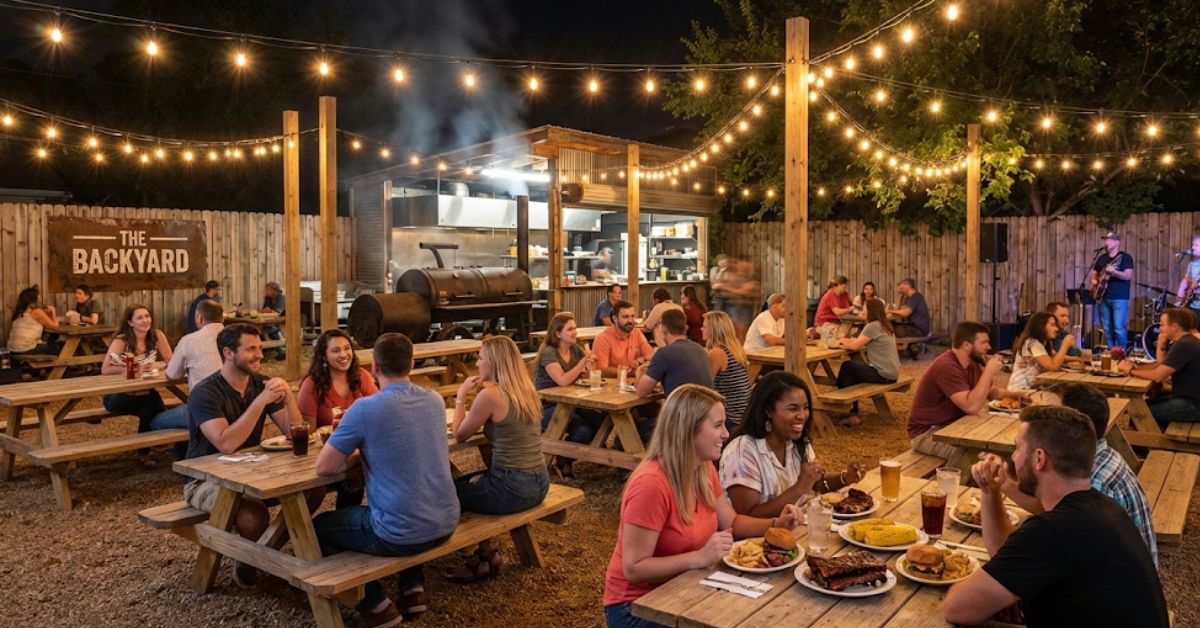
That backyard on Broadway restaurant? It works because of professional-grade equipment, staff, and daily use. Your backyard won’t replicate that.
But you can borrow design elements. String lights create ambiance ($50-300). Multiple seating zones give guests options. Quality outdoor speakers ($100-500 per pair) for background music.
Fire features draw people. Whether it’s a fire pit, fireplace, or tiki torches ($15-40 each), flames create gathering points naturally.
Drinks Backyard Setup
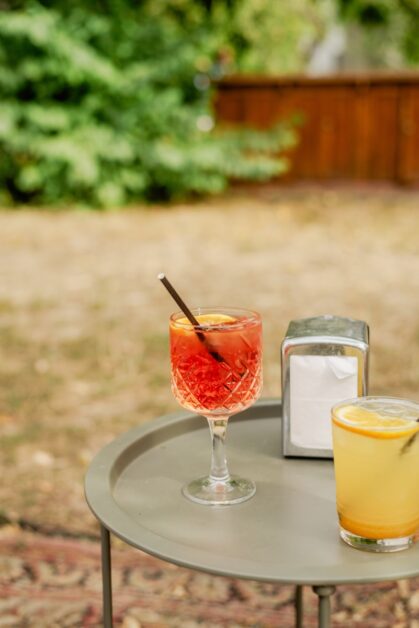
An outdoor bar costs $500-5,000 depending on complexity. Simple DIY bars use recycled pallets and treated lumber ($200-600 in materials). Built-in bars need plumbing, electrical, and weatherproof construction.
Mini fridges designed for outdoor use cost $300-800. Regular indoor fridges fail in temperature extremes. Don’t cheap out or you’ll replace it in two years.
Bar height is 42 inches. Counter height is 36 inches. Bar stools sit 30 inches off ground. Counter stools sit 24 inches off ground. Get the heights wrong and everything feels awkward.
The Backyard Baseball 2001 Connection
Is backyard baseball on PS5? Not originally, but the remastered version called Backyard Baseball ’01 launched on PlayStation 5 in June 2025 along with Nintendo Switch, following its earlier release on Steam, iOS, and Android in July 2025.
Is backyard baseball on Switch? Yes. Backyard Baseball ’01 came to Nintendo Switch on June 12, 2025.
Is backyard baseball on Xbox? Currently no Xbox release has been announced for the remastered versions.
Which backyard baseball game is the best? The community is split between Backyard Baseball 2001 and Backyard Baseball 2003, but 2001 gets the edge for nostalgia and the inclusion of 28 MLB legends as kids. Pablo Sanchez remains the strongest character in video game history according to fans.
The original backyard baseball game and backyard baseball 2001 game captured something special. Simple gameplay. Memorable characters. Actual fun instead of realistic simulation. Sometimes physical backyard sports areas inspire the same feeling—spaces where kids (and adults) can just play without overthinking it.
Backyard Football and Other Sports
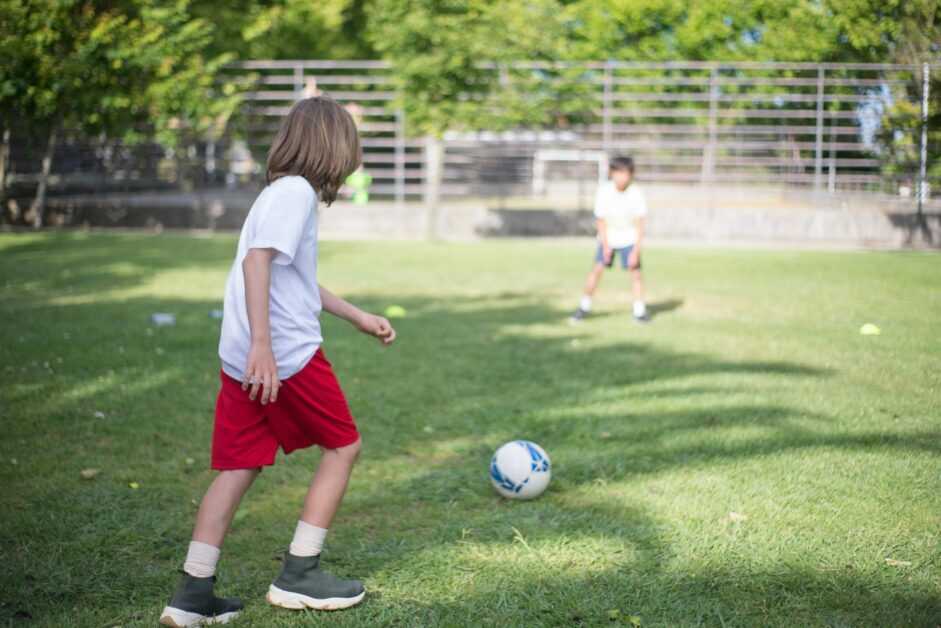
Backyard football spaces need flat, open areas. Mark boundaries with cones or ground paint. 30×60 feet gives enough room for touch football. 50×100 feet supports flag football.
Soccer goals for backyard use cost $50-300 for portable goals. $500-2,000 for permanent in-ground goals. Space them 30-50 feet apart for small-sided games.
The backyard sports games series reminds us that outdoor spaces should prioritize fun over perfection. That’s the real lesson.
Specialty Features and Unique Additions
Here’s where we talk about the backyard ideas that make people say “whoa” when they walk into your space.
Backyard Sauna Installation
A backyard sauna costs $3,000-8,000 for pre-fab models. $8,000-25,000 for custom builds. They’re having a moment right now because of health benefits and the Nordic wellness trend.
Barrel saunas cost less ($3,000-6,000) and look cool. Traditional square saunas hold more people. Both need 240V electrical or wood-burning heat sources.
Use it 2-3 times weekly to justify the cost. Otherwise it’s an expensive lawn ornament.
Backyard Tiny House Options
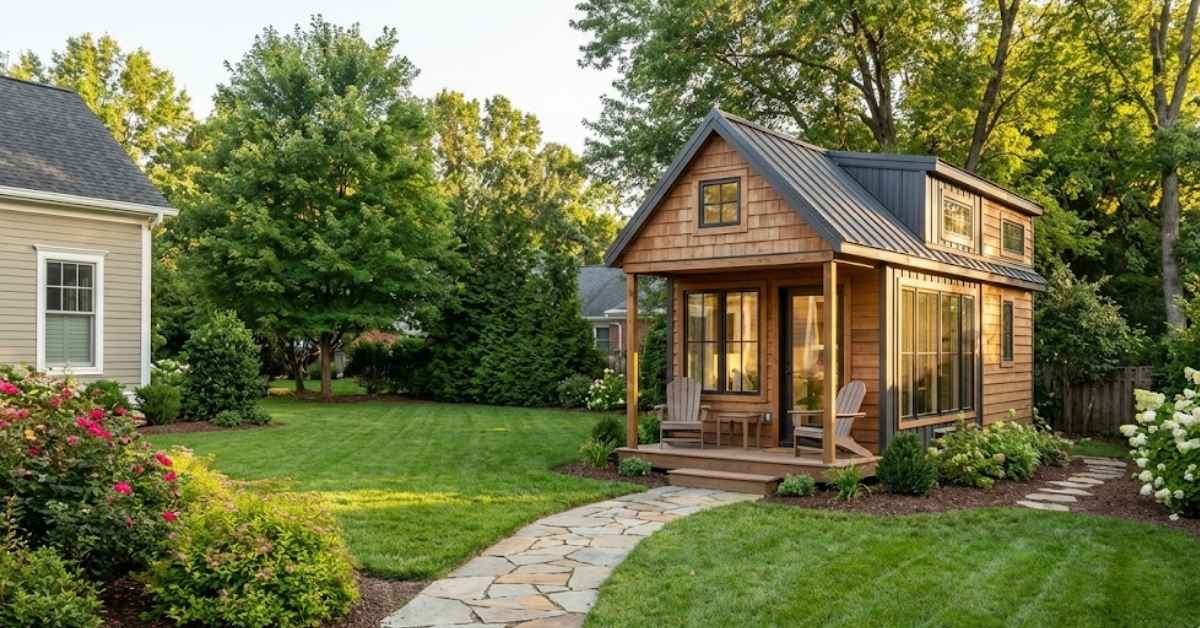
Backyard tiny homes cost $20,000-80,000. They add guest quarters, home offices, or rental income potential. Zoning laws vary wildly. Some cities encourage ADUs (accessory dwelling units). Others ban them.
Backyard tiny house structures under 120 square feet often avoid permits. Over that and you’re dealing with building codes, permits, inspections, and utilities.
Connection costs for water, sewer, and electrical run $2,000-8,000. Factor this into budgets or your $30,000 tiny house becomes a $40,000 project.
Backyard Tent for Events

Permanent backyard tent structures cost $2,000-10,000. Temporary rental tents cost $300-2,000 for weekend events depending on size.
A 20×20 tent (400 sq ft) seats 30-40 people comfortably. 20×40 tent (800 sq ft) seats 60-80 people. These are the most common party sizes.
Level ground is critical. Tents on slopes look wrong and feel weird. Grade the site first or rent flooring ($2-4 per sq ft).
Louie’s Backyard Style
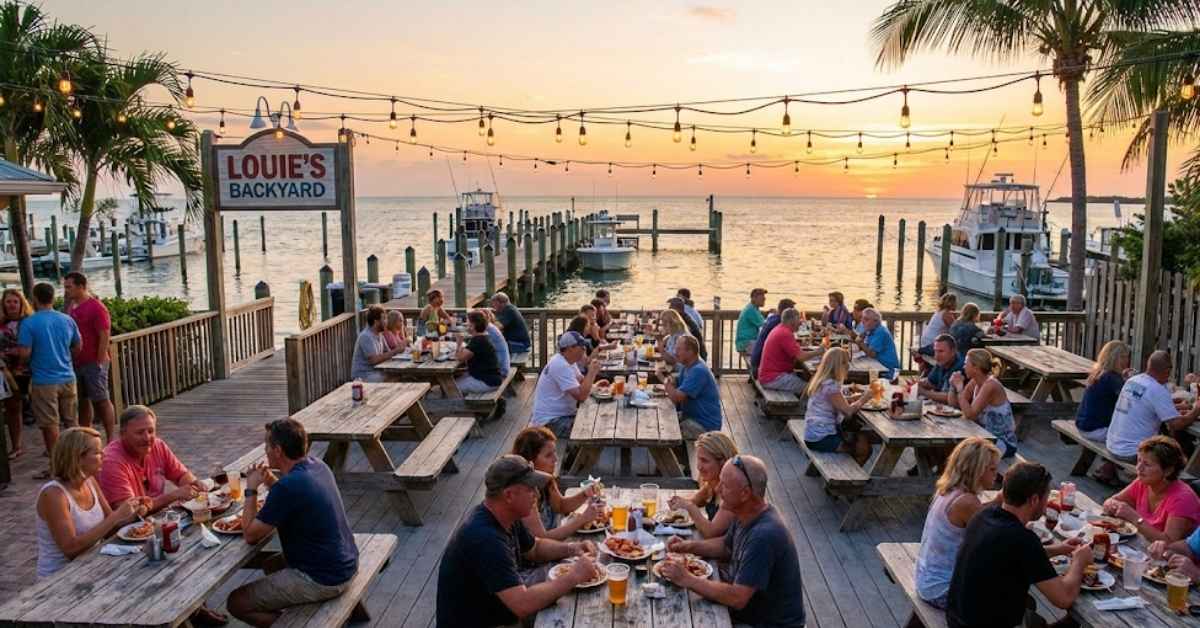
That famous louie’s backyard restaurant in Key West? It works because of waterfront location and tropical climate. You probably don’t have those advantages.
But the lesson translates: work with your location’s natural features. Waterfront property? Emphasize water views. Wooded lot? Embrace shade and natural feeling. Hillside? Create terraced levels.
Buck’s Backyard and Nido’s Backyard References
These are restaurant names that evoke casual outdoor dining. The backyard restaurant trend shows people want relaxed outdoor eating experiences.
You don’t need commercial permits to create that vibe for family and friends. Comfortable seating. Good lighting. Quality grill or smoker. Speakers for background music. That’s 90% of the atmosphere.
Urban Backyard Butchers and Backyard Burger

Backyard butchers is a butcher shop, not a backyard activity. Don’t process your own meat unless you’re trained because food safety matters and illness is expensive.
Backyard burger grilling? That’s just good summer living. Quality beef ($6-12 per pound for good ground chuck). Cast iron griddle on the grill. Butter on the buns. Simple beats complicated.
Is backyard butchers legit? Yes, it’s a legitimate butcher shop. Not related to actual backyard food processing which requires commercial licenses and inspections.
Backyard Taco and Backyard Door Concepts

Backyard taco nights work great for parties. Set up a taco bar with all the fixings. Guests build their own. Easy. Delicious. Minimal work for hosts.
A backyard door connection from your kitchen makes outdoor entertaining easier. French doors or sliding glass doors ($1,000-5,000 installed) create seamless indoor-outdoor flow. You’re not carrying food through narrow doorways.
Porky’s Backyard Reference
Another restaurant name. The theme here is clear: Americans associate “backyard” with casual, fun, no-pretense experiences. Your actual backyard should deliver that feeling.
Skip the formal stuff. Embrace comfort. Mix durable furniture with personal touches. Plants you actually like. Colors that make you happy. This is your space.
Safety and Practical Considerations
Let’s talk about the unsexy stuff that keeps your backyard safe and functional.
Are Backyard Mushrooms Poisonous?
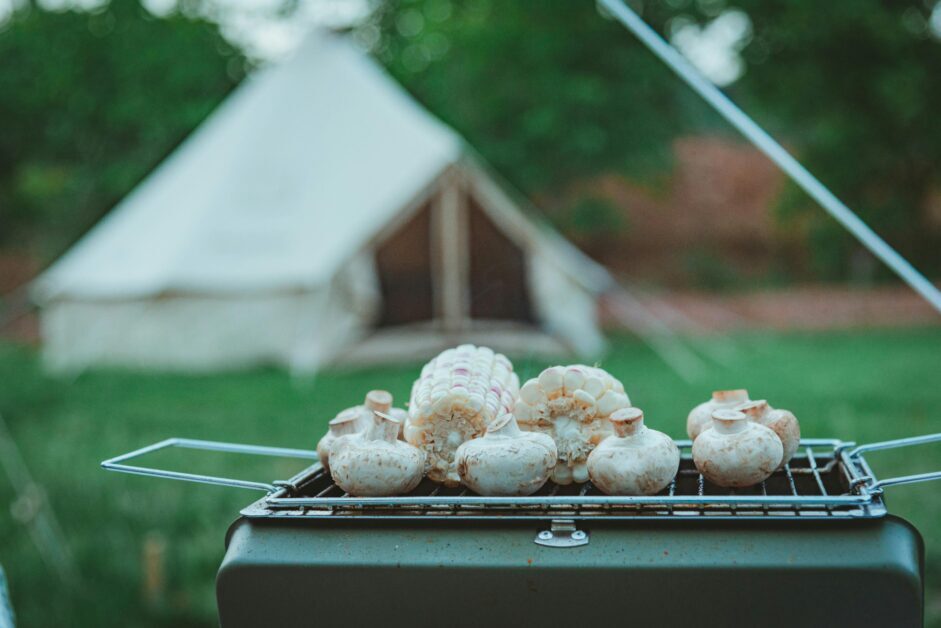
Are backyard mushrooms poisonous to dogs? Many are. Don’t let dogs eat random mushrooms. Common lawn mushrooms include Chlorophyllum molybdites (green-spored parasol) which causes severe vomiting.
Are backyard mushrooms edible? Some are. Most aren’t. Never eat wild mushrooms unless you’re 100% certain of identification. Mushroom poisoning kills people every year.
Are backyard mushrooms poisonous in general? About 1-2% of mushroom species are deadly. Another 20-30% make you sick. The rest are harmless but not edible. Don’t gamble.
Backyard Trampoline Safety

Are backyard trampolines safe? Not really. Emergency rooms treat 100,000+ trampoline injuries annually in the U.S. according to the American Academy of Pediatrics.
If you insist on having one, get safety nets ($100-300). Allow only one jumper at a time. Supervise always. Most injuries happen with multiple kids jumping together.
Trampolines also increase homeowner’s insurance premiums or void coverage entirely with some providers. Check your policy first.
Are Backyard Fire Pits Legal?

Local ordinances determine fire pit legality. Most allow them with restrictions. Common rules include 10-25 feet from structures, spark screens required, size limits (typically 3-foot diameter max), and burn bans during dry conditions.
Wood-burning pits face more restrictions than gas pits. Some HOAs ban fire pits entirely. Check before installing.
Backyard Breeding Questions

Are backyard breeders bad? Usually yes. Backyard breeding dogs without proper genetic testing, health screening, and knowledge leads to puppies with health problems and temperament issues.
Is backyard breeding illegal? It’s legal in most places but regulated. Commercial breeders need licenses. Some cities limit the number of dogs you can own and breed.
Why backyard breeding is bad: It prioritizes profit over animal welfare, doesn’t test for genetic diseases, and contributes to pet overpopulation while shelters euthanize animals.
Is backyard dog breeding illegal? Not inherently, but it becomes illegal when breeders violate animal welfare laws, exceed permit limits, or commit fraud in sales.
Backyard Mosquito Control
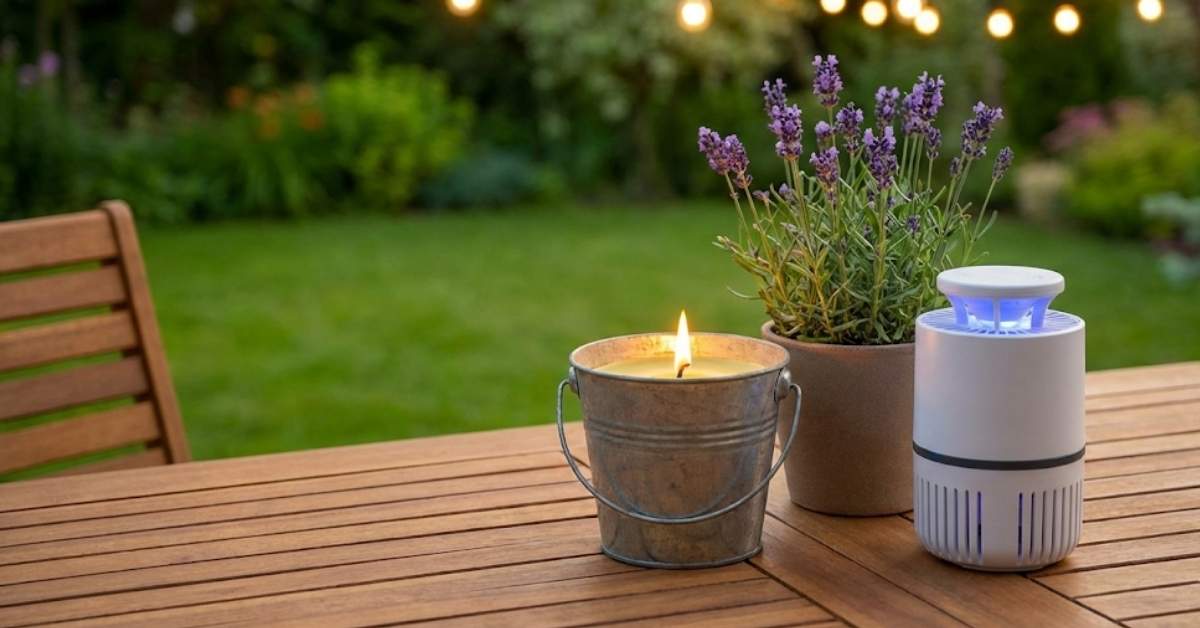
Backyard mosquito control costs $50-150 monthly for professional treatments. DIY options include removing standing water (free), mosquito dunks ($10-20 per pack), fans ($30-200), and citronella plants ($3-8 each).
Mosquitoes breed in any standing water. Check gutters, plant saucers, toys, tarps, and low spots in the yard. Empty or treat water that can’t drain.
Thermal foggers ($50-200) and repellent sprays ($15-40) provide temporary relief for events. Permanent solutions require eliminating breeding sites.
Table: Common Backyard Safety Issues
| Safety Concern | Risk Level | Prevention Cost | Prevention Methods | Insurance Impact |
|---|---|---|---|---|
| Trampolines | High | $100-300 | Safety nets, supervision, rules | Premium increase 10-25% |
| Pools | High | $1,200-2,500/year | Fencing, covers, alarms, supervision | Required additional coverage |
| Fire Pits | Medium | $50-200 | Spark screens, clearance, permits | Usually minimal |
| Play Equipment | Medium | $100-500 | Safety surfacing, maintenance | Usually minimal |
| Mushrooms | Low-Medium | Free | Identification, removal, pet monitoring | None |
Design Services and Professional Help
Sometimes DIY isn’t the answer. Know when to call pros and what to expect cost-wise.
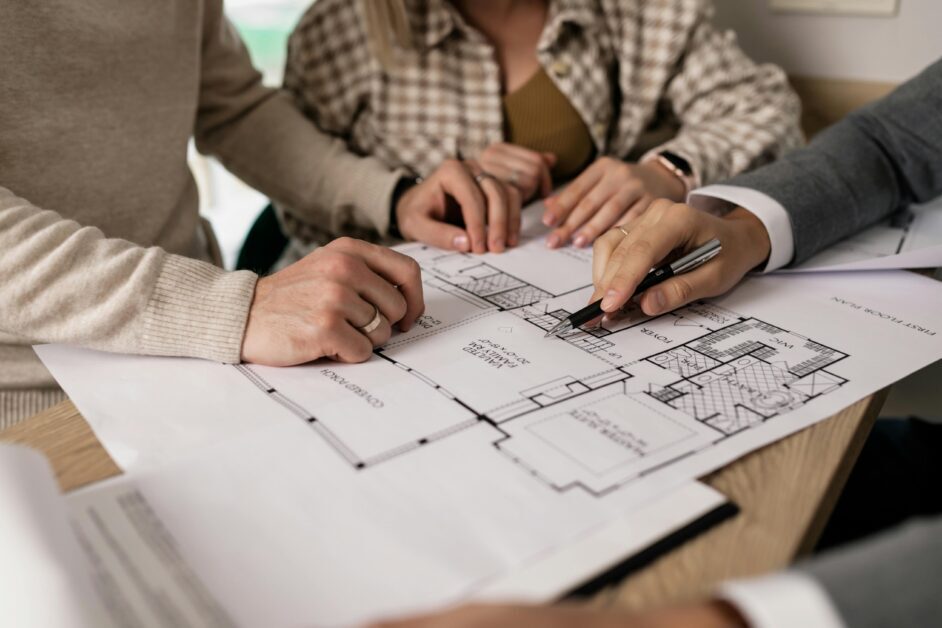
Backyard Landscape Design Costs
Professional backyard design costs $1,000-5,000 for basic plans. $5,000-15,000 for comprehensive designs with detailed specifications.
Design backyards through landscape architects ($100-200 per hour) for complex projects involving grading, drainage, and structures. Landscape designers ($50-150 per hour) handle simpler aesthetic projects.
The design fee is separate from installation. Budget 5-10% of your total project budget for professional design. A $30,000 backyard renovation should include $1,500-3,000 for design.
When to DIY vs Hire
DIY makes sense for projects under $2,000 where mistakes won’t cause structural damage. Planting, mulching, basic path installation, container gardens, painting, small repairs.
Hire pros for electrical work, gas line installation, major grading, retaining walls over 3 feet, pool installation, and structural builds. The permit and liability issues alone make professional help worth it.
Gray area projects like deck building and fence installation depend on your skill level. Handy homeowners save $3,000-8,000 doing their own decks. Novices create expensive mistakes.
Backyard Near Me Services
Search “backyard landscape design near me” or “backyard renovation contractors near me” to find local pros. Check licenses. Read reviews. Get three quotes minimum.
Local contractors understand regional climate, soil types, and building codes better than national chains. They also have reputations to protect in the community.
Seasonal pricing matters. Spring is peak season so prices are higher. Fall and winter (depending on climate) offer better deals because demand drops.
Backyard Products and Suppliers
Big box stores (Home Depot, Lowe’s) offer convenience and consistent inventory. Prices are okay. Quality is mid-range. Selection is limited to popular items.
Local landscape suppliers have better quality materials, bulk pricing, and expert staff. They’re 10-30% cheaper for large projects but minimum purchases apply.
Backyard products LLC and similar wholesalers sell to contractors primarily. Some open to public but expect bulk minimums and cash/check payment.
Regional Design Considerations
Where you live determines what works. Stop fighting your climate and embrace it.
Desert Climates (Arizona, Nevada, New Mexico)
Desert backyards need shade first. Ramadas, pergolas with 90% shade cloth, or covered patios. Without shade, outdoor spaces are unusable 4-6 months annually.
Native plants like agave, palo verde, and desert marigold need minimal water once established. Gravel mulch works better than wood mulch which blows away in wind.
Outdoor misters cost $100-800 installed. They drop temperatures 20-30 degrees in dry climates. Game-changer for summer entertaining.
Humid Subtropical (Southeast US)
Southeast backyards battle heat, humidity, and afternoon thunderstorms. Covered areas are essential. Fans improve comfort.
Mold and mildew attack everything. Choose rot-resistant materials (cedar, composite, aluminum) over pine or untreated wood.
Mosquito control isn’t optional. Budget $600-1,800 annually for professional treatments or accept you won’t use the space at dusk.
Cold Climates (Northern States, Mountain West)
Short growing seasons mean every day counts. Choose fast-growing plants. Start seeds indoors. Use season extension techniques.
Four-season design means winter views matter. Evergreens, ornamental grasses, bark texture, and hardscaping create interest when plants are dormant.
Snow load considerations for structures. Flat roofs collect snow and collapse. Pitched roofs shed snow. Building codes require specific strength ratings in snow-prone areas.
Mediterranean Climates (California Coast)
Mild year-round weather means outdoor living spaces get maximum use. Invest in quality furniture and structures because you’ll use them constantly.
Water restrictions are common. Drought-tolerant landscaping isn’t optional. It’s required in many municipalities with fines for violations.
Fire-resistant landscaping protects property in wildfire-prone areas. Defensible space zones, fire-resistant plants, and irrigation systems that work during power outages.
Pacific Northwest (Oregon, Washington)
Rain dominates 7-8 months annually. Covered outdoor areas are essential or you’ll never use the space.
Drainage solutions prevent swampy yards. French drains, rain gardens, and sloped grading. Moss grows on everything. That’s life. Embrace it or fight it constantly.
Native plants thrive in wet conditions. Ferns, heuchera, Japanese maple, rhododendron. Stop fighting the rain. Design for it.
Table: Regional Climate Design Priorities
| Region | Primary Challenge | Essential Features | Budget Priority | Best Investment |
|---|---|---|---|---|
| Desert | Heat, water scarcity | Shade structures, xeriscaping | Shade first, water efficiency | Covered patio with misters |
| Southeast | Humidity, insects | Ventilation, mosquito control | Covered areas, fans | Screen room or covered patio |
| Northern | Short season, snow | Season extension, winter interest | Quality furniture, storage | Four-season room |
| California | Drought, fire risk | Water conservation, fire resistance | Irrigation system, hardscaping | Drip irrigation + natives |
| Pacific NW | Rain, moss | Drainage, covered areas | Waterproof structures | Covered patio with drainage |
Related Article: Stop Wasting Cash on Your Ugly Yard: 50+ Backyard Ideas That Actually Work
Quick Answers (Because I Know You’ll Ask)
Q: How much does it cost to landscape a backyard?
Basic landscaping costs $3,000-10,000 for simple plantings and mulch. Mid-range projects with patios and features run $15,000-40,000. High-end complete renovations cost $50,000-150,000+. Your costs depend on square footage, materials, labor rates, and scope. A good rule is $5-15 per square foot for basic work, $15-50 per square foot for complete renovations.
Q: What’s the best low-maintenance backyard landscaping?
Native plants, drip irrigation, mulch, and hardscaping. Skip lawns in favor of ground covers or gravel. Choose perennials over annuals so you’re not replanting yearly. Install weed barriers under mulch. Use composite materials for decks and structures so you’re not staining and sealing constantly. The upfront cost runs 20-30% more but annual maintenance drops 60-70%.
Q: How do I make my small backyard look bigger?
Use diagonal lines instead of straight paths because your eye travels farther. Light colors and reflective surfaces bounce light around. Vertical gardens and tall, narrow plants draw the eye up. One large focal point beats many small decorations. Push furniture to edges and keep the center open. Mirrors on fences create depth illusion. Multi-level designs with raised beds or decks add dimension.
Q: Are backyard chickens worth it financially?
Probably not. Four hens cost $400-1,200 for coop setup plus $20-35 monthly feed. They produce $150-250 annual egg value. You break even at best on direct costs. The real value is entertainment, education for kids, pest control, and fertilizer. If you want chickens for fun and sustainability, great. If you want to save money on eggs, buy them at Costco.
Q: What’s the ROI on different backyard improvements?
Patios return 95% on investment. Professional landscaping returns 100-200% in property value. Pools return 50-70% (climate-dependent). Outdoor kitchens return 55-80%. Decks return 65-80%. Sheds return 50-60%. Fire pits return 60-75%. The key is quality installation and maintenance so they look good when you sell.
Q: How do I design a backyard on a budget?
Phase the project over 2-4 years so annual costs stay manageable. DIY where you’re capable and hire pros for specialized work. Use salvaged materials (Craigslist, Facebook Marketplace, Habitat ReStore) for furniture and decorations. Start with structural bones (patio, pathways) then add plants and features as budget allows. Native plants cost less and require less maintenance than exotic varieties. Mulch is cheap and transforms appearance quickly.
Your Backyard Action Plan
You’ve read 9,000+ words about backyard ideas. Now what? Here’s your step-by-step plan.
Step 1: Assess What You Have Measure your space. Test your soil. Identify sun and shade patterns. Note problem areas (drainage, dead zones, eyesores). Take photos from multiple angles. This takes 2-4 hours but saves months of mistakes.
Step 2: Define How You’ll Actually Use It Be honest. If you won’t host 50-person parties, don’t build for them. If you hate gardening, don’t plan elaborate flower beds. Design for your real life, not your aspirational Instagram life.
Step 3: Set a Realistic Budget Total budget, not just phase one. Include 10-20% contingency for surprises because there are always surprises. Decide which projects are DIY vs professional. Get quotes before committing.
Step 4: Start with Bones Hardscaping first. Patios, paths, structures. These are expensive and permanent so get them right. Plants and decorations come later and cost less to change if you hate them.
Step 5: Add the Fun Stuff Once structure is done, add furniture, plants, lighting, and accessories. This is where personality shines through. Mix new and vintage. Expensive and budget. Functional and decorative.
Step 6: Maintain or Fail Even low-maintenance yards need some maintenance. Schedule seasonal tasks. Budget for repairs and replacements. A $20,000 backyard becomes a $10,000 backyard in three years without basic upkeep.
Conclusion
Your backyard isn’t just dirt and grass anymore. It’s livable square footage you already own. Americans spend 11.7 hours weekly outside at home in 2026. That’s 600+ hours annually. Your backyard deserves better than being an afterthought.
The 137+ backyard ideas in this guide give you options for every budget, climate, and lifestyle. Small backyard solutions. Backyard landscaping fundamentals. Fire pit designs. Play areas. Gardens. Chickens. Entertainment spaces. Storage solutions. Something works for your situation.
Professional landscaping boosts property values 10-20%. Patios return 95% ROI. The money you spend on your backyard comes back when you sell. But the real return is the 600 annual hours you’ll spend in a space that doesn’t suck.
Stop wasting that space out back. Pick three projects from this guide. Start small or go big. DIY or hire pros. But do something. Your backyard is begging for attention.
Need more outdoor living inspiration? Check out our category news section for the latest trends, seasonal tips, and project ideas.
Visit Fit For Yard for calculators, guides, and straight-talk advice on making your yard work harder for you.