The “No-Guess” Guide To Soil Calculation: Stop Wasting Cash At The Garden Center
I’m tired of seeing people get ripped off. You head to the local nursery in a suburban Texas heatwave or a chilly Ohio spring. You see those bags of “premium” dirt stacked high. You guess you need twenty. You end up needing fifty. Or worse, you buy way too much and that expensive dirt sits in your driveway until it turns into a weed-infested mountain. It’s a joke.
If you want to grow anything decent, you need to stop guessing. Inflation is hitting us all hard. Lettuce prices are up. Strawberries are expensive. Why waste money on extra dirt you don’t need? You need a real plan. You need to use a Soil Calculator before you even touch your truck keys. I’ve spent years at Fit For Yard telling people that the math is the most important tool in the shed.
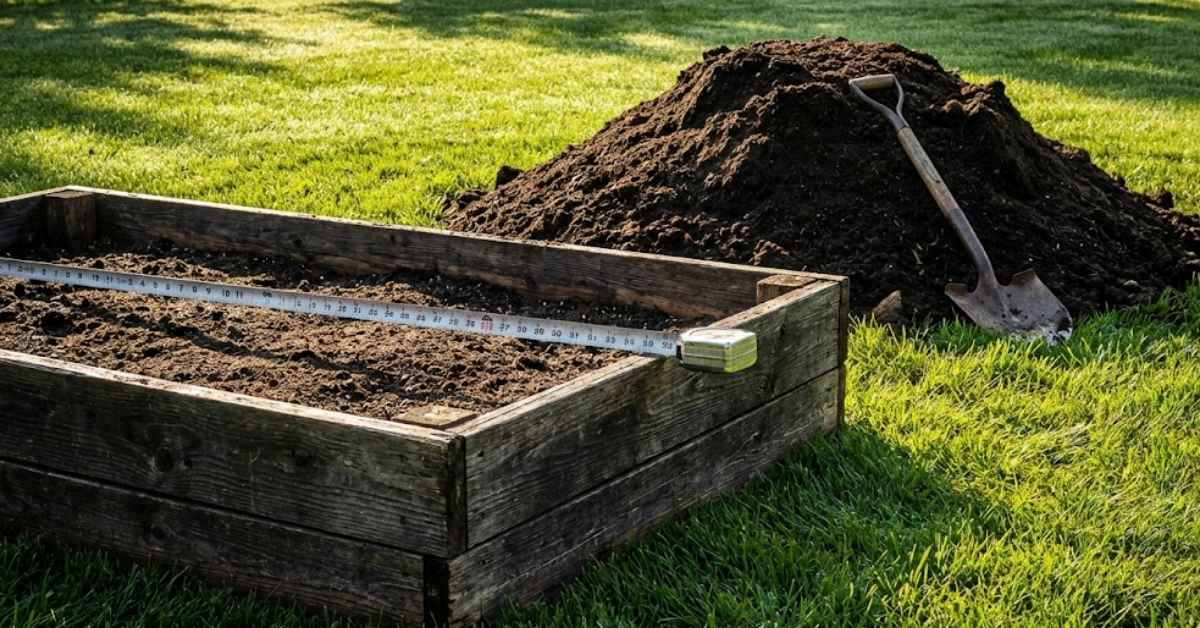
How much soil do I need for my garden? To find your soil volume, multiply the length of your garden bed by the width and the desired depth in feet. Divide that total by 27 to get the amount in cubic yards. For a standard 4×8 raised bed at 12 inches deep, you need exactly 1.18 cubic yards of soil.
Why Your Bulk Garden Soil Calculator Results Matter
Look, buying dirt in bags is fine if you have a tiny pot on a NYC balcony. But if you’re doing real work, you need bulk. Most people don’t realize how much space they’re actually filling. They think a “yard” of dirt is just a little pile. It’s not. It’s 27 cubic feet. That’s a lot of lifting.
Using a bulk garden soil calculator saves your back and your bank account. Bulk topsoil usually costs way less per pound than the bagged stuff. But the delivery fee will kill you if you have to call the truck back twice. Measure your beds twice. Write it down. Don’t trust your “gut feeling” because your gut doesn’t know geometry.
Finding The Right Soil Depth For Vegetable Garden Success
Most beginners make a huge mistake here. They think more is always better. It’s not. If you’re growing lettuce, you don’t need three feet of dirt. You’re just burying money at that point. But if you’re growing carrots or big tomatoes, you can’t be stingy.
A good soil depth for vegetable garden projects is usually around 12 to 18 inches. This gives the roots room to stretch out without hitting the hard clay underneath. If you’re building on top of concrete or really bad ground, you might need even more. Just remember that every extra inch of depth adds up fast in your total cost.
The Truth About Your Topsoil Yardage Calculator
I’ve seen “pros” eyeball a pile and tell you it’s three yards. Half the time, they’re lying. They want to move on to the next job. You need to be the smart one in the room. A topsoil yardage calculator is your best friend when the delivery truck arrives.
If you’re filling a big area, like a new lawn in North Carolina or a leveled spot in Florida, the math changes. You aren’t just filling a box. You’re covering ground. If you get the yardage wrong, you’ll have bald spots in your grass. Or you’ll have a weird hill in the middle of your yard that catches all the rain. Neither is a good look.
How Much Soil Do I Need For 4×8 Raised Bed Projects?
This is the most common question I get. The 4×8 bed is the king of the American backyard. It’s the perfect size. But it’s also the size that tricks people the most.
To fill a 4×8 raised bed that is 12 inches deep, you need about 32 cubic feet of soil. Since a standard big bag of soil is usually 2 cubic feet, you’re looking at 16 bags. That’s a lot of trips to the car. This is why I always tell people to look at the DIY PVC hydroponic tower guide if they want to save space and skip the heavy dirt lifting.
Quick Answers (Because I Know You’ll Ask)
How many bags of soil equal 1 cubic yard? It takes 27 bags of 1-cubic-foot soil or 13.5 bags of 2-cubic-foot soil to make one cubic yard. Most big-box stores sell the 2-cubic-foot size. Don’t kill your car’s suspension trying to haul a full yard in one trip.
Is it cheaper to buy soil in bulk or bags? Bulk is almost always cheaper if you need more than 2 yards. Bags are better for small fixes or if you can’t get a truck into your backyard. Do the math on the delivery fee before you decide.
How do I calculate soil for an irregular shaped garden? Break it into smaller squares or circles. Calculate each one and add them together. It’s not perfect, but it’s better than guessing. Or just overbuy by 10% to be safe.
What depth of soil is needed for a vegetable garden? For most greens, 12 inches is plenty. For root veggies like carrots, go for 18 inches. Check our can you grow carrots hydroponic tower post for a different way to do it.
How much does a yard of topsoil weigh? A cubic yard of dry topsoil weighs about 2,000 pounds. If it’s wet, it can go up to 3,000 pounds. Don’t put that in your light-duty pickup truck unless you want to buy new tires.
How much soil do I need for a 4×8 raised bed? You need 32 cubic feet for a 12-inch deep bed. If your bed is only 6 inches deep, you only need 16 cubic feet. Double-check your height before you buy.
Final Thoughts For The Frustrated Gardener
Yard work is expensive. I get it. But the biggest cost is always the mistakes we make because we were in a hurry. Take ten minutes. Get the tape measure. Use the tools. It’s the only way to keep your sanity and your savings.
If you want to keep up with the latest yard disasters and how to fix them, check out our News section. I’ve seen people pour washing up liquid on their lawns just to fix moss issues—there is always something new to learn in this game.
Stay smart, stay grumpy, and keep your hands dirty. Just make sure you’re digging in the right amount of dirt.