Your Driveway is About to Shatter: How to Repair a Cracked Concrete Driveway Before Winter Hits
You know that sound. You are out there with your snow shovel. You are in a rhythm. Scrape, toss. Scrape, toss. Then—WHAM.
The shovel handle jams into your gut. You doubled over in pain. Why? Because your shovel blade caught the edge of that massive crack in your driveway. The one you swore you would fix last July.
Well, it’s not July anymore. It’s almost winter. And if you don’t learn how to repair a cracked concrete driveway right now, that crack isn’t going to be just a nuisance. It’s going to be a canyon.
I see it all the time. Folks ignore the cracks. Then February comes. Water gets in. It freezes. It expands. And suddenly, you aren’t patching a crack; you’re repaving the whole slab.
Let’s fix this before the first hard freeze destroys your bank account.
Why Winter Hates Your Concrete
Here is the science lesson. I’ll keep it short.
Concrete is like a sponge. It has tiny pores. When it rains or snows, water gets into those cracks. When the temperature drops below 32 degrees, that water turns to ice.
Ice takes up about 9% more space than water. It expands with massive force. This is called the “freeze-thaw cycle.”
The University of Illinois explains that this pressure creates internal stress. Eventually, the concrete pops. It spalls. It crumbles.
So, we aren’t just filling a hole for looks. We are sealing the fortress against the ice enemy.
Step 1: Clean It Like You Mean It
Don’t you dare just squirt goop into a dirty crack. It won’t stick.
You need to get the debris out. If there is moss growing in there, rip it out. If there are loose chunks of gravel, pry them out with a screwdriver.
Get a wire brush. Scrub the walls of the crack. You want raw, rough concrete exposed. Not dirt. Not oil stains.
If you have a pressure washer, use it. Blast that thing out. But—and this is big—you have to let it dry. If you seal moisture inside the crack, you are just doing the ice’s job for it. Wait for a sunny, dry day.
Assessing the Damage: How Bad Is It?
Not all cracks are created equal.
If it’s a hairline crack (less than 1/4 inch wide), stop panicking. You can fix that in ten minutes with a bottle of liquid filler.
If it’s a wide crack (1/2 inch or more), you have a real problem. You need heavy-duty stuff.
And if one side of the crack is an inch higher than the other? That’s settling. No amount of patch in a tube will fix that. You need a mud-jacker or a slab-lifter. Call a pro for that. I can’t help you there.
The Secret Weapon: Backer Rods
If you are patching large concrete cracks, do not try to fill the bottomless pit with expensive sealant. You will go broke.
Use a backer rod.
It looks like a gray foam swimming noodle, but thinner. You stuff it into the crack. It fills the void. It gives your sealant something to sit on top of.
It costs like five bucks. It saves you fifty bucks in filler. Use it.
Step 2: Picking Your Poison (The Filler)
Go to the hardware store. Walk past the paint aisle. Go to the masonry section.
For Small Cracks: Get a textured acrylic concrete patch or a polyurethane sealant. It comes in a caulk tube. It stays flexible. This is key. Concrete moves. If you put something rigid in there, it will just crack again.
For Big Holes: You need actual patch mix. It comes in a tub or a bag. You mix it with water.
Speaking of mixing, if you are doing a big job, you need to know how much material to buy. Don’t guess. Use our Guide to Concrete Calculations. It will tell you exactly what you need so you don’t end up with half a bag of dust sitting in your garage for twenty years.
Step 3: The Application (Don’t Be Messy)
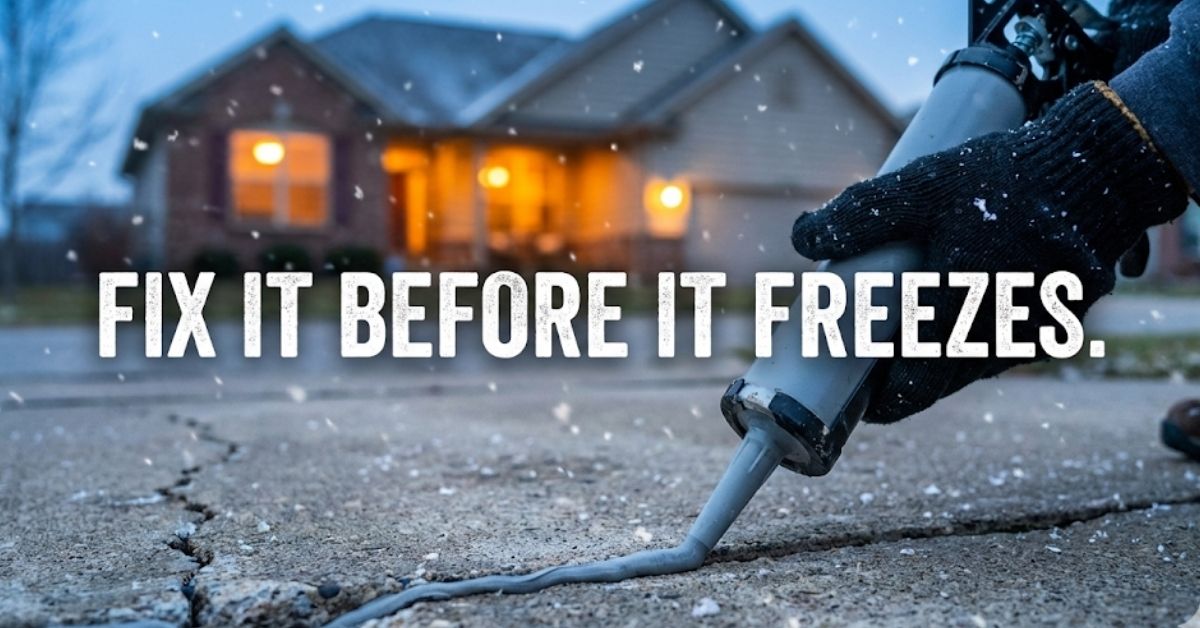
Cut the tip of the tube. Squeeze it into the crack.
Don’t just leave a worm of goop sitting on top. That looks terrible.
Use a putty knife or your finger (wear a glove, for crying out loud) to smooth it out. You want it level with the driveway surface.
If you are using the tub mix for deep holes, pack it in tight. Use a trowel. Feather the edges so it blends in.
And sprinkle a little sand on top while it’s wet. Why? Because fresh patch looks bright gray and fake. Sand adds texture and helps it blend with the old, weathered driveway.
What About Resurfacing?
Sometimes, the driveway looks like a spiderweb. There are too many cracks to count.
You might be wondering about driveway resurfacing cost vs repair.
Resurfacing means pouring a thin layer of new concrete over the whole thing. It looks brand new. It costs about $3 to $7 per square foot. Patching costs pennies.
If you are selling the house? Resurface it. If you just want to survive the winter without tripping? Patch it.
Temperature Matters (Don’t Freeze the Patch)
Here is the catch with winter repairs. You can’t do this when it’s 10 degrees out.
Most concrete crack filler for winter requires the air temperature to be at least 40°F or 50°F for 24 hours.
If you apply it when it’s freezing, the water in the mix will freeze before it cures. The patch will fail. It will turn to powder.
Watch the weather forecast. Look for a warm-ish afternoon.
Also, watch out for sudden storms. If you just patched the driveway and now the sky is turning gray, you need to protect your work. Check out our How to Protect Plants Freezing Rain Guide. The advice there about covering sensitive things applies to your wet concrete patch too. Throw a tarp over it.
Quick Answers (Because I Know You’ll Ask)
“Can you patch concrete in cold weather?” Barely. If it’s below 45°F, most products won’t cure. There are special vinyl patches that work in cooler temps, but read the label. If the bottle says “Apply above 50°F,” believe it.
“What is the best concrete crack filler?” For cracks that move (expansion joints), use Polyurethane. It stretches. For cracks that don’t move, use a vinyl concrete patch. Avoid the cheap rigid cement tubes; they crack in a month.
“Is it better to patch or resurface a driveway?” Patching is a band-aid. Resurfacing is plastic surgery. Patching stops the damage from getting worse. Resurfacing makes it look pretty. What does your budget say?
The Bottom Line
Your driveway takes a beating. You drive a two-ton metal box on it every day. You shovel it. You salt it.
Show it a little respect.
Go outside. Look for the cracks. Spend twenty dollars on some sealant and backer rod. Do it this weekend before the snow sticks.
If you don’t, I don’t want to hear you complaining when that shovel handle hits your stomach in January.
Fix the crack. Save your gut.